Necessary Cookies

Required for the site to function. Cannot be disabled.

Analytics Cookies

Help us understand how visitors interact with our site (Google Analytics via GTM).

Marketing Cookies

Used to track visitors and deliver personalised advertisements.

We use cookies to enhance your browsing experience and analyse site traffic. By clicking Accept All, you consent to our use of cookies. Privacy Policy
NewsFire Global
Home News Europe World Christianity Culture Wars Opinion Video
Information
About Us Authors Advertising Terms & Conditions Privacy Policy Contact
R2B Media
R2B NEWSFIRE.GR PAPAFOTIS.GR THRACTION HELLENIC CONSERVATIVES RIGHT2THEBONE YT
News Europe

Greece Arms Up Against Turkish Maritime Land Grabs

Greece is executing its largest Coast Guard modernization with offshore patrol vessels, drones, and high-speed boats to secure the Aegean amid Turkish territorial claims.

Dimitris Papafotis
Dimitris Papafotis Editor in Chief
AUGUST 24, 2026 AT 9:42 AM

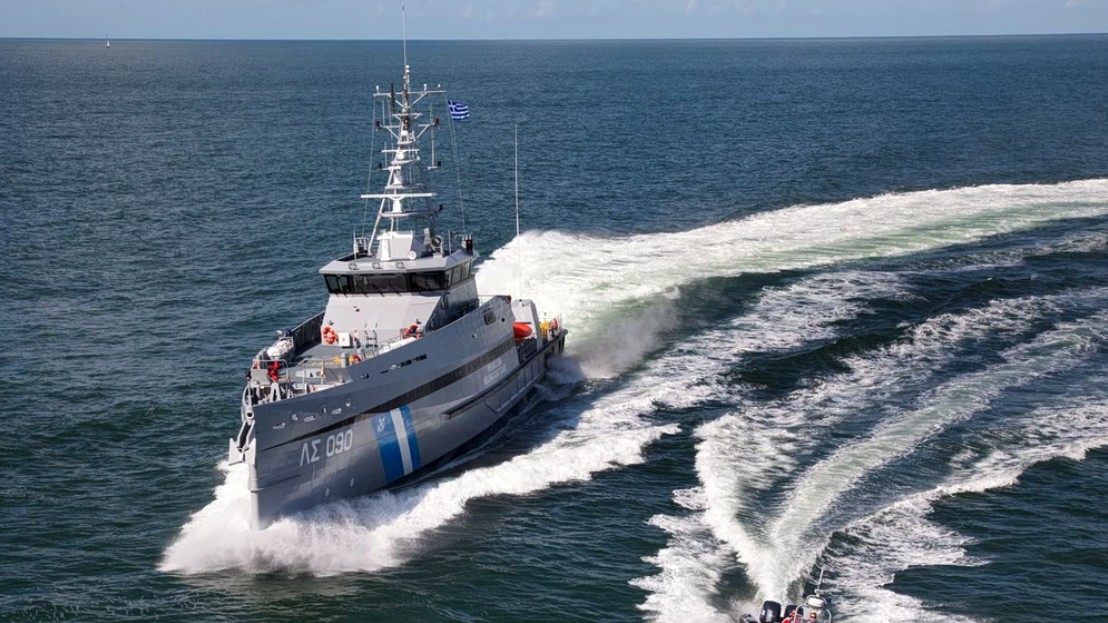
According to Greek City Times, the transformation centres on AIGIS 2, an ambitious equipment initiative that will integrate offshore patrol vessels, high-speed interceptors, drones, unmanned surface craft and autonomous underwater vehicles into a comprehensive maritime defence system.

Add as preferred source on Google
Photo: greekcitytimes.com

The Hellenic Coast Guard currently maintains approximately 230 vessels, giving it a substantial numerical edge over its Turkish counterpart. However, the focus is shifting from quantity to capability—specifically, the ability to detect incidents at long range, monitor them continuously and deploy the right asset with speed and precision.

Four Major Offshore Patrol Vessels on Order

Greece’s offshore patrol capacity currently relies on four major vessels: a modern Damen Stan Patrol 5509 and three Israeli-built Sa’ar-class vessels, each 58 metres in length.

That fleet will soon expand significantly. Athens has approved the acquisition of four new offshore patrol vessels (OPVs) in a 2+2 configuration, each exceeding 80 metres and equipped with 30mm or 40mm guns and a helicopter deck. The programme carries an estimated price tag of around €360 million and will dramatically extend the Coast Guard’s endurance and blue-water presence.

High-Speed Boats Capable of Exceeding 60 Knots

The upgrade extends across vessel categories. The four Italian-built Cantiere Navale Vittoria coastal patrol boats will reportedly be joined by six additional vessels measuring over 30 metres.

The Coast Guard already operates more than 60 high-speed boats ranging from 15 to 25 metres. Seven new Watercat 2000 Patrol boats have been contracted, with deliveries set to begin in October and continue through next summer.

AIGIS 2 also includes 14 new vessels longer than 18 metres capable of speeds above 50 knots, plus 10 interceptors capable of exceeding 60 knots. These craft will enable the Coast Guard to pursue targets at extreme speeds and cover vast distances, sharply reducing response times during maritime incidents.

Drones, VTOL Systems and Autonomous Aircraft

The most significant expansion, however, will occur in the air. The Coast Guard currently operates three twin-engine F406 Caravan II aircraft fitted with surface-search radar and thermal cameras, along with six AS365 N3 Dauphin helicopters used for search and rescue and surveillance.

That network is about to grow substantially. The programme includes two VTOL systems comprising four aircraft capable of vertical take-off and landing from islands or ships. These platforms will have an endurance exceeding 10 hours and carry cameras, thermal sensors and specialised radar designed to detect high-speed boats and small craft.

Additional acquisitions include 20 smaller tactical drones, three heavy multirotors capable of carrying approximately 40 to 50 kilograms, and five automated drones capable of autonomous take-off, return and recharging without continuous human control.

Greece is also moving forward with the purchase of four additional fixed-wing VTOL drones valued at €30 million, designed to support missions requiring extended endurance and range.

Unmanned Surface and Underwater Vehicles

Perhaps the most innovative component of the plan lies beneath the surface. AIGIS 2 includes two systems of unmanned surface vessels (USVs) and three systems of autonomous underwater vehicles (AUVs), with a combined value of approximately €50 million.

The result will be a multi-domain surveillance architecture: crewed ships and high-speed boats at sea, manned and unmanned aircraft in the air, and autonomous systems operating both on and beneath the water.

This capability shift will reduce reliance on crewed vessels and their speed alone. Instead, the Coast Guard will increasingly detect targets from long distances, track them continuously across domains, and deploy the most appropriate asset to wherever it is needed—without delay.

With information from Greek City Times

Share:
Dimitris Papafotis
Dimitris Papafotis

Dimitris Papafotis is the editor-in-chief of NewsFire.GR. He was born and raised in Athens. He studied at the Journalism Workshop (1991-1993). He currently lives in Pyrgos, Ilia, where he has been active in radio and various newspapers, while also maintaining his personal blog, Papafotis.gr.

According to Greek City Times, the transformation centres on AIGIS 2, an ambitious equipment initiative that will integrate offshore patrol vessels, high-speed interceptors, drones, unmanned surface craft and autonomous underwater vehicles into a comprehensive maritime defence system.

Add as preferred source on Google
Photo: greekcitytimes.com

The Hellenic Coast Guard currently maintains approximately 230 vessels, giving it a substantial numerical edge over its Turkish counterpart. However, the focus is shifting from quantity to capability—specifically, the ability to detect incidents at long range, monitor them continuously and deploy the right asset with speed and precision.

Four Major Offshore Patrol Vessels on Order

Greece’s offshore patrol capacity currently relies on four major vessels: a modern Damen Stan Patrol 5509 and three Israeli-built Sa’ar-class vessels, each 58 metres in length.

That fleet will soon expand significantly. Athens has approved the acquisition of four new offshore patrol vessels (OPVs) in a 2+2 configuration, each exceeding 80 metres and equipped with 30mm or 40mm guns and a helicopter deck. The programme carries an estimated price tag of around €360 million and will dramatically extend the Coast Guard’s endurance and blue-water presence.

High-Speed Boats Capable of Exceeding 60 Knots

The upgrade extends across vessel categories. The four Italian-built Cantiere Navale Vittoria coastal patrol boats will reportedly be joined by six additional vessels measuring over 30 metres.

The Coast Guard already operates more than 60 high-speed boats ranging from 15 to 25 metres. Seven new Watercat 2000 Patrol boats have been contracted, with deliveries set to begin in October and continue through next summer.

AIGIS 2 also includes 14 new vessels longer than 18 metres capable of speeds above 50 knots, plus 10 interceptors capable of exceeding 60 knots. These craft will enable the Coast Guard to pursue targets at extreme speeds and cover vast distances, sharply reducing response times during maritime incidents.

Drones, VTOL Systems and Autonomous Aircraft

The most significant expansion, however, will occur in the air. The Coast Guard currently operates three twin-engine F406 Caravan II aircraft fitted with surface-search radar and thermal cameras, along with six AS365 N3 Dauphin helicopters used for search and rescue and surveillance.

That network is about to grow substantially. The programme includes two VTOL systems comprising four aircraft capable of vertical take-off and landing from islands or ships. These platforms will have an endurance exceeding 10 hours and carry cameras, thermal sensors and specialised radar designed to detect high-speed boats and small craft.

Additional acquisitions include 20 smaller tactical drones, three heavy multirotors capable of carrying approximately 40 to 50 kilograms, and five automated drones capable of autonomous take-off, return and recharging without continuous human control.

Greece is also moving forward with the purchase of four additional fixed-wing VTOL drones valued at €30 million, designed to support missions requiring extended endurance and range.

Unmanned Surface and Underwater Vehicles

Perhaps the most innovative component of the plan lies beneath the surface. AIGIS 2 includes two systems of unmanned surface vessels (USVs) and three systems of autonomous underwater vehicles (AUVs), with a combined value of approximately €50 million.

The result will be a multi-domain surveillance architecture: crewed ships and high-speed boats at sea, manned and unmanned aircraft in the air, and autonomous systems operating both on and beneath the water.

This capability shift will reduce reliance on crewed vessels and their speed alone. Instead, the Coast Guard will increasingly detect targets from long distances, track them continuously across domains, and deploy the most appropriate asset to wherever it is needed—without delay.

With information from Greek City Times

