Necessary Cookies

Required for the site to function. Cannot be disabled.

Analytics Cookies

Help us understand how visitors interact with our site (Google Analytics via GTM).

Marketing Cookies

Used to track visitors and deliver personalised advertisements.

We use cookies to enhance your browsing experience and analyse site traffic. By clicking Accept All, you consent to our use of cookies. Privacy Policy
NewsFire Global
Home News Europe World Christianity Culture Wars Opinion Video
Information
About Us Authors Advertising Terms & Conditions Privacy Policy Contact
R2B Media
R2B NEWSFIRE.GR PAPAFOTIS.GR THRACTION HELLENIC CONSERVATIVES RIGHT2THEBONE YT
News Europe

German Army Recruits Only 530 From 300,000 Applicants

Germany's military expansion faces crisis as only 530 volunteers enlisted after 298,200 recruitment questionnaires were sent to young Germans, far short of the goal to expand the Bundeswehr to 260,000 soldiers.

Dimitris Papafotis
Dimitris Papafotis Editor in Chief
JUNE 26, 2026 AT 3:52 PM
brusselssignal.eu
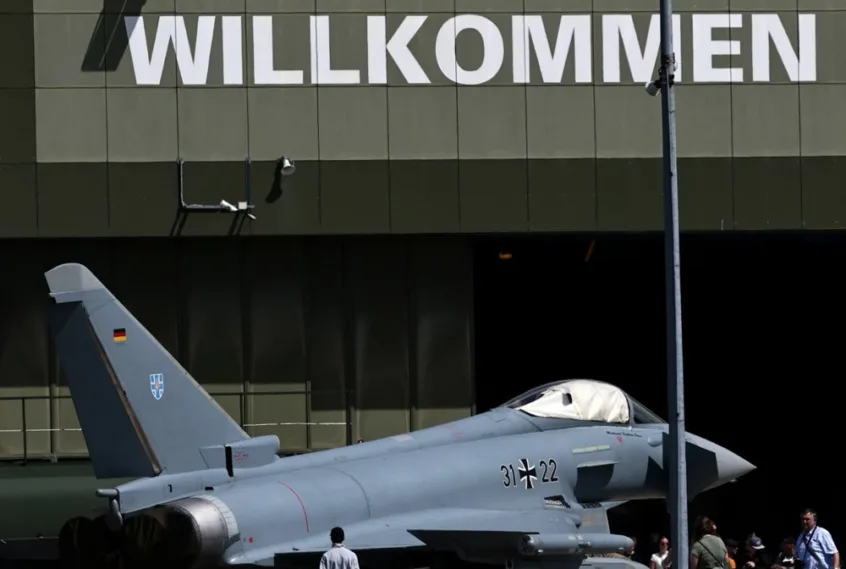
Photo: brusselssignal.eu

The dismal figures, released by the Defence Ministry on June 25, expose the deep challenges facing the Bundeswehr as it attempts to rebuild its strength amid growing security concerns in Europe, according to Brussels Signal.

Under the new Wehrdienst assessment system introduced at the start of 2026, the German military dispatched 298,200 questionnaires by mid-June. Approximately 153,200 went to men, who are legally obligated to respond, while 145,000 were sent to women on a voluntary basis.

While compliance among men was impressive at 96 per cent, the actual enlistment rate has proven catastrophically low. Only around 1,500 individuals have completed medical and selection procedures, with a mere 530 formally signing up for service in 2026.

More than one in five young men expressed at least some interest in military service on their questionnaires. Yet the overwhelming majority failed to follow through with formal enlistment, raising serious questions about the effectiveness of the new recruitment tool.

The disappointing results come as Germany pushes to expand the Bundeswehr from its current active personnel strength of roughly 186,000 toward an ambitious long-term target of 260,000 soldiers plus 200,000 reservists by the mid-2030s. This would enable Germany to field up to 460,000 soldiers in wartime conditions.

Defence Minister Boris Pistorius has made the military expansion a cornerstone of his tenure, viewing it as essential for Germany to fulfill its NATO commitments and adapt to Europe’s deteriorating security landscape. Pistorius has consistently identified recruitment as the single biggest barrier to German defence readiness.

Systemic Problems Plague German Military Recruitment

Experts and opposition figures point to multiple structural problems undermining recruitment efforts. Military compensation and working conditions trail far behind the civilian labor market, while postings and working hours remain unattractive to young people.

The armed forces suffer from a poor public image among Germany’s youth, and face fierce competition from a tight job market where school-leavers and university graduates enjoy numerous better-paid alternatives. Bureaucratic delays and drawn-out decision-making processes further discourage potential recruits.

The questionnaire initiative was designed as a major innovation to expand the recruitment base without reintroducing full conscription. Its abysmal performance will now fuel intense debate in Berlin about whether a purely voluntary system can ever generate the required manpower, or whether Germany must eventually adopt some form of mandatory or selective national service.

Regular Recruitment Shows Modest Gains

The poor questionnaire results stand in sharp contrast to regular recruitment channels, which have registered some improvement in 2025-2026. The Ministry of Defense announced Wednesday that approximately 38,500 applications have been received so far this year, representing a 24 per cent increase compared to the same period last year. New soldier numbers have risen by 13 per cent to around 13,000.

Even these gains, however, fall dramatically short of what is needed to achieve the government’s growth targets in response to perceived Russian threats and evolving NATO requirements.

Critics contend that decades of underfunding, political neglect, and entrenched public pacifism following the Cold War’s end have inflicted reputational damage on the Bundeswehr that cannot be quickly repaired.

[EMBED_N]

The recruitment crisis adds to a growing list of Bundeswehr troubles, including chronic equipment shortages, maintenance backlogs, and failed procurement projects that have undermined German military credibility among NATO allies.

With information from Brussels Signal

Share:
Dimitris Papafotis
Dimitris Papafotis

Dimitris Papafotis is the editor-in-chief of NewsFire.GR. He was born and raised in Athens. He studied at the Journalism Workshop (1991-1993). He currently lives in Pyrgos, Ilia, where he has been active in radio and various newspapers, while also maintaining his personal blog, Papafotis.gr.

brusselssignal.eu
Photo: brusselssignal.eu

The dismal figures, released by the Defence Ministry on June 25, expose the deep challenges facing the Bundeswehr as it attempts to rebuild its strength amid growing security concerns in Europe, according to Brussels Signal.

Under the new Wehrdienst assessment system introduced at the start of 2026, the German military dispatched 298,200 questionnaires by mid-June. Approximately 153,200 went to men, who are legally obligated to respond, while 145,000 were sent to women on a voluntary basis.

While compliance among men was impressive at 96 per cent, the actual enlistment rate has proven catastrophically low. Only around 1,500 individuals have completed medical and selection procedures, with a mere 530 formally signing up for service in 2026.

More than one in five young men expressed at least some interest in military service on their questionnaires. Yet the overwhelming majority failed to follow through with formal enlistment, raising serious questions about the effectiveness of the new recruitment tool.

The disappointing results come as Germany pushes to expand the Bundeswehr from its current active personnel strength of roughly 186,000 toward an ambitious long-term target of 260,000 soldiers plus 200,000 reservists by the mid-2030s. This would enable Germany to field up to 460,000 soldiers in wartime conditions.

Defence Minister Boris Pistorius has made the military expansion a cornerstone of his tenure, viewing it as essential for Germany to fulfill its NATO commitments and adapt to Europe’s deteriorating security landscape. Pistorius has consistently identified recruitment as the single biggest barrier to German defence readiness.

Systemic Problems Plague German Military Recruitment

Experts and opposition figures point to multiple structural problems undermining recruitment efforts. Military compensation and working conditions trail far behind the civilian labor market, while postings and working hours remain unattractive to young people.

The armed forces suffer from a poor public image among Germany’s youth, and face fierce competition from a tight job market where school-leavers and university graduates enjoy numerous better-paid alternatives. Bureaucratic delays and drawn-out decision-making processes further discourage potential recruits.

The questionnaire initiative was designed as a major innovation to expand the recruitment base without reintroducing full conscription. Its abysmal performance will now fuel intense debate in Berlin about whether a purely voluntary system can ever generate the required manpower, or whether Germany must eventually adopt some form of mandatory or selective national service.

Regular Recruitment Shows Modest Gains

The poor questionnaire results stand in sharp contrast to regular recruitment channels, which have registered some improvement in 2025-2026. The Ministry of Defense announced Wednesday that approximately 38,500 applications have been received so far this year, representing a 24 per cent increase compared to the same period last year. New soldier numbers have risen by 13 per cent to around 13,000.

Even these gains, however, fall dramatically short of what is needed to achieve the government’s growth targets in response to perceived Russian threats and evolving NATO requirements.

Critics contend that decades of underfunding, political neglect, and entrenched public pacifism following the Cold War’s end have inflicted reputational damage on the Bundeswehr that cannot be quickly repaired.

[EMBED_N]

The recruitment crisis adds to a growing list of Bundeswehr troubles, including chronic equipment shortages, maintenance backlogs, and failed procurement projects that have undermined German military credibility among NATO allies.

With information from Brussels Signal