Necessary Cookies

Required for the site to function. Cannot be disabled.

Analytics Cookies

Help us understand how visitors interact with our site (Google Analytics via GTM).

Marketing Cookies

Used to track visitors and deliver personalised advertisements.

We use cookies to enhance your browsing experience and analyse site traffic. By clicking Accept All, you consent to our use of cookies. Privacy Policy
NewsFire Global
Home News Europe World Christianity Culture Wars Opinion
Information
About Us Authors Advertising Terms & Conditions Privacy Policy Contact
R2B Media
R2B NEWSFIRE.GR PAPAFOTIS.GR THRACTION HELLENIC CONSERVATIVES RIGHT2THEBONE YT
News Europe

European Union: Ursula von der Leyen Widely Criticized by Left and Right

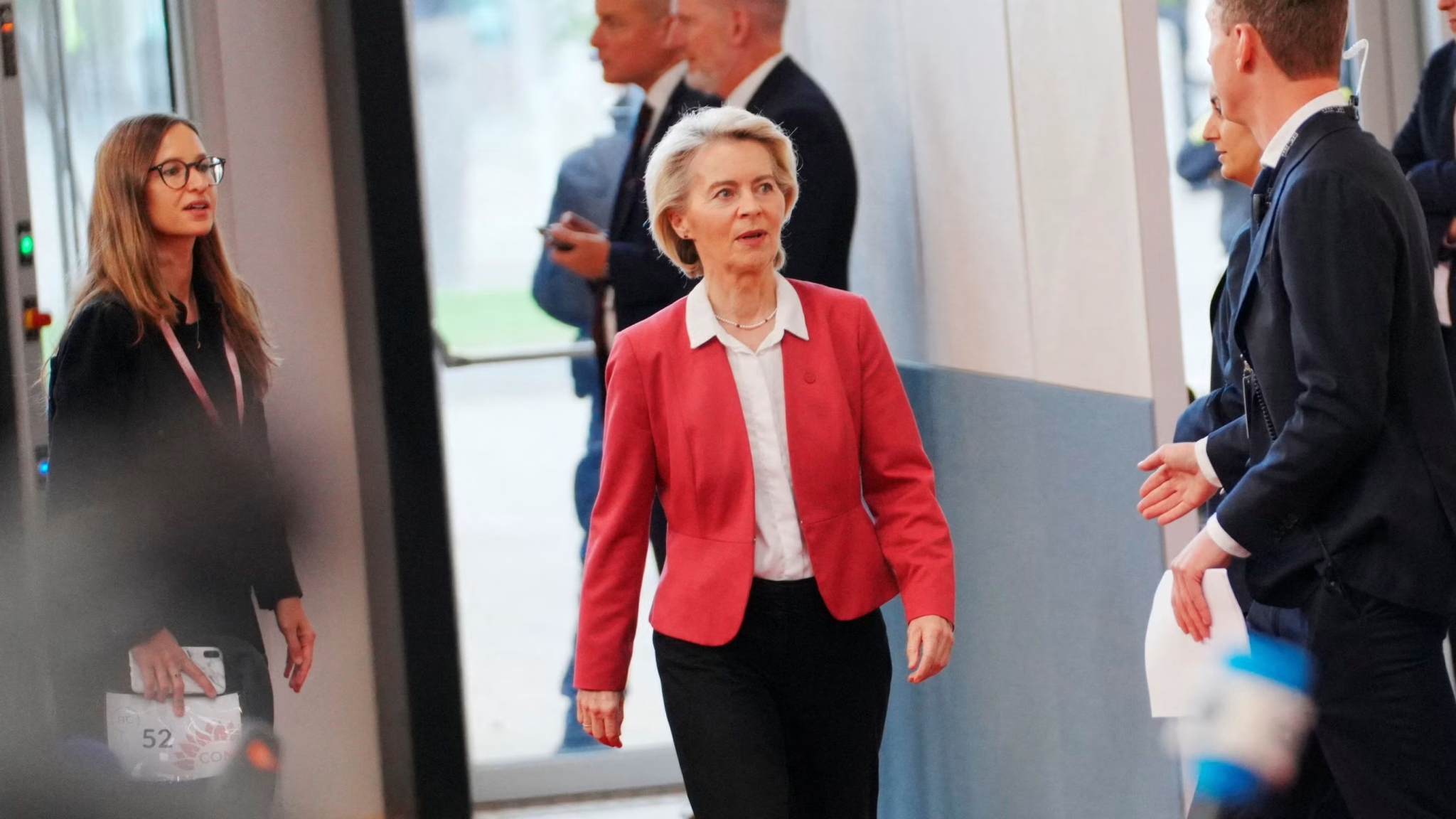
Ursula von der Leyen survived two no-confidence motions in the European Parliament, revealing deep divides across political lines and underscoring mounting tensions within EU leadership.

Newsroom
Newsroom Staff Writer
OCTOBER 9, 2025 AT 7:10 PM Updated: May 21, 2026 1:56 PM

Ursula von der Leyen managed to avoid two motions of no confidence in the European Parliament, one from the right and one from the left wing. Despite their rejection, the results reveal deep dissatisfaction from different political sides, exposing cracks in the leadership of the European Union.

The motion of no confidence from the right

The first motion, submitted by the group Patriots for Europe under Jordan Bardella, gathered 179 votes in favor, 378 against, and 37 abstentions. Although it did not achieve the required majority, this initiative highlighted disagreements even within the center-right wing. Four French MEPs from the Republicans, including François-Xavier Bellamy, voted in favor, expressing opposition to the trade agreement with Mercosur. Bellamy emphasized that this stance aligns with commitments to protect farmers, avoiding contradictions with pre-election promises.

This move underscores the pressure from patriotic forces, which see von der Leyen’s policy as a retreat on issues of national economy and agricultural production.

The motion from the left side

The second motion, from the Left group co-chaired by Manon Aubry, received just 133 votes in favor, 383 against, and 78 abstentions. Aubry expressed disappointment over the low support from socialists, with only 3% of them voting in favor, and no French socialist following suit. Similarly, 30% of the Greens and 10% of the Patriots supported the proposal.

This division on the left indicates difficulties in unifying criticism against the leadership, despite issues raised such as inertia on international matters.

Reactions from von der Leyen and her political environment

Following the results, von der Leyen expressed satisfaction with the strong support from the Parliament, strengthening her alliance with social democrats, centrists, and center-right members. Nevertheless, criticism persists, including accusations of wavering toward the far-right and undermining environmental policies.

In a recent debate, Valérie Hayer from the centrists pointed out that the majority functions dysfunctionally, while Iratxe García from the social democrats called for clear alliance choices. Bardella accused the EU of uncontrolled migration and economic retreat, reminding that Europe is a civilization based on free nations, not bureaucratic norms.

Von der Leyen responded with a conciliatory tone, calling for unity against external threats such as Russia, avoiding the harsh language of the past.

Historical context and prospects

A similar motion was rejected in July, with 175 votes in favor. The Parliament has never dismissed a Commission, although in 1999 the Santer Commission resigned before a vote due to scandals.

These events highlight a Europe in transition, where the need for national autonomy and the protection of citizens clashes with central policies, creating challenges for leadership.

Related articles

Share:
Newsroom
Newsroom

NewsFire.GR is a website created with the hope that the media will rediscover their true identity, which is none other than informing the public about the real stakes of our times. Journalism and political analysis must hold power accountable, not serve it.

Ursula von der Leyen managed to avoid two motions of no confidence in the European Parliament, one from the right and one from the left wing. Despite their rejection, the results reveal deep dissatisfaction from different political sides, exposing cracks in the leadership of the European Union.

The motion of no confidence from the right

The first motion, submitted by the group Patriots for Europe under Jordan Bardella, gathered 179 votes in favor, 378 against, and 37 abstentions. Although it did not achieve the required majority, this initiative highlighted disagreements even within the center-right wing. Four French MEPs from the Republicans, including François-Xavier Bellamy, voted in favor, expressing opposition to the trade agreement with Mercosur. Bellamy emphasized that this stance aligns with commitments to protect farmers, avoiding contradictions with pre-election promises.

This move underscores the pressure from patriotic forces, which see von der Leyen’s policy as a retreat on issues of national economy and agricultural production.

The motion from the left side

The second motion, from the Left group co-chaired by Manon Aubry, received just 133 votes in favor, 383 against, and 78 abstentions. Aubry expressed disappointment over the low support from socialists, with only 3% of them voting in favor, and no French socialist following suit. Similarly, 30% of the Greens and 10% of the Patriots supported the proposal.

This division on the left indicates difficulties in unifying criticism against the leadership, despite issues raised such as inertia on international matters.

Reactions from von der Leyen and her political environment

Following the results, von der Leyen expressed satisfaction with the strong support from the Parliament, strengthening her alliance with social democrats, centrists, and center-right members. Nevertheless, criticism persists, including accusations of wavering toward the far-right and undermining environmental policies.

In a recent debate, Valérie Hayer from the centrists pointed out that the majority functions dysfunctionally, while Iratxe García from the social democrats called for clear alliance choices. Bardella accused the EU of uncontrolled migration and economic retreat, reminding that Europe is a civilization based on free nations, not bureaucratic norms.

Von der Leyen responded with a conciliatory tone, calling for unity against external threats such as Russia, avoiding the harsh language of the past.

Historical context and prospects

A similar motion was rejected in July, with 175 votes in favor. The Parliament has never dismissed a Commission, although in 1999 the Santer Commission resigned before a vote due to scandals.

These events highlight a Europe in transition, where the need for national autonomy and the protection of citizens clashes with central policies, creating challenges for leadership.

Related articles