
Cyprus Demands Global Response to Wartime Sexual Violence
Cyprus called for international accountability for sexual violence during Turkey's 1974 invasion, citing lasting trauma and urging stronger mechanisms to prosecute wartime atrocities.
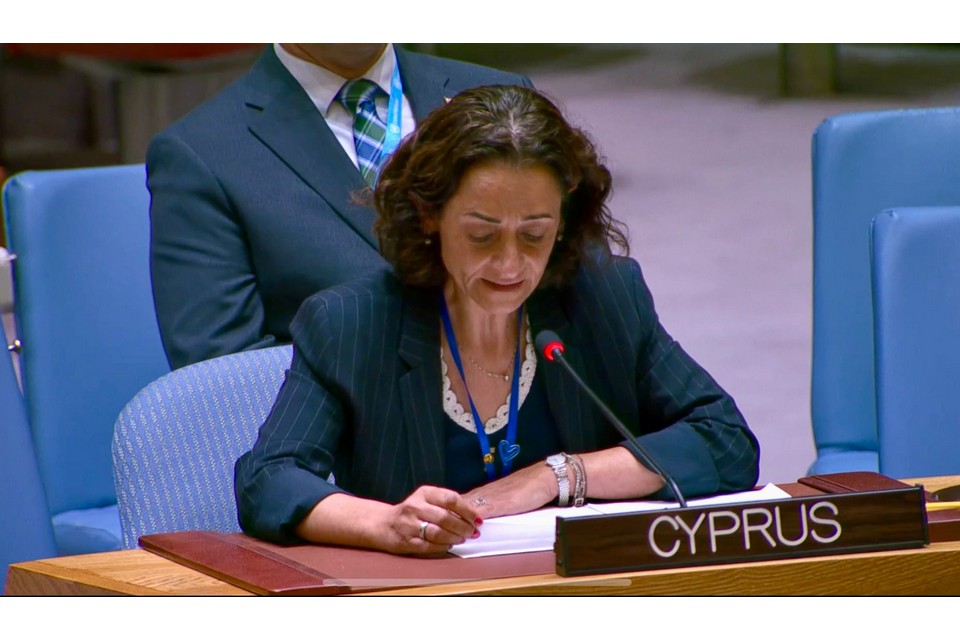

Speaking at a Security Council open debate on women, peace and security, Maria Michael, Cyprus’ permanent representative to the UN, detailed how hundreds of women, girls, men and boys were subjected to sexual violence by Turkish military forces during the invasion five decades ago, according to Cyprus Mail columnist Eleni Panayiotou.
Michael told the assembly that the trauma inflicted on survivors remains unhealed within Cypriot society and continues to inform the nation’s advocacy for justice and recognition on behalf of conflict survivors worldwide.
The Cypriot envoy referenced the latest report by UN Secretary-General Antonio Guterres, which she said underscores the alarming prevalence of conflict-related sexual violence globally. She emphasized that Cyprus, having endured foreign military invasion and more than five decades of Turkish occupation, understands intimately the enduring devastation wrought by such crimes.
European Parliament Resolution Cited
Michael pointed to a resolution adopted by the European Parliament that formally condemned the sexual violence perpetrated by Turkish troops during the 1974 invasion. The resolution also called for accountability measures and survivor support, which Michael described as a vital step in maintaining historical memory and elevating awareness across Europe and internationally.
The Turkish Pseudostate in Northern Cyprus continues to occupy the northern portion of the island, maintained by military force and recognized by no nation other than Turkey itself.
Sexual Violence as War Crime
Michael warned that rape and other forms of conflict-related sexual violence are being systematically deployed as instruments of war, terror, torture and political repression. She noted that under international law, such acts may constitute war crimes, crimes against humanity or even genocide, making accountability both a matter of justice and a tool of prevention.
The Cypriot diplomat outlined three core priorities for the international community: centering survivors in all responses, ending impunity and ensuring the full and meaningful participation of women in peace and security processes.
Call for Sanctions and Prosecution
Michael urged member states to strengthen investigations and prosecutions related to conflict-related sexual violence, while calling for more robust use of existing UN Security Council sanctions regimes. She argued that such mechanisms must be fully deployed to reinforce accountability, deter future violations and send an unambiguous message that perpetrators will face justice.
She stressed that survivors must be granted timely access to justice, healthcare, legal assistance, psychosocial support and reparations, free from stigma or fear of retaliation.
Michael also highlighted the critical role played by women’s protection advisers and local women’s organizations in prevention, early warning systems and direct assistance to survivors, urging sustained international funding for their efforts.
National Action Plan on Women and Security
Addressing the broader women, peace and security agenda, Michael stated that sustainable peace is unattainable without the full and meaningful participation of women. She noted that Cyprus adopted its second national action plan on women, peace and security earlier this year, reinforcing its commitment to implementing UN Security Council Resolution 1325 and strengthening measures related to participation, protection, prevention, relief and recovery.
Michael added that Cyprus continues to provide humanitarian assistance and development cooperation to women and girls affected by conflict through its Cyprus Aid program.
In her closing remarks, the Cypriot envoy emphasized that international law demands more than rhetoric. She called for concrete action to protect survivors, prosecute perpetrators, address the underlying causes of conflict-related sexual violence and ensure that such crimes are never normalized as collateral damage of warfare.
Cyprus, Michael affirmed, remains committed to collaborating with the international community to strengthen global responses to conflict-related sexual violence and advance the full implementation of the women, peace and security agenda.
With information from Cyprus Mail





