Necessary Cookies

Required for the site to function. Cannot be disabled.

Analytics Cookies

Help us understand how visitors interact with our site (Google Analytics via GTM).

Marketing Cookies

Used to track visitors and deliver personalised advertisements.

We use cookies to enhance your browsing experience and analyse site traffic. By clicking Accept All, you consent to our use of cookies. Privacy Policy
NewsFire Global
Home News Europe World Christianity Culture Wars Opinion Video
Information
About Us Authors Advertising Terms & Conditions Privacy Policy Contact
R2B Media
R2B NEWSFIRE.GR PAPAFOTIS.GR THRACTION HELLENIC CONSERVATIVES RIGHT2THEBONE YT
News Europe

Constitutional Changes Build Authoritarian Rule in Hungary

A Hungarian politician warns that constitutional amendments by the Tisza Party have dismantled democratic safeguards, barred Viktor Orbán from office, and created what critics call a new autocracy.

Dimitris Papafotis
Dimitris Papafotis Editor in Chief
AUGUST 2, 2026 AT 3:34 PM

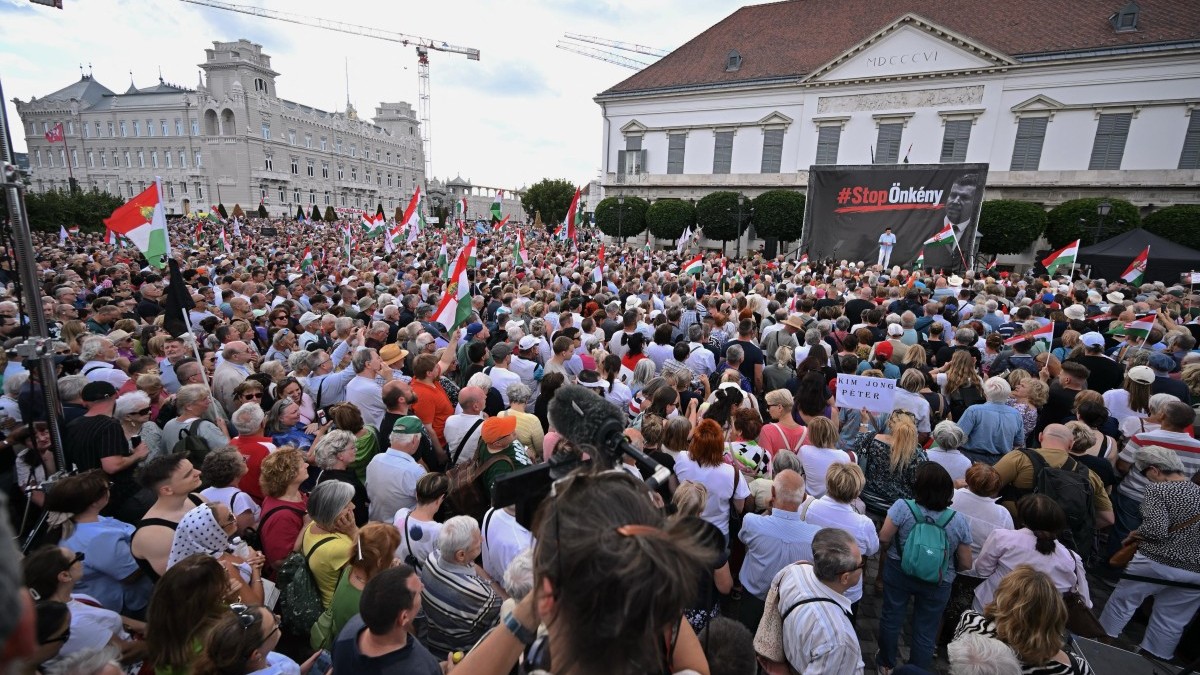
A veteran Hungarian politician who participated in the 1990 transition from communism has issued a stark warning that Hungary’s constitutional order has been fundamentally undermined following recent amendments imposed by the Tisza Party after the 2026 elections.

According to The European Conservative, the politician claims that Hungary is no longer a democratic state governed by the rule of law, and that an era of autocracy has returned to the country. The sweeping constitutional changes, embodied in the 17th amendment to Hungary’s Fundamental Law, allegedly violate both written and unwritten principles foundational to European constitutional democracies.

The first major grievance centers on retroactive legislation designed to bar Viktor Orbán, leader of the largest opposition party, from standing as a candidate for Prime Minister again. The measure is described as severing the connection between Orbán and the Hungarian people.

Second, the Tisza government reportedly removed the democratically elected President of the Republic from office through a single provision buried in the amendment’s final clauses, with no constitutional justification provided. Similarly, the President of the Constitutional Court and several constitutional judges have been dismissed via tailor-made constitutional provisions, effectively dismantling the separation of powers and the system of checks and balances.

Third, a new investigative authority has been established with extraordinary powers and minimal judicial oversight—what critics characterize as a political police force. Public media will now fall under direct government control, further consolidating executive power.

Fourth, parliamentary terms have been limited to twelve years, a move set to exclude a significant portion of established political figures from public life. The source notes that if such a rule were applied in the European Parliament, 164 MEPs would be disqualified from re-election, including prominent figures such as Manfred Weber and Daniel Freund. In Germany, nearly sixty percent of CDU lawmakers would be barred from the next election, and leaders such as the Italian Prime Minister, the German Chancellor, the Spanish Prime Minister, and Donald Tusk would be ineligible to stand again.

The combination of these measures, the politician argues, represents an illegitimate system designed exclusively for the consolidation of power by Péter Magyar and the Tisza Party—actions described as unprecedented in Europe.

Brussels’ Deafening Silence

What makes the situation particularly troubling, according to the report, is the total silence from European Union institutions. For years, Brussels subjected patriotic Hungary to relentless political attacks, with the European Parliament debating Hungary on an almost weekly basis during protracted political witch-hunts. The European Commission withheld EU funds legally owed to Hungarians, citing so-called rule-of-law concerns.

Now, when the democratic rule of law is genuinely being dismantled in Hungary, those same institutions have gone silent. This silence, the politician contends, exposes the so-called rule-of-law procedure as nothing more than a political weapon of blackmail, designed to punish Member States that oppose Brussels’ mainstream power politics and defend their sovereignty.

By remaining complicit through silence, Brussels has forfeited all credibility on rule-of-law matters once and for all, the source argues.

A Pattern Across Europe

The same scenario, according to the veteran politician, has been repeating itself across Europe for more than a decade. Liberal-globalist elites who label themselves progressive are attempting to sideline political opponents through targeted legal proceedings, constitutional reforms that ignore democratic principles, and the weaponization of criminal law.

The objective is consistent: to render sovereigntist, patriotic, and nationally committed politicians and parties incapable of functioning through politically motivated proceedings and reprisals.

This, the politician insists, is not the freedom and democracy that the people of Central Europe fought for when they overthrew communist dictatorships. The imposition of a centralized system and its allied networks represents a betrayal of the principles won in 1990.

With information from The European Conservative

Share:
Dimitris Papafotis
Dimitris Papafotis

Dimitris Papafotis is the editor-in-chief of NewsFire.GR. He was born and raised in Athens. He studied at the Journalism Workshop (1991-1993). He currently lives in Pyrgos, Ilia, where he has been active in radio and various newspapers, while also maintaining his personal blog, Papafotis.gr.

A veteran Hungarian politician who participated in the 1990 transition from communism has issued a stark warning that Hungary’s constitutional order has been fundamentally undermined following recent amendments imposed by the Tisza Party after the 2026 elections.

According to The European Conservative, the politician claims that Hungary is no longer a democratic state governed by the rule of law, and that an era of autocracy has returned to the country. The sweeping constitutional changes, embodied in the 17th amendment to Hungary’s Fundamental Law, allegedly violate both written and unwritten principles foundational to European constitutional democracies.

The first major grievance centers on retroactive legislation designed to bar Viktor Orbán, leader of the largest opposition party, from standing as a candidate for Prime Minister again. The measure is described as severing the connection between Orbán and the Hungarian people.

Second, the Tisza government reportedly removed the democratically elected President of the Republic from office through a single provision buried in the amendment’s final clauses, with no constitutional justification provided. Similarly, the President of the Constitutional Court and several constitutional judges have been dismissed via tailor-made constitutional provisions, effectively dismantling the separation of powers and the system of checks and balances.

Third, a new investigative authority has been established with extraordinary powers and minimal judicial oversight—what critics characterize as a political police force. Public media will now fall under direct government control, further consolidating executive power.

Fourth, parliamentary terms have been limited to twelve years, a move set to exclude a significant portion of established political figures from public life. The source notes that if such a rule were applied in the European Parliament, 164 MEPs would be disqualified from re-election, including prominent figures such as Manfred Weber and Daniel Freund. In Germany, nearly sixty percent of CDU lawmakers would be barred from the next election, and leaders such as the Italian Prime Minister, the German Chancellor, the Spanish Prime Minister, and Donald Tusk would be ineligible to stand again.

The combination of these measures, the politician argues, represents an illegitimate system designed exclusively for the consolidation of power by Péter Magyar and the Tisza Party—actions described as unprecedented in Europe.

Brussels’ Deafening Silence

What makes the situation particularly troubling, according to the report, is the total silence from European Union institutions. For years, Brussels subjected patriotic Hungary to relentless political attacks, with the European Parliament debating Hungary on an almost weekly basis during protracted political witch-hunts. The European Commission withheld EU funds legally owed to Hungarians, citing so-called rule-of-law concerns.

Now, when the democratic rule of law is genuinely being dismantled in Hungary, those same institutions have gone silent. This silence, the politician contends, exposes the so-called rule-of-law procedure as nothing more than a political weapon of blackmail, designed to punish Member States that oppose Brussels’ mainstream power politics and defend their sovereignty.

By remaining complicit through silence, Brussels has forfeited all credibility on rule-of-law matters once and for all, the source argues.

A Pattern Across Europe

The same scenario, according to the veteran politician, has been repeating itself across Europe for more than a decade. Liberal-globalist elites who label themselves progressive are attempting to sideline political opponents through targeted legal proceedings, constitutional reforms that ignore democratic principles, and the weaponization of criminal law.

The objective is consistent: to render sovereigntist, patriotic, and nationally committed politicians and parties incapable of functioning through politically motivated proceedings and reprisals.

This, the politician insists, is not the freedom and democracy that the people of Central Europe fought for when they overthrew communist dictatorships. The imposition of a centralized system and its allied networks represents a betrayal of the principles won in 1990.

With information from The European Conservative

