Necessary Cookies

Required for the site to function. Cannot be disabled.

Analytics Cookies

Help us understand how visitors interact with our site (Google Analytics via GTM).

Marketing Cookies

Used to track visitors and deliver personalised advertisements.

We use cookies to enhance your browsing experience and analyse site traffic. By clicking Accept All, you consent to our use of cookies. Privacy Policy
NewsFire Global
Home News Europe World Christianity Culture Wars Opinion
Information
About Us Authors Advertising Terms & Conditions Privacy Policy Contact
R2B Media
R2B NEWSFIRE.GR PAPAFOTIS.GR THRACTION HELLENIC CONSERVATIVES RIGHT2THEBONE YT
News Europe

Behind the Scenes Ankara Thrace: Orders to Fake Muftis and Habiboglu’s Actions

Turkish officials coordinated with minority leaders in Thrace and propaganda groups in Europe to consolidate Ankara's influence through simultaneous diplomatic meetings and aggressive statements.
Nikos Arvanitis
Nikos Arvanitis Staff Writer
JUNE 4, 2026 AT 8:02 PM

Ankara is in full coordination mode with a dual-track communication and political strategy aimed at consolidating its influence in Thrace, through a synchronized “pincer” operation unfolding simultaneously on two fronts: official contacts in Turkey and propaganda campaigns in Europe.

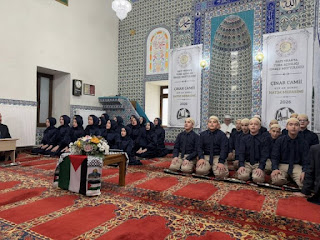
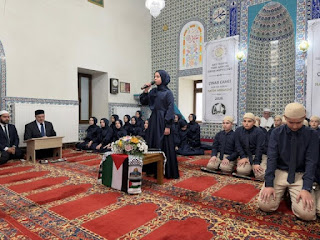
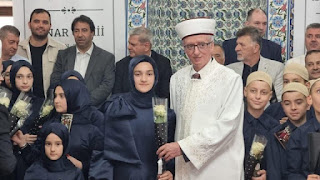
The diplomatic itinerary began on Sunday, May 24, 2026, in Xanthi. There, the graduation ceremony (Hatim) of Quranic School students was instrumentalized as a field of religious and political mobilization, in the presence of Turkish Consul General in Komotini, Aykut Ounal, and minority MPs Hüseyin Zeybek and Burhan Baran.

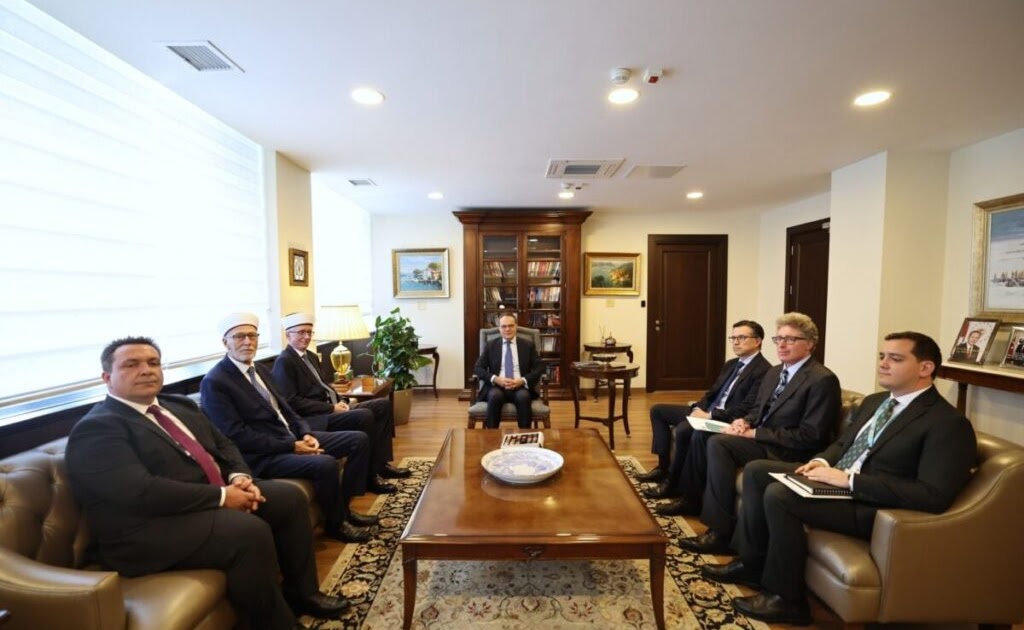
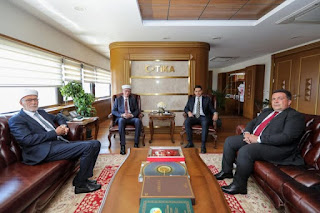
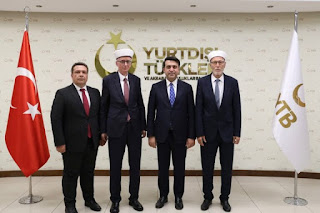
Immediately after, a delegation from the hardline core of the consular bloc—consisting of the pseudo-muftis of Xanthi and Komotini, Mustafa Traba and Ibrahim Serif, as well as the President of the “Turkish Youth of Komotini” (GTGB), Sedat Hasan—traveled hastily to Ankara to receive guidance ahead of a particularly sensitive period for stability in the region.

In the Turkish capital, the pro-consulate group held successive meetings with top mechanisms exercising soft power and diplomacy:

  • YTB & TİKA: Meetings with Abdullah Eren (head of the Presidency for Turks Abroad – YTB) and Abdülhadi Turus (TİKA), organizations that function as financial and educational arms for interventions in Thrace.

  • Turkish Ministry of Foreign Affairs: The delegation was officially received by Turkey’s Deputy Foreign Minister and President of the EU Directorate, Ambassador Mehmet Kemal Bozay.

At exactly the same time, the propaganda thread in Europe was picked up from Germany by ABTTF President Halit Habiboglu. Using the visit of Greek Defense Minister Nikos Dendias to Albania as a pretext, Habiboglu issued an aggressive statement, attempting to equate unequal situations and accusing Greece of “targeting” the minority.

The simultaneous appearance of the pseudo-muftis at the Turkish Foreign Ministry and the international intervention by ABTTF demonstrate absolute coordination under the orders of the neighboring country’s revisionist center, aimed at managing a situation that threatens Ankara’s influence through illegal structures.

Historical & Legal Framework: Thrace vs. Albania

The attempt to equate the Muslim minority of Thrace with the Greek minority of Albania constitutes a monument to legal and historical distortion. The two cases are governed by entirely different regimes:

Characteristic

Greek Minority in Albania

Muslim Minority in Thrace

International Status

Recognized as a National Minority based on Albania’s unilateral declaration in 1921 to the League of Nations and relevant bilateral agreements.

Recognized exclusively as a Religious Minority based on the international and binding Treaty of Lausanne (1923).

Community Composition

Unified ethnic group (ethnic Greeks) historically residing in specific areas (e.g., Northern Epirus).

Three-component community that is not ethnically unified. Consists of three distinct groups: Pomaks, Roma, and ethnic Turks.

Rhetorical Objective

Protection of the historical, linguistic, and religious rights of a recognized national group.

Instrumentalization by the Consulate to label the entire minority as “Turkish,” serving Ankara’s revisionist agenda.

Editor’s Comment

The puzzle of recent days composes a clear picture: Ankara leaves nothing to chance. The instrumentalization of young children at the Xanthi Hatim was used as a communication smokescreen, so that the pro-consulate triad could depart immediately afterward for Turkey. The visit to Ankara’s decision-making centers, shortly before a pivotal confrontation with legality in the Thrace arena, constitutes an attempt to receive specific instructions on how to confront the institutions of the Greek State.

Any institutional or judicial crack in the action of the para-institutional actors will constitute a strong blow to the effort to impose an informal “state within a state” and religious or ethnic fanaticism in the region. That’s why Turkey’s top soft power mechanisms were mobilized.

For us in Thrace, the Greek State’s stance cannot be exhausted in passive monitoring. The real weakening of the pro-consulate bloc will only come when the Greek state fills in practice the gaps exploited by YTB and TİKA. The radical upgrading of public minority education, the economic support of the region, and the daily fortification of equality before the law and equal citizenship are the only weapons to make our Muslim fellow citizens feel secure within the Greek and European legal order, breaking the bonds of fear and consular isolation. The coming hours will show whether legality in Thrace remains non-negotiable.
Source: TAXIARCHISpress

Share:
Nikos Arvanitis
Nikos Arvanitis

Nikos Arvanitis is a journalist and analyst, accredited diplomatic correspondent in Belgrade. He has been monitoring developments in Southeast Europe since 1991, manages the Thracian news website KomotiniPress, and also contributes articles to ViaDiplomacy.

Ankara is in full coordination mode with a dual-track communication and political strategy aimed at consolidating its influence in Thrace, through a synchronized “pincer” operation unfolding simultaneously on two fronts: official contacts in Turkey and propaganda campaigns in Europe.

The diplomatic itinerary began on Sunday, May 24, 2026, in Xanthi. There, the graduation ceremony (Hatim) of Quranic School students was instrumentalized as a field of religious and political mobilization, in the presence of Turkish Consul General in Komotini, Aykut Ounal, and minority MPs Hüseyin Zeybek and Burhan Baran.

Immediately after, a delegation from the hardline core of the consular bloc—consisting of the pseudo-muftis of Xanthi and Komotini, Mustafa Traba and Ibrahim Serif, as well as the President of the “Turkish Youth of Komotini” (GTGB), Sedat Hasan—traveled hastily to Ankara to receive guidance ahead of a particularly sensitive period for stability in the region.

In the Turkish capital, the pro-consulate group held successive meetings with top mechanisms exercising soft power and diplomacy:

At exactly the same time, the propaganda thread in Europe was picked up from Germany by ABTTF President Halit Habiboglu. Using the visit of Greek Defense Minister Nikos Dendias to Albania as a pretext, Habiboglu issued an aggressive statement, attempting to equate unequal situations and accusing Greece of “targeting” the minority.

The simultaneous appearance of the pseudo-muftis at the Turkish Foreign Ministry and the international intervention by ABTTF demonstrate absolute coordination under the orders of the neighboring country’s revisionist center, aimed at managing a situation that threatens Ankara’s influence through illegal structures.

Historical & Legal Framework: Thrace vs. Albania

The attempt to equate the Muslim minority of Thrace with the Greek minority of Albania constitutes a monument to legal and historical distortion. The two cases are governed by entirely different regimes:

Characteristic

Greek Minority in Albania

Muslim Minority in Thrace

International Status

Recognized as a National Minority based on Albania’s unilateral declaration in 1921 to the League of Nations and relevant bilateral agreements.

Recognized exclusively as a Religious Minority based on the international and binding Treaty of Lausanne (1923).

Community Composition

Unified ethnic group (ethnic Greeks) historically residing in specific areas (e.g., Northern Epirus).

Three-component community that is not ethnically unified. Consists of three distinct groups: Pomaks, Roma, and ethnic Turks.

Rhetorical Objective

Protection of the historical, linguistic, and religious rights of a recognized national group.

Instrumentalization by the Consulate to label the entire minority as “Turkish,” serving Ankara’s revisionist agenda.

Editor’s Comment

The puzzle of recent days composes a clear picture: Ankara leaves nothing to chance. The instrumentalization of young children at the Xanthi Hatim was used as a communication smokescreen, so that the pro-consulate triad could depart immediately afterward for Turkey. The visit to Ankara’s decision-making centers, shortly before a pivotal confrontation with legality in the Thrace arena, constitutes an attempt to receive specific instructions on how to confront the institutions of the Greek State.

Any institutional or judicial crack in the action of the para-institutional actors will constitute a strong blow to the effort to impose an informal “state within a state” and religious or ethnic fanaticism in the region. That’s why Turkey’s top soft power mechanisms were mobilized.

For us in Thrace, the Greek State’s stance cannot be exhausted in passive monitoring. The real weakening of the pro-consulate bloc will only come when the Greek state fills in practice the gaps exploited by YTB and TİKA. The radical upgrading of public minority education, the economic support of the region, and the daily fortification of equality before the law and equal citizenship are the only weapons to make our Muslim fellow citizens feel secure within the Greek and European legal order, breaking the bonds of fear and consular isolation. The coming hours will show whether legality in Thrace remains non-negotiable.
newsfire.gr
newsfire.gr
newsfire.gr
newsfire.gr
newsfire.gr
newsfire.gr

Source: TAXIARCHISpress