Necessary Cookies

Required for the site to function. Cannot be disabled.

Analytics Cookies

Help us understand how visitors interact with our site (Google Analytics via GTM).

Marketing Cookies

Used to track visitors and deliver personalised advertisements.

We use cookies to enhance your browsing experience and analyse site traffic. By clicking Accept All, you consent to our use of cookies. Privacy Policy
NewsFire Global
Home News Europe World Christianity Culture Wars Opinion Video
Information
About Us Authors Advertising Terms & Conditions Privacy Policy Contact
R2B Media
R2B NEWSFIRE.GR PAPAFOTIS.GR THRACTION HELLENIC CONSERVATIVES RIGHT2THEBONE YT
News Europe

Battle for Odessa drains strength of city’s residents

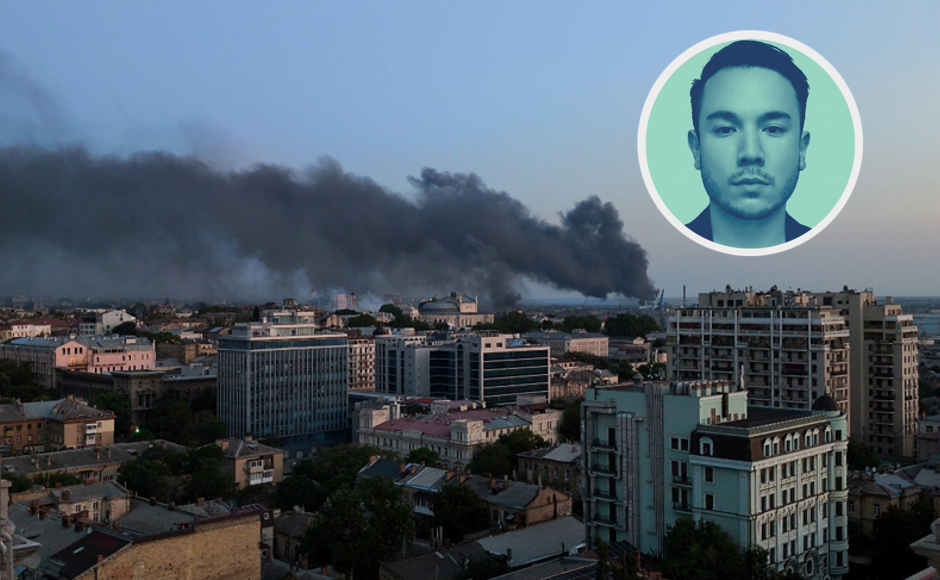
Russian forces launched over 200 drones and missiles at Odessa on August 9, injuring about a dozen civilians and damaging port and energy infrastructure in an economic strangulation strategy.

Dimitris Papafotis
Dimitris Papafotis Editor in Chief
AUGUST 17, 2026 AT 5:56 PM

The attack underscores Russia’s evolving strategy in southern Ukraine, where Moscow appears increasingly focused on economically strangling a city it may never be able to capture militarily. Odessa represents far more than just another Ukrainian urban center on a target list. Without the port facilities in and around Odessa, Ukraine would effectively become a landlocked nation in economic terms, severed from its most vital direct access to global trade.

Grain, vegetable oil, and other export commodities flow through these facilities to international markets. Even international humanitarian organizations source Ukrainian agricultural products through these trade routes, and a significant portion of the global population depends on Ukrainian grain for sustenance.

Russia does not need to conquer Odessa to inflict substantial damage on Ukraine’s war effort and economic survival. By making port traffic dangerous and expensive, destroying warehouses, and repeatedly striking energy supply and logistics infrastructure, Moscow can economically exhaust a city that appears militarily unreachable for the foreseeable future. By mid-August, the situation had deteriorated to the point where the port of Ismajil on the Danube was also heavily struck.

Air Defense Struggles Against New Jet-Powered Drones

During the night of the attack, the sky over Odessa glowed red as Ukrainian air defense units fought continuously. Families with children rushed through apartment building stairwells to shelters, sometimes descending ten or more floors, as the first impacts shook the walls.

Ukrainian air defense forces battled relentlessly throughout the night but faced considerable difficulty intercepting the new jet-powered drones that Russia has increasingly deployed. Mobile fire teams worked with electronic warfare systems, machine guns, and increasingly specialized interceptor drones, while a technological arms race unfolded over the city whose individual developmental steps are now measured in months rather than years. What happens above the rooftops of Odessa offers a glimpse into the warfare of coming decades, except the people live inside this testing laboratory.

Civilian Targets Hit in Historic Districts

By morning, black smoke rose over the city known as the Pearl of the Black Sea. The abstract language of military situation reports, which speaks of drones, infrastructure, and intercepted missiles, ended abruptly at blackened facades and burned-out apartments. People had been sleeping here. Some no longer had homes by the next morning.

A cafe on the street handed out free beverages. This establishment also had its windows blown out, and residents wrapped in blankets huddled outside. The fire brigade continued battling the blaze into the early morning hours as flames nearly completely destroyed a historic residential building.

One resident named Leona, a Jewish Ukrainian who has spent her entire life in the building, rejected any military justification for the strike. This was not a military district, definitely not, she stated, adding that she had grown up in the building and it was no military target.

She responded even more contemptuously when confronted with Moscow’s justification for the war that began in February 2022, which even after years of Russian missile attacks on Ukrainian cities has not disappeared from official language: the alleged “denazification” of Ukraine.

Odessa’s Complex Identity Defies Moscow’s Assumptions

Odessa was predominantly Russian-speaking before the war, but Leona emphasized there is no oppression there. She herself speaks both Russian and Ukrainian without issue. Russia started this war, she insisted.

This city was never ethnically clearly sorted and would probably be offended if anyone tried. Ukrainian and Russian influences overlap here, Jewish history cannot be separated from Odessa’s history at all, Greeks and Bulgarians have left their marks, and even today someone can speak Russian and politically understand themselves no less as Ukrainian.

The war has not eliminated this longstanding ambiguity. It has merely disproven an assumption that in Moscow was apparently held as self-evident for a remarkably long time: namely, that the Russian language would eventually also mean Russian political loyalty. However, not everything is rosy for the central government in Kyiv here in Odessa, which has a different sense of identity than the rest of Ukraine.

The technological dimension of the conflict over Odessa’s skies represents a preview of future warfare, where jet-powered drones, electronic warfare systems, and specialized interceptor drones engage in rapid evolutionary cycles. What military planners once projected over years now develops in months, with the civilian population trapped beneath this deadly innovation race.

With information from Junge Freiheit

Share:
Dimitris Papafotis
Dimitris Papafotis

Dimitris Papafotis is the editor-in-chief of NewsFire.GR. He was born and raised in Athens. He studied at the Journalism Workshop (1991-1993). He currently lives in Pyrgos, Ilia, where he has been active in radio and various newspapers, while also maintaining his personal blog, Papafotis.gr.

The attack underscores Russia’s evolving strategy in southern Ukraine, where Moscow appears increasingly focused on economically strangling a city it may never be able to capture militarily. Odessa represents far more than just another Ukrainian urban center on a target list. Without the port facilities in and around Odessa, Ukraine would effectively become a landlocked nation in economic terms, severed from its most vital direct access to global trade.

Grain, vegetable oil, and other export commodities flow through these facilities to international markets. Even international humanitarian organizations source Ukrainian agricultural products through these trade routes, and a significant portion of the global population depends on Ukrainian grain for sustenance.

Russia does not need to conquer Odessa to inflict substantial damage on Ukraine’s war effort and economic survival. By making port traffic dangerous and expensive, destroying warehouses, and repeatedly striking energy supply and logistics infrastructure, Moscow can economically exhaust a city that appears militarily unreachable for the foreseeable future. By mid-August, the situation had deteriorated to the point where the port of Ismajil on the Danube was also heavily struck.

Air Defense Struggles Against New Jet-Powered Drones

During the night of the attack, the sky over Odessa glowed red as Ukrainian air defense units fought continuously. Families with children rushed through apartment building stairwells to shelters, sometimes descending ten or more floors, as the first impacts shook the walls.

Ukrainian air defense forces battled relentlessly throughout the night but faced considerable difficulty intercepting the new jet-powered drones that Russia has increasingly deployed. Mobile fire teams worked with electronic warfare systems, machine guns, and increasingly specialized interceptor drones, while a technological arms race unfolded over the city whose individual developmental steps are now measured in months rather than years. What happens above the rooftops of Odessa offers a glimpse into the warfare of coming decades, except the people live inside this testing laboratory.

Civilian Targets Hit in Historic Districts

By morning, black smoke rose over the city known as the Pearl of the Black Sea. The abstract language of military situation reports, which speaks of drones, infrastructure, and intercepted missiles, ended abruptly at blackened facades and burned-out apartments. People had been sleeping here. Some no longer had homes by the next morning.

A cafe on the street handed out free beverages. This establishment also had its windows blown out, and residents wrapped in blankets huddled outside. The fire brigade continued battling the blaze into the early morning hours as flames nearly completely destroyed a historic residential building.

One resident named Leona, a Jewish Ukrainian who has spent her entire life in the building, rejected any military justification for the strike. This was not a military district, definitely not, she stated, adding that she had grown up in the building and it was no military target.

She responded even more contemptuously when confronted with Moscow’s justification for the war that began in February 2022, which even after years of Russian missile attacks on Ukrainian cities has not disappeared from official language: the alleged “denazification” of Ukraine.

Odessa’s Complex Identity Defies Moscow’s Assumptions

Odessa was predominantly Russian-speaking before the war, but Leona emphasized there is no oppression there. She herself speaks both Russian and Ukrainian without issue. Russia started this war, she insisted.

This city was never ethnically clearly sorted and would probably be offended if anyone tried. Ukrainian and Russian influences overlap here, Jewish history cannot be separated from Odessa’s history at all, Greeks and Bulgarians have left their marks, and even today someone can speak Russian and politically understand themselves no less as Ukrainian.

Emergency services are working at the sites of the Russian strikes that took place this morning and last night. In Kyiv, the fires were quickly extinguished, and emergency work is now ongoing. The Russians injured six people in the city and the region. Kremenchuk and Kryvyi Rih… pic.twitter.com/BVjprWpzQ7

— Volodymyr Zelenskyy / Володимир Зеленський (@ZelenskyyUa) August 16, 2026

The war has not eliminated this longstanding ambiguity. It has merely disproven an assumption that in Moscow was apparently held as self-evident for a remarkably long time: namely, that the Russian language would eventually also mean Russian political loyalty. However, not everything is rosy for the central government in Kyiv here in Odessa, which has a different sense of identity than the rest of Ukraine.

The technological dimension of the conflict over Odessa’s skies represents a preview of future warfare, where jet-powered drones, electronic warfare systems, and specialized interceptor drones engage in rapid evolutionary cycles. What military planners once projected over years now develops in months, with the civilian population trapped beneath this deadly innovation race.

With information from Junge Freiheit

