Necessary Cookies

Required for the site to function. Cannot be disabled.

Analytics Cookies

Help us understand how visitors interact with our site (Google Analytics via GTM).

Marketing Cookies

Used to track visitors and deliver personalised advertisements.

We use cookies to enhance your browsing experience and analyse site traffic. By clicking Accept All, you consent to our use of cookies. Privacy Policy
NewsFire Global
Home News Europe World Christianity Culture Wars Opinion Video
Information
About Us Authors Advertising Terms & Conditions Privacy Policy Contact
R2B Media
R2B NEWSFIRE.GR PAPAFOTIS.GR THRACTION HELLENIC CONSERVATIVES RIGHT2THEBONE YT
News Europe

Back in the USSR: Soviet-Style Control Returns to Europe

European leaders propose peace negotiations with Russia over Ukraine, but Putin's war economy and domestic political constraints make any genuine settlement extremely difficult.
Dimitris Papafotis
Dimitris Papafotis Editor in Chief
JUNE 10, 2026 AT 3:20 PM

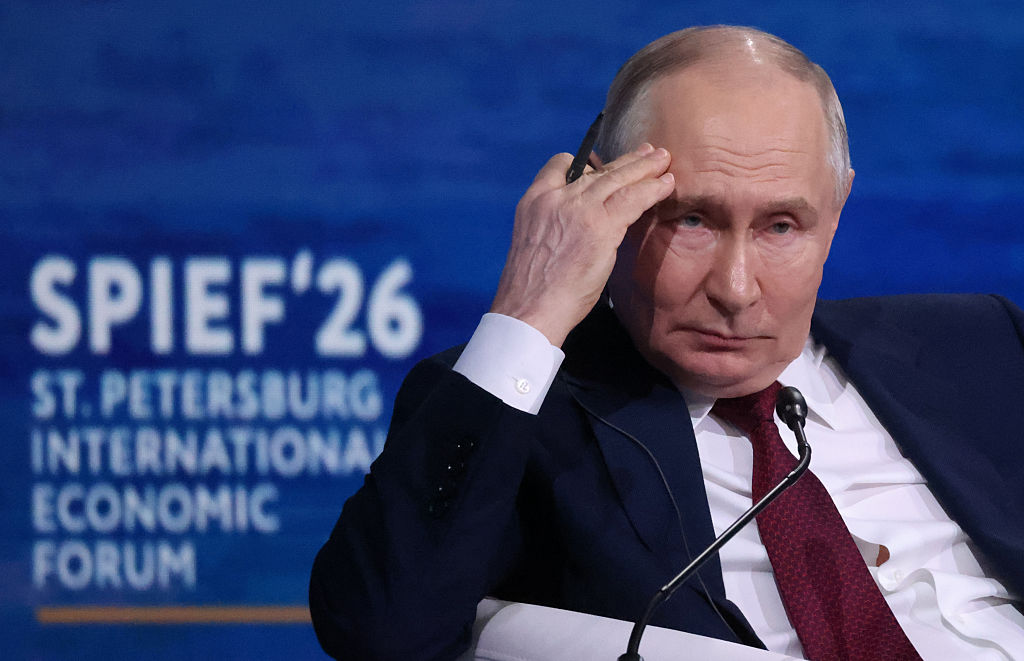
Russian President Vladimir Putin remains locked into his war economy in Ukraine, making any genuine peace settlement extremely difficult despite European hopes that a negotiated deal could end the conflict and potentially lead to regime change in Moscow, according to a new analysis.

Following a weekend summit of European leaders, a spokesman for German Chancellor Friedrich Merz announced that Europe stands ready to assume the leading role in negotiations to halt Russia’s ongoing invasion of Ukraine, as Brussels Signal reports. The proposed conditions include a ceasefire along current battle lines, substantial security guarantees for Ukraine, and maintaining the freeze on Russian assets until full war reparations are paid.

The European proposal’s use of the term “full-scale invasion” signals a critical concession: territories seized before 2022—including Crimea and parts of the Donbas—would effectively become negotiating chips offered to Moscow. Europe appears willing to let Putin claim a partial victory by retaining these earlier conquests in exchange for ending active hostilities.

For Ukrainian President Volodymyr Zelensky to accept such terms, he would almost certainly need ironclad commitments for immediate EU membership following any agreement. Anything less would likely trigger his removal by an outraged Ukrainian population.

Putin responded to the European overture with characteristic contempt, proposing former German Chancellor Gerhard Schröder—widely viewed as compromised by Russian interests—as Europe’s negotiator. The suggestion demonstrates Moscow’s view that Europe lacks standing as an equal partner in discussions with imperial Russia.

The Domestic Trap

According to Brussels Signal, Putin faces severe constraints that make any peace agreement politically dangerous. Keeping only territories held before 2022 would render the subsequent massive losses in personnel and resources meaningless. Russian nationalists and the military establishment would view such an outcome as betrayal, putting Putin’s rule and possibly his life at risk.

European leaders have apparently embraced this calculation, quietly hoping that a humiliating peace deal would lead to Putin’s ouster and Russia’s transformation into what they call a “normal European state.”

That optimistic scenario faces a harsh reality check from recent analysis by Seva Gunitsky and Jeremy Morris published in Foreign Affairs. The scholars argue that after more than four years of conflict, Russia’s entire economy and social structure have been reorganized around war production, creating powerful domestic forces that make ending the conflict nearly impossible.

War Economy Resurrection

Putin has effectively recreated the Soviet war economy model, optimizing Russia’s vast natural resources for military hardware production and enriching party loyalists. The only thriving sectors of the Russian economy are now tied to military spending. The armed forces monopolize state resources while veterans expect privileged access to government support and employment.

Urban elites remain placated through grey market imports of consumer goods, while provincial unrest meets violent suppression. Ending the war would threaten this entire economic structure, from oligarchs who own weapons factories to well-compensated production line workers.

The analysis reveals that Putin is trapped by the war economy he resurrected—but so would be any successor. War, whether hot or cold, has become the essential foundation of contemporary Russian society, the binding force that unites the country.

No Easy Exit

Any potential Putin successor would emerge from the same cadres that have profited from the conflict and would have no incentive to reduce the insular hostility toward Europe that currently unifies Russia. Nearly a million veterans suspicious of any Kremlin policies that diminish their sacrifices in what Russian propaganda portrays as a struggle against the decadent West constitute a severe constraint on any Russian leader.

The concern is that these veterans could form something resembling Germany’s interwar Stahlhelm movement—angry, organized, and highly effective at political intimidation.

The implications for European hopes are stark: removing Putin would not necessarily transform Russia into a peaceful partner, as the entire Russian state structure and economy now depend on maintaining permanent hostility toward the West.

With information from Brussels Signal

Share:
Dimitris Papafotis
Dimitris Papafotis

Dimitris Papafotis is the editor-in-chief of NewsFire.GR. He was born and raised in Athens. He studied at the Journalism Workshop (1991-1993). He currently lives in Pyrgos, Ilia, where he has been active in radio and various newspapers, while also maintaining his personal blog, Papafotis.gr.

Russian President Vladimir Putin remains locked into his war economy in Ukraine, making any genuine peace settlement extremely difficult despite European hopes that a negotiated deal could end the conflict and potentially lead to regime change in Moscow, according to a new analysis.

Following a weekend summit of European leaders, a spokesman for German Chancellor Friedrich Merz announced that Europe stands ready to assume the leading role in negotiations to halt Russia’s ongoing invasion of Ukraine, as Brussels Signal reports. The proposed conditions include a ceasefire along current battle lines, substantial security guarantees for Ukraine, and maintaining the freeze on Russian assets until full war reparations are paid.

The European proposal’s use of the term “full-scale invasion” signals a critical concession: territories seized before 2022—including Crimea and parts of the Donbas—would effectively become negotiating chips offered to Moscow. Europe appears willing to let Putin claim a partial victory by retaining these earlier conquests in exchange for ending active hostilities.

For Ukrainian President Volodymyr Zelensky to accept such terms, he would almost certainly need ironclad commitments for immediate EU membership following any agreement. Anything less would likely trigger his removal by an outraged Ukrainian population.

Putin responded to the European overture with characteristic contempt, proposing former German Chancellor Gerhard Schröder—widely viewed as compromised by Russian interests—as Europe’s negotiator. The suggestion demonstrates Moscow’s view that Europe lacks standing as an equal partner in discussions with imperial Russia.

The Domestic Trap

According to Brussels Signal, Putin faces severe constraints that make any peace agreement politically dangerous. Keeping only territories held before 2022 would render the subsequent massive losses in personnel and resources meaningless. Russian nationalists and the military establishment would view such an outcome as betrayal, putting Putin’s rule and possibly his life at risk.

European leaders have apparently embraced this calculation, quietly hoping that a humiliating peace deal would lead to Putin’s ouster and Russia’s transformation into what they call a “normal European state.”

That optimistic scenario faces a harsh reality check from recent analysis by Seva Gunitsky and Jeremy Morris published in Foreign Affairs. The scholars argue that after more than four years of conflict, Russia’s entire economy and social structure have been reorganized around war production, creating powerful domestic forces that make ending the conflict nearly impossible.

War Economy Resurrection

Putin has effectively recreated the Soviet war economy model, optimizing Russia’s vast natural resources for military hardware production and enriching party loyalists. The only thriving sectors of the Russian economy are now tied to military spending. The armed forces monopolize state resources while veterans expect privileged access to government support and employment.

Urban elites remain placated through grey market imports of consumer goods, while provincial unrest meets violent suppression. Ending the war would threaten this entire economic structure, from oligarchs who own weapons factories to well-compensated production line workers.

The analysis reveals that Putin is trapped by the war economy he resurrected—but so would be any successor. War, whether hot or cold, has become the essential foundation of contemporary Russian society, the binding force that unites the country.

No Easy Exit

Any potential Putin successor would emerge from the same cadres that have profited from the conflict and would have no incentive to reduce the insular hostility toward Europe that currently unifies Russia. Nearly a million veterans suspicious of any Kremlin policies that diminish their sacrifices in what Russian propaganda portrays as a struggle against the decadent West constitute a severe constraint on any Russian leader.

The concern is that these veterans could form something resembling Germany’s interwar Stahlhelm movement—angry, organized, and highly effective at political intimidation.

The implications for European hopes are stark: removing Putin would not necessarily transform Russia into a peaceful partner, as the entire Russian state structure and economy now depend on maintaining permanent hostility toward the West.

With information from Brussels Signal

