Necessary Cookies

Required for the site to function. Cannot be disabled.

Analytics Cookies

Help us understand how visitors interact with our site (Google Analytics via GTM).

Marketing Cookies

Used to track visitors and deliver personalised advertisements.

We use cookies to enhance your browsing experience and analyse site traffic. By clicking Accept All, you consent to our use of cookies. Privacy Policy
NewsFire Global
Home News Europe World Christianity Culture Wars Opinion Video
Information
About Us Authors Advertising Terms & Conditions Privacy Policy Contact
R2B Media
R2B NEWSFIRE.GR PAPAFOTIS.GR THRACTION HELLENIC CONSERVATIVES RIGHT2THEBONE YT
News Culture Wars

America’s 250th Birthday Perfect Time to Reclaim Real History

America's 250th anniversary has reignited debate over the Declaration of Independence as progressive academics challenge the founders' motives while supporters defend revolutionary principles.
Stefanos Banos
Stefanos Banos Staff Writer
JUNE 29, 2026 AT 12:00 AM

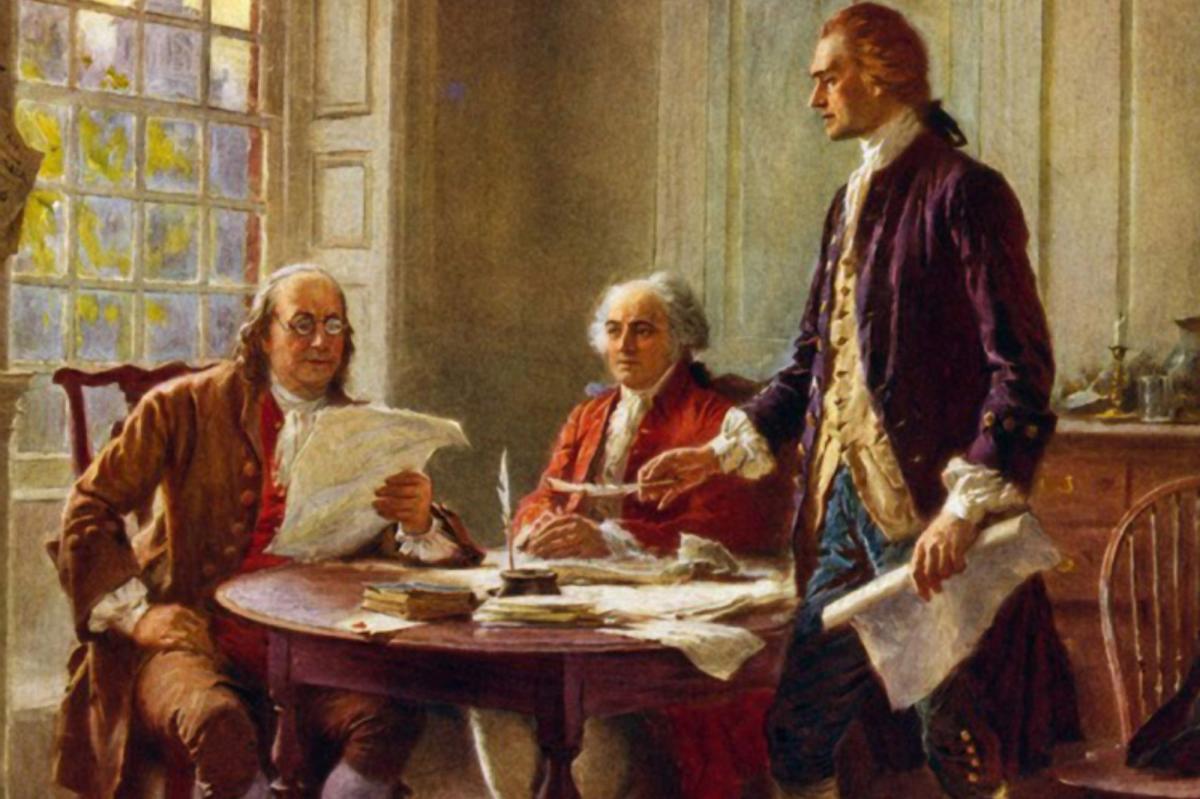
According to New York Post, when the founders affixed their signatures to the Declaration of Independence two and a half centuries ago, they understood the mortal danger they faced. Defying the British crown constituted treason, and the penalty was death.

Dr. Benjamin Rush, Philadelphia’s most prominent physician at the time, later recalled to John Adams in 1811 the grave atmosphere that filled the chamber as delegates were summoned individually to sign what many believed were their own execution orders.

The Declaration’s enduring principles—that all human beings are created equal, that rights derive from God rather than government, and that political authority requires popular consent—continue to inspire citizens today.

Yet more than a century of attacks from left-wing academics have systematically undermined both the founders and the founding itself. Beginning in 1913, historian Charles Austin Beard launched the assault with his work arguing the founders were driven not by liberty but by economic self-interest. Subsequent generations layered on accusations of racism and misogyny. Some historians dismissed the American Revolution as merely incremental change rather than genuine revolution comparable to France’s bloody upheaval.

Historical evidence tells a different story. The concept of self-governance was widely debated across all social classes in colonial America. Edward Gibbon’s history of Rome became a bestseller in America, spreading Enlightenment ideals of civic virtue. Ancient Roman history served as a template for America’s emerging future.

Thomas Paine’s Common Sense ignited revolutionary fervor among the broader population. George Washington, appointed Continental Army commander before the Declaration was even signed, had the pamphlet read aloud to his soldiers. Members of Congress contemplating independence consumed it eagerly. Even detractors who recoiled at Paine’s inflammatory rhetoric acknowledged its profound influence.

During an era when many colonists remained loyal to Britain, and others sought only parliamentary representation, Paine dismantled the notion of divine monarchical authority. He declared America’s cause represented humanity’s cause and proclaimed the time had come to separate. His most powerful assertion was that humanity possessed the power to remake the world anew.

Against this proud historical record, the political left has constructed a false counter-narrative. Writer Nikole Hannah-Jones spearheaded the 1619 Project, promoted by The New York Times and distributed to classrooms nationwide, claiming the founders came to America not for religious liberty but to preserve slavery—an assertion the Puritans would have rejected.

This revisionist account has been taught to American children—a distortion President Donald Trump appears determined to correct through his ambitious 250th anniversary celebration. Under his direction, Washington is receiving a comprehensive restoration. The algae-covered Tidal Basin will soon feature water dyed American flag blue. Historical figures toppled by revisionists are being restored to their pedestals.

In Freedom Square near 14th and Pennsylvania Avenue, Caesar Rodney is making his return. Despite suffering from painful skin cancer, Rodney rode 80 miles through a storm to cast Delaware’s vote for independence, ensuring all 13 colonies affirmed the measure. His equestrian statue, destroyed during the 2020 riots, stands upright once more.

As Trump champions patriotism, radical Democrats reject the American experiment—a system where, as Secretary of State Marco Rubio recently observed, citizens are not constrained by birth circumstances, skin color, or ethnicity.

In New York, Mayor Zohran Mamdani has prohibited gatherings exceeding 20 people for the celebration, which includes a Times Square ball drop as July 3 becomes July 4.

In Philadelphia, birthplace of both the Declaration and Constitution, the city’s museum has unveiled a new exhibit that reads like an apology for American history. Its message: slaves built the nation while white settlers colonized it, and the phrase “all men are created equal” excluded most people.

Yet Thomas Jefferson’s words resonated powerfully at the time. Slaves, Native Americans, and women all heard the call to equality. John Adams worried the founders were unleashing forces beyond their control.

Adams warned there would be no end to new claims for rights—women would demand suffrage, young men would assert their interests, and the propertyless would demand equal voice with the wealthy.

In his original draft of the Declaration, Jefferson included a grievance that would surprise his modern critics: an accusation that King George had waged cruel war against human nature itself by violating the sacred rights of life and liberty of a distant people—a reference to the slave trade that Southern delegates forced him to remove.

With information from New York Post

Share:
Stefanos Banos
Stefanos Banos

Stefanos Banos was born in Piraeus and is an editor at NewsFire.GR, specializing in political analysis and international relations. He graduated from the Department of Communication and Media at the University of Bremen in Germany, where he also completed his Master of Arts in Communication and Media Studies. Married to Zoi, he is a proud father of three boys.

According to New York Post, when the founders affixed their signatures to the Declaration of Independence two and a half centuries ago, they understood the mortal danger they faced. Defying the British crown constituted treason, and the penalty was death.

Dr. Benjamin Rush, Philadelphia’s most prominent physician at the time, later recalled to John Adams in 1811 the grave atmosphere that filled the chamber as delegates were summoned individually to sign what many believed were their own execution orders.

The Declaration’s enduring principles—that all human beings are created equal, that rights derive from God rather than government, and that political authority requires popular consent—continue to inspire citizens today.

Yet more than a century of attacks from left-wing academics have systematically undermined both the founders and the founding itself. Beginning in 1913, historian Charles Austin Beard launched the assault with his work arguing the founders were driven not by liberty but by economic self-interest. Subsequent generations layered on accusations of racism and misogyny. Some historians dismissed the American Revolution as merely incremental change rather than genuine revolution comparable to France’s bloody upheaval.

Historical evidence tells a different story. The concept of self-governance was widely debated across all social classes in colonial America. Edward Gibbon’s history of Rome became a bestseller in America, spreading Enlightenment ideals of civic virtue. Ancient Roman history served as a template for America’s emerging future.

Thomas Paine’s Common Sense ignited revolutionary fervor among the broader population. George Washington, appointed Continental Army commander before the Declaration was even signed, had the pamphlet read aloud to his soldiers. Members of Congress contemplating independence consumed it eagerly. Even detractors who recoiled at Paine’s inflammatory rhetoric acknowledged its profound influence.

During an era when many colonists remained loyal to Britain, and others sought only parliamentary representation, Paine dismantled the notion of divine monarchical authority. He declared America’s cause represented humanity’s cause and proclaimed the time had come to separate. His most powerful assertion was that humanity possessed the power to remake the world anew.

Against this proud historical record, the political left has constructed a false counter-narrative. Writer Nikole Hannah-Jones spearheaded the 1619 Project, promoted by The New York Times and distributed to classrooms nationwide, claiming the founders came to America not for religious liberty but to preserve slavery—an assertion the Puritans would have rejected.

This revisionist account has been taught to American children—a distortion President Donald Trump appears determined to correct through his ambitious 250th anniversary celebration. Under his direction, Washington is receiving a comprehensive restoration. The algae-covered Tidal Basin will soon feature water dyed American flag blue. Historical figures toppled by revisionists are being restored to their pedestals.

In Freedom Square near 14th and Pennsylvania Avenue, Caesar Rodney is making his return. Despite suffering from painful skin cancer, Rodney rode 80 miles through a storm to cast Delaware’s vote for independence, ensuring all 13 colonies affirmed the measure. His equestrian statue, destroyed during the 2020 riots, stands upright once more.

As Trump champions patriotism, radical Democrats reject the American experiment—a system where, as Secretary of State Marco Rubio recently observed, citizens are not constrained by birth circumstances, skin color, or ethnicity.

In New York, Mayor Zohran Mamdani has prohibited gatherings exceeding 20 people for the celebration, which includes a Times Square ball drop as July 3 becomes July 4.

In Philadelphia, birthplace of both the Declaration and Constitution, the city’s museum has unveiled a new exhibit that reads like an apology for American history. Its message: slaves built the nation while white settlers colonized it, and the phrase “all men are created equal” excluded most people.

Yet Thomas Jefferson’s words resonated powerfully at the time. Slaves, Native Americans, and women all heard the call to equality. John Adams worried the founders were unleashing forces beyond their control.

Adams warned there would be no end to new claims for rights—women would demand suffrage, young men would assert their interests, and the propertyless would demand equal voice with the wealthy.

In his original draft of the Declaration, Jefferson included a grievance that would surprise his modern critics: an accusation that King George had waged cruel war against human nature itself by violating the sacred rights of life and liberty of a distant people—a reference to the slave trade that Southern delegates forced him to remove.

With information from New York Post