
Feuga’s Letter: Asks Mitsotakis to Abolish Same-Sex Couples Law
A New Democracy official's letter requesting reconsideration of same-sex marriage law and Antonis Samaras's expulsion has exposed internal party divisions, though the government clarified it does not reflect official policy.
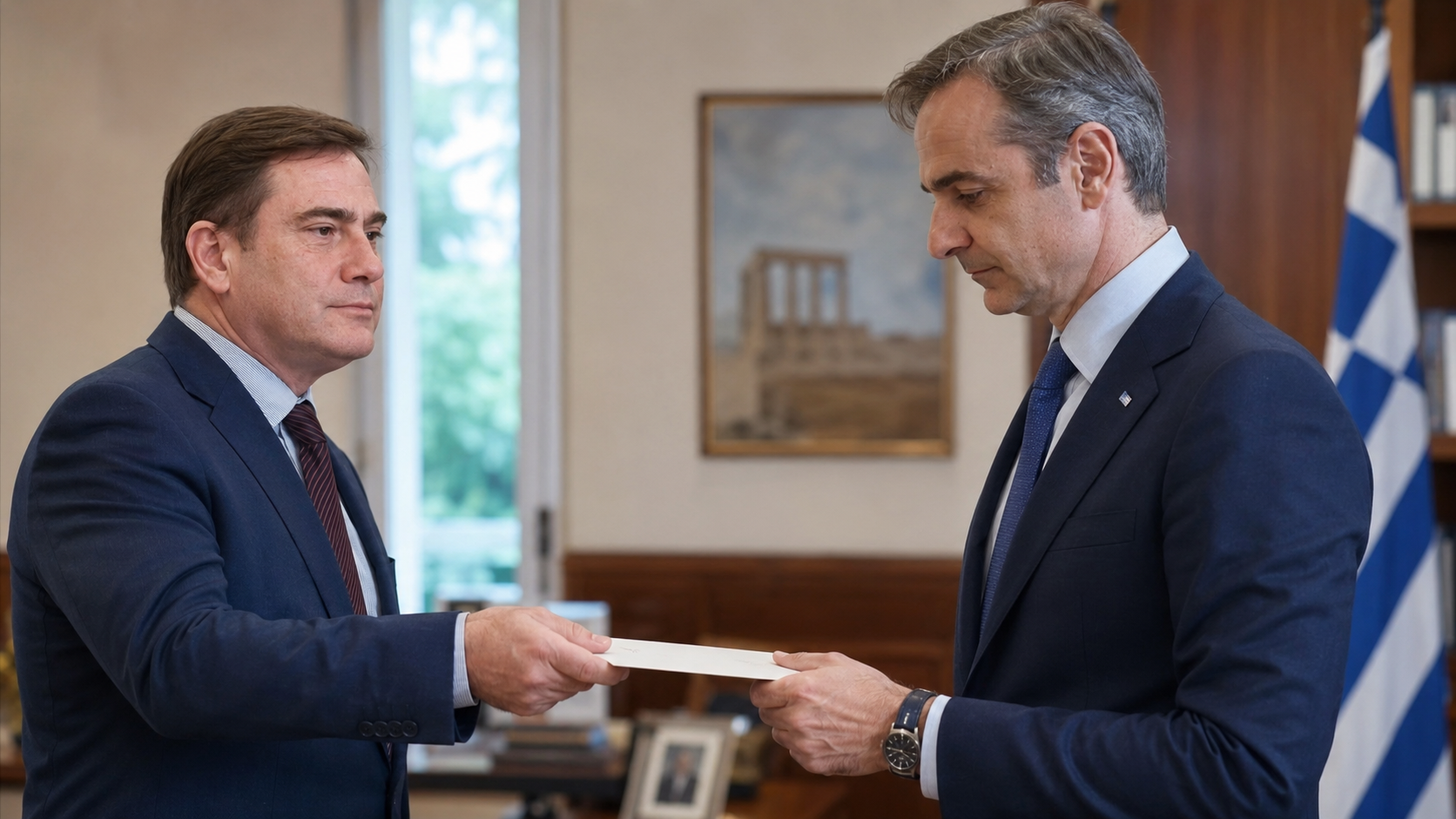

The letter from Vasilis Feygas to Kyriakos Mitsotakis has prominently highlighted the differing views that coexist within New Democracy, particularly on issues concerning values and social sensitivities.
The request for reconsideration of the same-sex couples law
At the center of the letter from ND’s Political Planning Secretary is the request for reconsideration of the legislative framework concerning same-sex marriage. According to Newsbomb, Feygas argued that a significant segment of ND’s traditional electoral base felt that it was not given sufficient hearing during the public debate on the issue, and that an effort is required to restore trust.
This position opens a broader dialogue regarding how the center-right party will continue to maintain balance between its reformist profile and the different sensitivities of its electoral forces.
Party unity and the issue of Antonis Samaras
At the same time, the reference to lifting the expulsion of Antonis Samaras brought back to the political forefront the issue of rallying the center-right party. As Newsbomb reports, supporters of such a move believe that gathering all forces of ND is of vital importance in view of the upcoming electoral contests. However, the Maximos Mansion has chosen to avoid opening a new internal party discussion around this specific issue.
The government’s response
Government spokesman Pavlos Marinakis clarified explicitly that Feygas’s letter does not constitute New Democracy’s position and that there is no intention of changing government policy. In this way, Maximos attempted to separate the personal opinion of an official from official government choices.
The different tendencies within ND
Feygas’s intervention is recorded as a reminder that different tendencies and concerns coexist within ND. The critical issue for the party’s leadership is maintaining party unity, without creating rifts both toward the center and toward its traditional base.
The discussion that has opened proves that issues such as the same-sex couples law and the relationship with historic party figures remain active in the political environment. Noteworthy is that the new debate came from a person who until now maintained a low public profile, contrary to many expectations for strong internal party pressures from the usual power centers.





