Necessary Cookies

Required for the site to function. Cannot be disabled.

Analytics Cookies

Help us understand how visitors interact with our site (Google Analytics via GTM).

Marketing Cookies

Used to track visitors and deliver personalised advertisements.

We use cookies to enhance your browsing experience and analyse site traffic. By clicking Accept All, you consent to our use of cookies. Privacy Policy
NewsFire Global
Home News Europe World Christianity Culture Wars Opinion Video
Information
About Us Authors Advertising Terms & Conditions Privacy Policy Contact
R2B Media
R2B NEWSFIRE.GR PAPAFOTIS.GR THRACTION HELLENIC CONSERVATIVES RIGHT2THEBONE YT
News Culture Wars

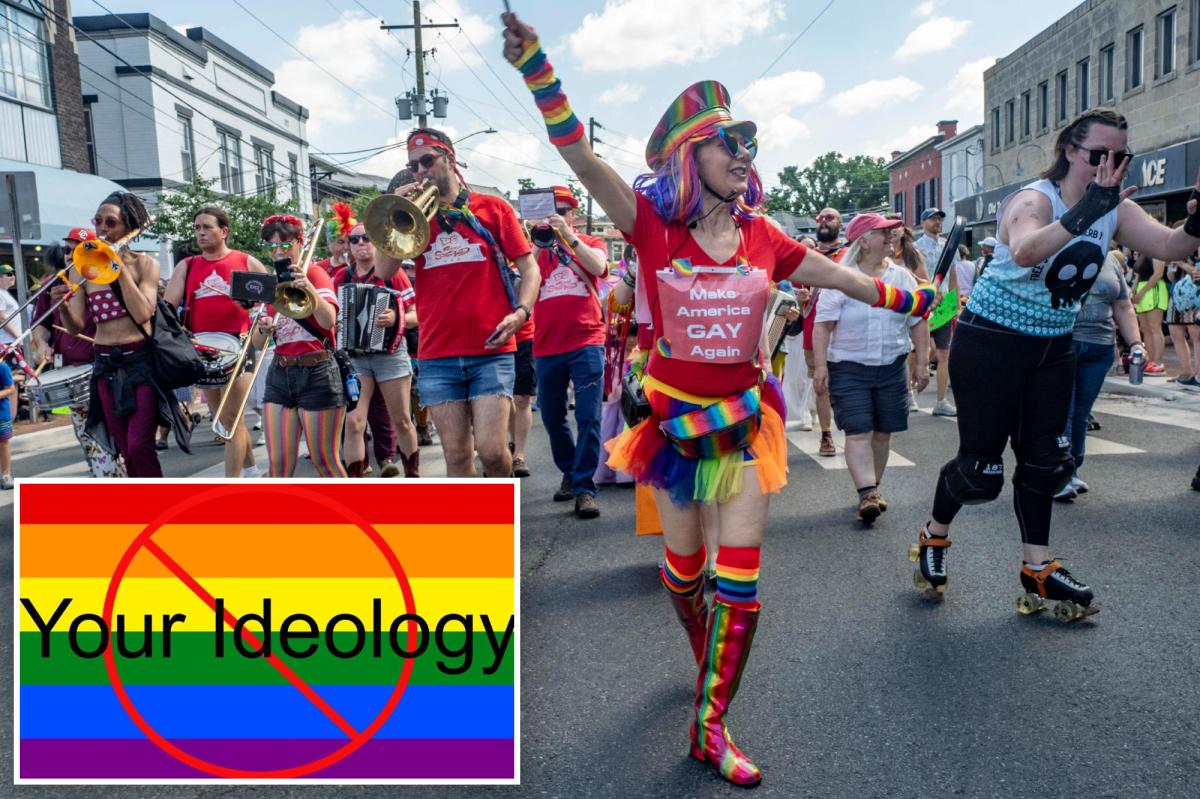
Pride Month Divides America as Many Call for End to Events

A survey of 2,000 Americans found 17 percent oppose Pride Month entirely, with political affiliation the main dividing line as 32 percent of Republicans favor canceling it versus six percent of Democrats.
Stefanos Banos
Stefanos Banos Staff Writer
JUNE 25, 2026 AT 9:02 PM

A newly released survey has found that nearly one in five Americans believe Pride Month should be eliminated entirely, exposing sharp political divisions over the annual celebration of the LGBTQ+ community.

According to New York Post, research conducted by Talker Research polled 2,000 Americans and discovered that 17 percent oppose Pride Month celebrations altogether, while an additional eight percent believe the observance has become excessive and should be reduced in scope.

The survey results paint a picture of a nation deeply split along ideological lines when it comes to LGBTQ+ recognition. While 28 percent of respondents view Pride Month as significant and worthy of support, another 21 percent indicated theoretical support but acknowledged minimal personal investment in the occasion.

Political affiliation emerged as the primary dividing line in attitudes toward Pride Month. Democrats expressed support at more than double the rate of Republicans, with 44 percent versus 17 percent respectively. The gap widened further when examining opposition: nearly one-third of Republican respondents, 32 percent, said Pride should be canceled outright, compared to just six percent of Democrats holding that view.

These findings align with separate data from Gallup showing a recent decline in American support for LGBTQ+ causes, with Republicans driving much of that shift.

Robert Kesten, President and CEO of Stonewall National Museum Archives & Library, offered analysis of the changing landscape for LGBTQ+ Americans. He suggested that community members in less welcoming areas are increasingly concealing their identities or relocating to more accepting regions.

Kesten pointed to media narratives as influential factors shaping public perception. He noted that same-sex marriage approval ratings, while still relatively high, have stopped climbing and begun declining—a development he attributed to sustained messaging campaigns emphasizing traditional values.

Despite the polarization, the survey uncovered some positive indicators. Forty-four percent of all respondents believe support for LGBTQ+ Americans has grown over the past year, a sentiment even more pronounced among LGBTQ+ individuals themselves, at 56 percent. Meanwhile, 39 percent of general respondents and 24 percent of LGBTQ+ respondents perceived no change, while 17 percent overall and 20 percent of LGBTQ+ respondents detected decreased support.

Regarding Pride event attendance, the survey revealed a predictable divide based on identity. Thirty-nine percent of LGBTQ+ respondents plan to attend Pride events in June, compared to just nine percent of non-LGBTQ+ Americans. More than half of non-LGBTQ+ respondents, 54 percent, stated they would not attend and have no interest in doing so, versus only seven percent of LGBTQ+ individuals.

Kesten encouraged broader community participation in Pride events regardless of sexual orientation or gender identity, emphasizing the importance of human connection and communal celebration. He argued that while physical symbols can be removed, personal knowledge and cultural understanding remain indelible.

With information from New York Post

Share:
Stefanos Banos
Stefanos Banos

Stefanos Banos was born in Piraeus and is an editor at NewsFire.GR, specializing in political analysis and international relations. He graduated from the Department of Communication and Media at the University of Bremen in Germany, where he also completed his Master of Arts in Communication and Media Studies. Married to Zoi, he is a proud father of three boys.

A newly released survey has found that nearly one in five Americans believe Pride Month should be eliminated entirely, exposing sharp political divisions over the annual celebration of the LGBTQ+ community.

According to New York Post, research conducted by Talker Research polled 2,000 Americans and discovered that 17 percent oppose Pride Month celebrations altogether, while an additional eight percent believe the observance has become excessive and should be reduced in scope.

The survey results paint a picture of a nation deeply split along ideological lines when it comes to LGBTQ+ recognition. While 28 percent of respondents view Pride Month as significant and worthy of support, another 21 percent indicated theoretical support but acknowledged minimal personal investment in the occasion.

Political affiliation emerged as the primary dividing line in attitudes toward Pride Month. Democrats expressed support at more than double the rate of Republicans, with 44 percent versus 17 percent respectively. The gap widened further when examining opposition: nearly one-third of Republican respondents, 32 percent, said Pride should be canceled outright, compared to just six percent of Democrats holding that view.

These findings align with separate data from Gallup showing a recent decline in American support for LGBTQ+ causes, with Republicans driving much of that shift.

Robert Kesten, President and CEO of Stonewall National Museum Archives & Library, offered analysis of the changing landscape for LGBTQ+ Americans. He suggested that community members in less welcoming areas are increasingly concealing their identities or relocating to more accepting regions.

Kesten pointed to media narratives as influential factors shaping public perception. He noted that same-sex marriage approval ratings, while still relatively high, have stopped climbing and begun declining—a development he attributed to sustained messaging campaigns emphasizing traditional values.

Despite the polarization, the survey uncovered some positive indicators. Forty-four percent of all respondents believe support for LGBTQ+ Americans has grown over the past year, a sentiment even more pronounced among LGBTQ+ individuals themselves, at 56 percent. Meanwhile, 39 percent of general respondents and 24 percent of LGBTQ+ respondents perceived no change, while 17 percent overall and 20 percent of LGBTQ+ respondents detected decreased support.

Regarding Pride event attendance, the survey revealed a predictable divide based on identity. Thirty-nine percent of LGBTQ+ respondents plan to attend Pride events in June, compared to just nine percent of non-LGBTQ+ Americans. More than half of non-LGBTQ+ respondents, 54 percent, stated they would not attend and have no interest in doing so, versus only seven percent of LGBTQ+ individuals.

Kesten encouraged broader community participation in Pride events regardless of sexual orientation or gender identity, emphasizing the importance of human connection and communal celebration. He argued that while physical symbols can be removed, personal knowledge and cultural understanding remain indelible.

With information from New York Post