Necessary Cookies

Required for the site to function. Cannot be disabled.

Analytics Cookies

Help us understand how visitors interact with our site (Google Analytics via GTM).

Marketing Cookies

Used to track visitors and deliver personalised advertisements.

We use cookies to enhance your browsing experience and analyse site traffic. By clicking Accept All, you consent to our use of cookies. Privacy Policy
NewsFire Global
Home News Europe World Christianity Culture Wars Opinion Video
Information
About Us Authors Advertising Terms & Conditions Privacy Policy Contact
R2B Media
R2B NEWSFIRE.GR PAPAFOTIS.GR THRACTION HELLENIC CONSERVATIVES RIGHT2THEBONE YT
News Europe

Left Party bomb drops before convention: Stalin, Mao, Honecker praised

Germany's Die Linke party faces internal crisis after revelations that senior youth organization officials openly sympathized with Stalin, Mao, and expressed extreme anti-Israel views.

Dimitris Papafotis
Dimitris Papafotis Editor in Chief
JUNE 19, 2026 AT 7:12 PM Updated: Jun 19, 2026 6:17 PM

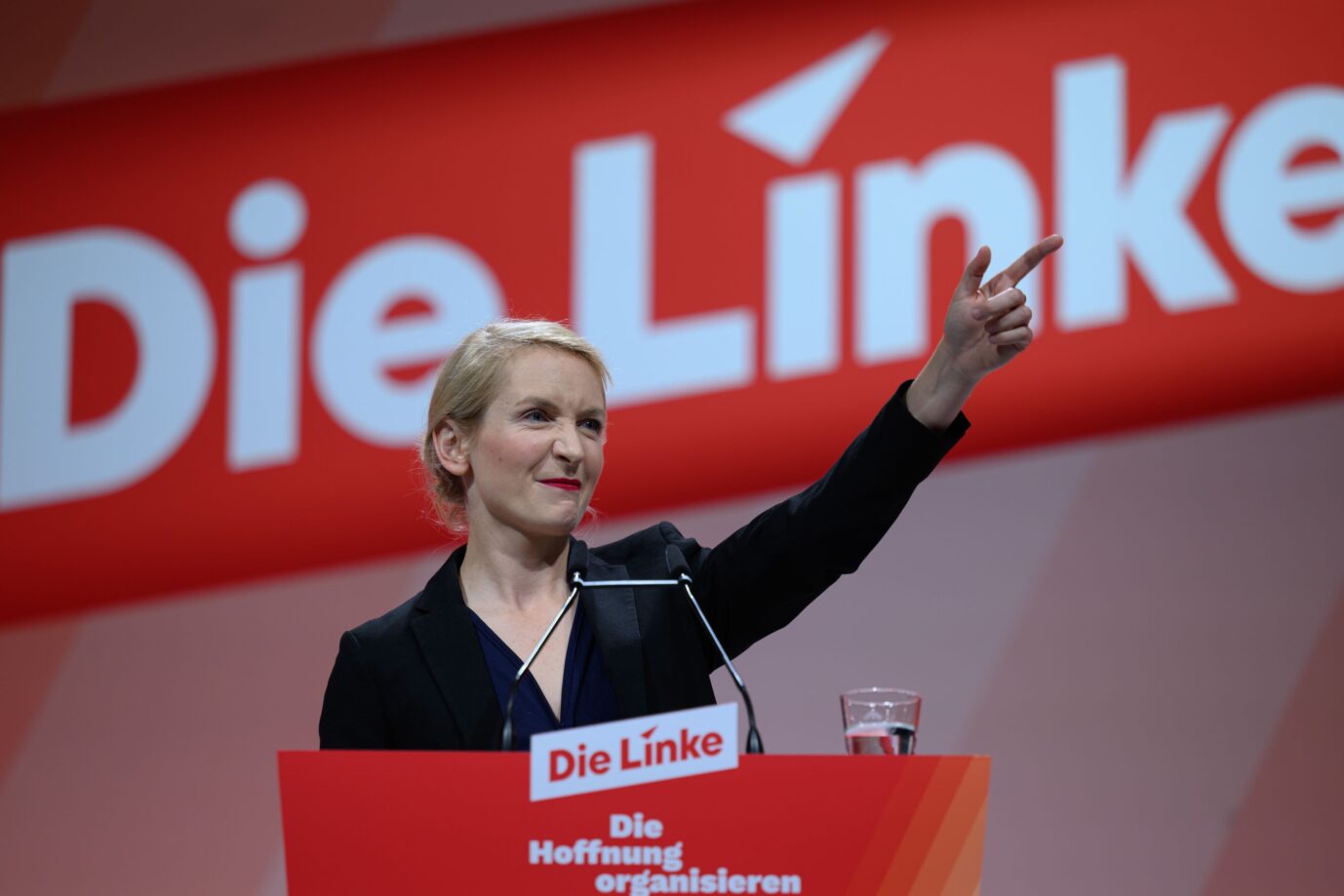
According to Junge Freiheit, broadcaster Bayerischer Rundfunk published comprehensive research on Wednesday exposing that numerous senior officials in the Linksjugend openly sympathize with socialist dictators and dictatorships. The revelations come at a critical moment for party leader Ines Schwerdtner, who faces reelection at this weekend’s congress.

The Bavarian broadcaster’s investigation revealed that at solid’s federal congress in April, an East German flag was displayed in the conference room without objection. More troublingly, the group’s Federal Working Group for Agitation Propaganda, which has since dissolved following the investigation, regularly shared images of Josef Stalin, Mao Zedong, and Erich Honecker on Instagram and explicitly positioned itself within the tradition of socialist states like the German Democratic Republic.

Party Officials Praise Communist Regimes

Internal forum messages documented members writing statements such as “Long live Stalin!” and “Long live Honecker!” One solid official praised the East German National People’s Army as an “anti-militaristic institution that protected peace.” Another advocated reconnecting with the tradition of the Free German Youth, the GDR’s youth organization.

Most disturbingly, one youth official posted inflammatory anti-Israel content in an internal chat group, including an image of a burning Israeli flag accompanied by the phrase “Israel verrecke!” and references to alleged “Israeli concentration camps.”

The investigation carries particular weight because those involved are not fringe members but current and former board members of Linksjugend at federal and state levels. Selina Pfister, one of four federal spokespersons for the youth organization, authored the post about reconnecting with GDR youth traditions. Several of those identified also work as staff members for Die Linke members of the Bundestag.

Party Leadership Faces Growing Radicalization

The timing could hardly be worse for Schwerdtner, who was already bracing for escalating disputes over Israel at the weekend congress. Anti-Israel factions within the party have scored numerous victories in recent months. In March, a state party congress in Lower Saxony condemned “political Zionism,” with portions of the regional organization declaring themselves the “first anti-Zionist state chapter.”

Earlier, in November 2024, the Linksjugend federal congress passed a resolution declaring that the Israeli state project has a “colonial and racist character.”

Party leadership has responded to these developments with critical words but has simultaneously accommodated growing anti-Israel pressure from below. For the weekend congress, officials had hoped to neutralize the issue with a deliberately vague resolution designed to satisfy all factions without resolving underlying divisions. The document notably states that Zionism is “controversially discussed” within the party and emphasizes that debates must not “degenerate into mutual delegitimization.”

Membership Surge Transforms Party Composition

The internal polarization stems partly from dramatic membership growth since 2023. Party rolls have swelled from approximately 50,000 members to more than 120,000 today, fundamentally changing the organization’s character.

As reported by Frankfurter Allgemeine Zeitung citing internal figures, the membership has become significantly younger and more western. Western regional chapters have consequently gained delegate representation at the congress, meaning the party’s supreme body has shifted in a more radical direction.

Regional Split on Stalin Revelations

Reactions to the Bayerischer Rundfunk investigation reveal clear geographical divisions. Eastern state chapters quickly joined federal co-chairs Schwerdtner and Jan van Aken in condemning the revelations. Thuringia state leader Ralf Plötner declared that positive references to Stalinist politics have “no place in our party.”

Saxony-Anhalt party leadership demanded comprehensive clarification, stating the incidents cannot be dismissed as isolated missteps or marginal problems. The reports point to political milieus and a discussion culture in which authoritarian ideas, historical revisionism, and antisemitic thought patterns are apparently tolerated or downplayed, the regional leadership warned.

In stark contrast, Bavaria’s state chapter dismissed the broadcaster’s revelations as “one-sided reporting without sufficient fact-checking” intended to influence internal party debates. Unlike Saxony-Anhalt, Bavaria faces no state elections this year.

The controversy threatens to overshadow the Potsdam congress and further destabilize a party already struggling with existential questions about its identity and direction. With membership composition shifting rapidly and radical elements gaining influence, Die Linke’s ability to maintain unity while navigating fundamental disagreements over antisemitism, historical memory, and authoritarian sympathies remains deeply uncertain.

With information from Junge Freiheit

Share:
Dimitris Papafotis
Dimitris Papafotis

Dimitris Papafotis is the editor-in-chief of NewsFire.GR. He was born and raised in Athens. He studied at the Journalism Workshop (1991-1993). He currently lives in Pyrgos, Ilia, where he has been active in radio and various newspapers, while also maintaining his personal blog, Papafotis.gr.

According to Junge Freiheit, broadcaster Bayerischer Rundfunk published comprehensive research on Wednesday exposing that numerous senior officials in the Linksjugend openly sympathize with socialist dictators and dictatorships. The revelations come at a critical moment for party leader Ines Schwerdtner, who faces reelection at this weekend’s congress.

The Bavarian broadcaster’s investigation revealed that at solid’s federal congress in April, an East German flag was displayed in the conference room without objection. More troublingly, the group’s Federal Working Group for Agitation Propaganda, which has since dissolved following the investigation, regularly shared images of Josef Stalin, Mao Zedong, and Erich Honecker on Instagram and explicitly positioned itself within the tradition of socialist states like the German Democratic Republic.

Party Officials Praise Communist Regimes

Internal forum messages documented members writing statements such as “Long live Stalin!” and “Long live Honecker!” One solid official praised the East German National People’s Army as an “anti-militaristic institution that protected peace.” Another advocated reconnecting with the tradition of the Free German Youth, the GDR’s youth organization.

Most disturbingly, one youth official posted inflammatory anti-Israel content in an internal chat group, including an image of a burning Israeli flag accompanied by the phrase “Israel verrecke!” and references to alleged “Israeli concentration camps.”

The investigation carries particular weight because those involved are not fringe members but current and former board members of Linksjugend at federal and state levels. Selina Pfister, one of four federal spokespersons for the youth organization, authored the post about reconnecting with GDR youth traditions. Several of those identified also work as staff members for Die Linke members of the Bundestag.

Party Leadership Faces Growing Radicalization

The timing could hardly be worse for Schwerdtner, who was already bracing for escalating disputes over Israel at the weekend congress. Anti-Israel factions within the party have scored numerous victories in recent months. In March, a state party congress in Lower Saxony condemned “political Zionism,” with portions of the regional organization declaring themselves the “first anti-Zionist state chapter.”

Earlier, in November 2024, the Linksjugend federal congress passed a resolution declaring that the Israeli state project has a “colonial and racist character.”

Party leadership has responded to these developments with critical words but has simultaneously accommodated growing anti-Israel pressure from below. For the weekend congress, officials had hoped to neutralize the issue with a deliberately vague resolution designed to satisfy all factions without resolving underlying divisions. The document notably states that Zionism is “controversially discussed” within the party and emphasizes that debates must not “degenerate into mutual delegitimization.”

Membership Surge Transforms Party Composition

The internal polarization stems partly from dramatic membership growth since 2023. Party rolls have swelled from approximately 50,000 members to more than 120,000 today, fundamentally changing the organization’s character.

As reported by Frankfurter Allgemeine Zeitung citing internal figures, the membership has become significantly younger and more western. Western regional chapters have consequently gained delegate representation at the congress, meaning the party’s supreme body has shifted in a more radical direction.

Regional Split on Stalin Revelations

Reactions to the Bayerischer Rundfunk investigation reveal clear geographical divisions. Eastern state chapters quickly joined federal co-chairs Schwerdtner and Jan van Aken in condemning the revelations. Thuringia state leader Ralf Plötner declared that positive references to Stalinist politics have “no place in our party.”

Saxony-Anhalt party leadership demanded comprehensive clarification, stating the incidents cannot be dismissed as isolated missteps or marginal problems. The reports point to political milieus and a discussion culture in which authoritarian ideas, historical revisionism, and antisemitic thought patterns are apparently tolerated or downplayed, the regional leadership warned.

In stark contrast, Bavaria’s state chapter dismissed the broadcaster’s revelations as “one-sided reporting without sufficient fact-checking” intended to influence internal party debates. Unlike Saxony-Anhalt, Bavaria faces no state elections this year.

The controversy threatens to overshadow the Potsdam congress and further destabilize a party already struggling with existential questions about its identity and direction. With membership composition shifting rapidly and radical elements gaining influence, Die Linke’s ability to maintain unity while navigating fundamental disagreements over antisemitism, historical memory, and authoritarian sympathies remains deeply uncertain.

With information from Junge Freiheit