Necessary Cookies

Required for the site to function. Cannot be disabled.

Analytics Cookies

Help us understand how visitors interact with our site (Google Analytics via GTM).

Marketing Cookies

Used to track visitors and deliver personalised advertisements.

We use cookies to enhance your browsing experience and analyse site traffic. By clicking Accept All, you consent to our use of cookies. Privacy Policy
NewsFire Global
Home News Europe World Christianity Culture Wars Opinion Video
Information
About Us Authors Advertising Terms & Conditions Privacy Policy Contact
R2B Media
R2B NEWSFIRE.GR PAPAFOTIS.GR THRACTION HELLENIC CONSERVATIVES RIGHT2THEBONE YT
News World

Trump Reverses Course on Ukraine and Backs G7 Line

President Trump aligned with European G7 leaders on Ukraine by backing sanctions and recognizing Moscow's lack of interest in peace, marking a shift in U.S. policy.

Newsroom
Newsroom Staff Writer
JUNE 18, 2026 AT 5:05 PM

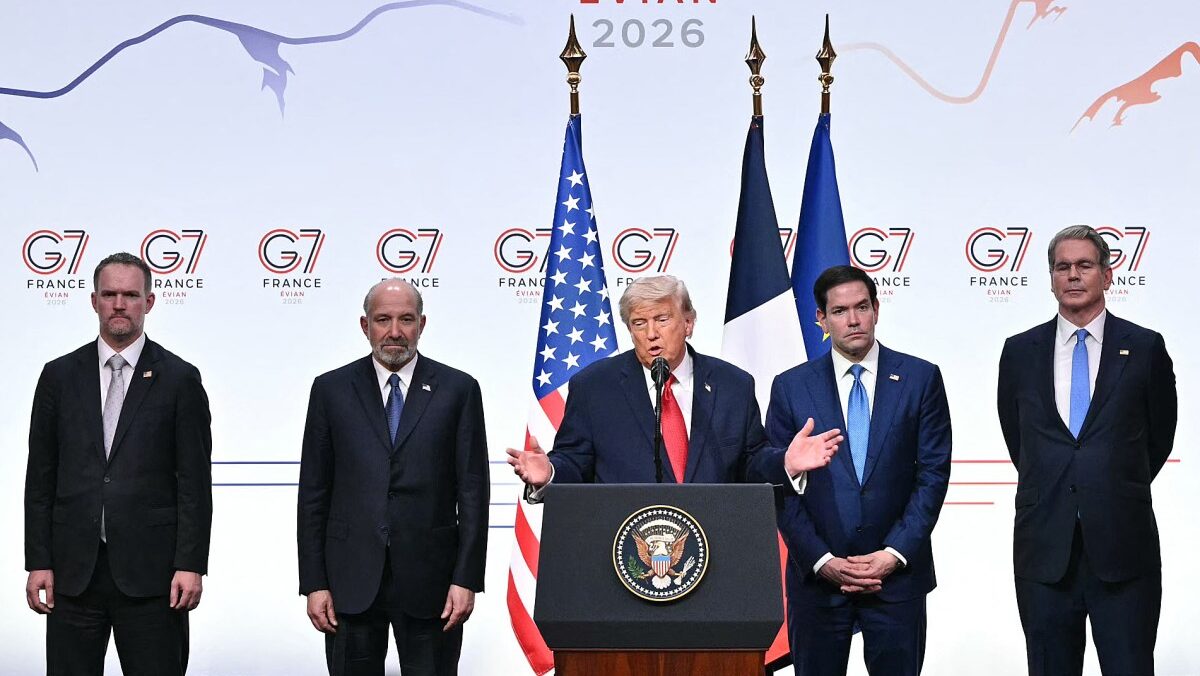
The final day of the G7 summit in Évian delivered an unexpected diplomatic turn, with U.S. President Donald Trump aligning more closely with the European stance on Ukraine than observers had anticipated just weeks earlier.

Following months of inconsistent messaging from Washington, as The European Conservative reports, Trump backed the G7’s final communiqué, endorsed fresh sanctions against Russia, and publicly recognized that Moscow lacks genuine interest in negotiating peace. The recalibration was welcomed by multiple European leaders but also reinforced a growing conviction in Brussels that American foreign policy remains driven by short-term tactical considerations rather than coherent long-term strategy.

The joint statement adopted by G7 leaders reaffirmed commitment to Ukraine’s territorial integrity and outlined plans to strengthen sanctions against the Russian economy, including targeted measures against Moscow’s energy revenues. These sanctions had previously been relaxed amid urgent need for crude oil access during the most challenging phases of the conflict with Iran, but with a reported agreement with Tehran now in place, they appear set for restoration.

German Chancellor Friedrich Merz stated that achieving consensus demanded intensive negotiations, though all members ultimately signed the document. Given Berlin’s track record, however, this may amount to more rhetoric than tangible action.

Even more striking was the response from French President Emmanuel Macron, who described a very profound change in the American position and argued that Trump had concluded Russian President Vladimir Putin currently holds no serious intention of pursuing peace negotiations.

Trump himself noticeably sharpened his rhetoric during the summit. Departing from previous occasions, he expressed frustration with the protracted conflict and voiced support for escalating economic pressure on Russia.

Canadian Prime Minister Mark Carney also publicly acknowledged the shift in Washington’s tone. The development is particularly notable given it follows months of contradictory signals from the White House regarding its Ukraine policy and broader approach to European security.

With information from The European Conservative
Share:
Newsroom
Newsroom

NewsFire.GR is a website created with the hope that the media will rediscover their true identity, which is none other than informing the public about the real stakes of our times. Journalism and political analysis must hold power accountable, not serve it.

The final day of the G7 summit in Évian delivered an unexpected diplomatic turn, with U.S. President Donald Trump aligning more closely with the European stance on Ukraine than observers had anticipated just weeks earlier.

Following months of inconsistent messaging from Washington, as The European Conservative reports, Trump backed the G7’s final communiqué, endorsed fresh sanctions against Russia, and publicly recognized that Moscow lacks genuine interest in negotiating peace. The recalibration was welcomed by multiple European leaders but also reinforced a growing conviction in Brussels that American foreign policy remains driven by short-term tactical considerations rather than coherent long-term strategy.

The joint statement adopted by G7 leaders reaffirmed commitment to Ukraine’s territorial integrity and outlined plans to strengthen sanctions against the Russian economy, including targeted measures against Moscow’s energy revenues. These sanctions had previously been relaxed amid urgent need for crude oil access during the most challenging phases of the conflict with Iran, but with a reported agreement with Tehran now in place, they appear set for restoration.

German Chancellor Friedrich Merz stated that achieving consensus demanded intensive negotiations, though all members ultimately signed the document. Given Berlin’s track record, however, this may amount to more rhetoric than tangible action.

Even more striking was the response from French President Emmanuel Macron, who described a very profound change in the American position and argued that Trump had concluded Russian President Vladimir Putin currently holds no serious intention of pursuing peace negotiations.

Trump himself noticeably sharpened his rhetoric during the summit. Departing from previous occasions, he expressed frustration with the protracted conflict and voiced support for escalating economic pressure on Russia.

Canadian Prime Minister Mark Carney also publicly acknowledged the shift in Washington’s tone. The development is particularly notable given it follows months of contradictory signals from the White House regarding its Ukraine policy and broader approach to European security.

With information from The European Conservative