Necessary Cookies

Required for the site to function. Cannot be disabled.

Analytics Cookies

Help us understand how visitors interact with our site (Google Analytics via GTM).

Marketing Cookies

Used to track visitors and deliver personalised advertisements.

We use cookies to enhance your browsing experience and analyse site traffic. By clicking Accept All, you consent to our use of cookies. Privacy Policy
NewsFire Global
Home News Europe World Christianity Culture Wars Opinion Video
Information
About Us Authors Advertising Terms & Conditions Privacy Policy Contact
R2B Media
R2B NEWSFIRE.GR PAPAFOTIS.GR THRACTION HELLENIC CONSERVATIVES RIGHT2THEBONE YT
News Europe

Russia Intensifies Air Strikes and Advances in Donbass

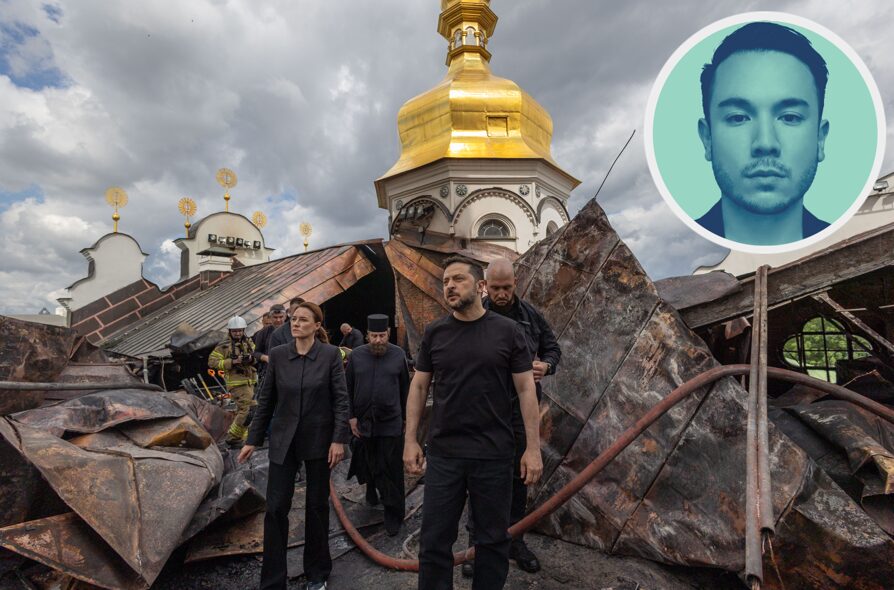
Russian forces damaged the sacred Kyiv Pechersk Lavra monastery in a major aerial assault, contradicting years of Kremlin propaganda that promised such Orthodox sites would never be targeted.

Dimitris Papafotis
Dimitris Papafotis Editor in Chief
JUNE 18, 2026 AT 5:25 AM

The Kyiv Pechersk Lavra, a UNESCO World Heritage Site and one of the most significant Orthodox monasteries in Eastern Europe, was damaged during a nighttime attack on June 14 that killed at least eleven people and injured dozens more. Ukrainian authorities recovered wreckage from a Russian Geran or Shahed drone at the site, directly contradicting Moscow’s claim that a misfired Ukrainian Patriot interceptor missile caused the damage.

Russian President Vladimir Putin reaffirmed after the St. Petersburg Economic Forum that he remains unwilling to negotiate with Ukrainian President Volodymyr Zelensky and intends to continue the military conquest of territories Russia claims as its own. The latest large-scale attack on Kyiv involved more than 600 drones and approximately 70 missiles, according to Ukrainian reports, with a high proportion of ballistic systems against which Ukrainian air defenses have limited effectiveness.

Moscow’s denial rings hollow to observers who note a simple logical flaw in the Russian narrative. Why would Ukrainian Patriot missiles be flying over Kyiv at all if Russia had not first launched drones and missiles at the capital? The strike also demolished costume warehouses belonging to Ukraine’s film industry, destroying over one million costumes from the Soviet and Ukrainian cinema eras.

Broken Promises and Sacred Sites

The attack represents a stark reversal of public assurances made by prominent Russian state television host Margarita Simonyan in 2022. Simonyan, an influential propagandist, had declared on air that Russia would never bomb Kyiv specifically because the Lavra stands there as a sacred site for all Orthodox Russians, including those in Russia itself.

Recent weeks have seen an apparent pattern of deliberate Russian strikes on cultural infrastructure including monasteries, churches, museums, and heritage sites across Ukraine. In the city of Kharkiv, several firefighters were killed while extinguishing a blaze at a post office when a second Russian strike hit the same building, targeting first responders. Ukrainian officials characterized this as a so-called double tap attack, a tactic designed to maximize casualties among emergency personnel. Russia’s Defense Ministry has not commented on the incident and continues to maintain that Russian forces have committed no war crimes and strike only military targets.

Ukraine Targets Russian Logistics in the South

While Russia attempts to break Ukrainian resistance through sustained aerial bombardment, the operational situation in the southern theater is shifting in Ukraine’s favor. Kyiv has conducted an increasingly effective drone campaign for months against Russian logistics networks in occupied territories, targeting not frontline positions but the critical infrastructure behind them. Bridges, roads, rail junctions, fuel depots, electrical substations, command posts, air defense positions, and supply routes to Crimea have all come under systematic attack.

The so-called land bridge connecting Russia through occupied Donetsk, Zaporizhzhia, and Kherson oblasts to the Crimean peninsula faces growing pressure. Russian military observers have begun expressing open concern about the sustainability of their positions. Rybar, one of the most influential Russian military channels on Telegram, acknowledged the enemy’s intentions are clear and warned that by disrupting logistics to Crimea, Ukrainian forces are pushing Russian troops in the southeast into a major crisis.

Another channel, Military Informant, described Ukraine’s objective as unambiguous: to keep the Chonhar bridge blocked through repeated strikes. The channel cautioned that by autumn, Ukrainian forces may have the capability to cause frequent power outages on the peninsula, potentially rendering it nearly untenable. Nationalist commentator Maksim Kalashnikov offered an even sharper assessment, claiming that Ukrainian forces are gaining the upper hand in the south with the intention of severing the land bridge entirely and effectively cutting off Russian troops in Kherson and Crimea.

No Immediate Collapse, But Strategic Pressure Mounts

Operationally, this does not mean the Russian southern front faces imminent collapse. Ukraine is not currently conducting a large-scale offensive comparable to summer 2023 operations. Instead, Kyiv appears to be pursuing a methodical attrition campaign designed to systematically degrade Russian logistical capacity and force difficult strategic choices on Moscow’s military leadership.

The combination of sustained Russian strikes on civilian and cultural targets in Ukrainian cities and Ukraine’s growing effectiveness in disrupting Russian rear-area operations suggests the conflict remains far from any resolution, despite the arrival of summer. Putin’s refusal to engage in negotiations and his insistence on territorial conquest indicate Moscow has no intention of altering its strategic objectives, even as operational realities on the ground grow increasingly challenging for Russian forces in the south.

With information from Junge Freiheit

Share:
Dimitris Papafotis
Dimitris Papafotis

Dimitris Papafotis is the editor-in-chief of NewsFire.GR. He was born and raised in Athens. He studied at the Journalism Workshop (1991-1993). He currently lives in Pyrgos, Ilia, where he has been active in radio and various newspapers, while also maintaining his personal blog, Papafotis.gr.

The Kyiv Pechersk Lavra, a UNESCO World Heritage Site and one of the most significant Orthodox monasteries in Eastern Europe, was damaged during a nighttime attack on June 14 that killed at least eleven people and injured dozens more. Ukrainian authorities recovered wreckage from a Russian Geran or Shahed drone at the site, directly contradicting Moscow’s claim that a misfired Ukrainian Patriot interceptor missile caused the damage.

Footage of the attack on Kyiv last night. pic.twitter.com/ddIJgDepSe

— WarTranslated (@wartranslated) June 15, 2026

Russian President Vladimir Putin reaffirmed after the St. Petersburg Economic Forum that he remains unwilling to negotiate with Ukrainian President Volodymyr Zelensky and intends to continue the military conquest of territories Russia claims as its own. The latest large-scale attack on Kyiv involved more than 600 drones and approximately 70 missiles, according to Ukrainian reports, with a high proportion of ballistic systems against which Ukrainian air defenses have limited effectiveness.

Russian propagandist Margarita Simonyan said: “We will never bomb Kyiv for one simple reason

There are our sacred sites in Kyiv, and neither Vladimir Vladimirovich nor Sergey Kuzhugetovich will ever make a decision to bomb, for example, the Kyiv Pechersk Lavra. That is simply… pic.twitter.com/U2rngFoZgE

— NEXTA (@nexta_tv) June 15, 2026

Moscow’s denial rings hollow to observers who note a simple logical flaw in the Russian narrative. Why would Ukrainian Patriot missiles be flying over Kyiv at all if Russia had not first launched drones and missiles at the capital? The strike also demolished costume warehouses belonging to Ukraine’s film industry, destroying over one million costumes from the Soviet and Ukrainian cinema eras.

Broken Promises and Sacred Sites

The attack represents a stark reversal of public assurances made by prominent Russian state television host Margarita Simonyan in 2022. Simonyan, an influential propagandist, had declared on air that Russia would never bomb Kyiv specifically because the Lavra stands there as a sacred site for all Orthodox Russians, including those in Russia itself.

Ukrainian emergency crews battling the fire at the Dormition Cathedral of the Kyiv Pechersk Lavra following the Russian strike. https://t.co/RCHGEfYrEN pic.twitter.com/Do7xz7pFmq

— Special Kherson Cat 🐈🇺🇦 (@bayraktar_1love) June 15, 2026

Recent weeks have seen an apparent pattern of deliberate Russian strikes on cultural infrastructure including monasteries, churches, museums, and heritage sites across Ukraine. In the city of Kharkiv, several firefighters were killed while extinguishing a blaze at a post office when a second Russian strike hit the same building, targeting first responders. Ukrainian officials characterized this as a so-called double tap attack, a tactic designed to maximize casualties among emergency personnel. Russia’s Defense Ministry has not commented on the incident and continues to maintain that Russian forces have committed no war crimes and strike only military targets.

Ukraine Targets Russian Logistics in the South

While Russia attempts to break Ukrainian resistance through sustained aerial bombardment, the operational situation in the southern theater is shifting in Ukraine’s favor. Kyiv has conducted an increasingly effective drone campaign for months against Russian logistics networks in occupied territories, targeting not frontline positions but the critical infrastructure behind them. Bridges, roads, rail junctions, fuel depots, electrical substations, command posts, air defense positions, and supply routes to Crimea have all come under systematic attack.

The so-called land bridge connecting Russia through occupied Donetsk, Zaporizhzhia, and Kherson oblasts to the Crimean peninsula faces growing pressure. Russian military observers have begun expressing open concern about the sustainability of their positions. Rybar, one of the most influential Russian military channels on Telegram, acknowledged the enemy’s intentions are clear and warned that by disrupting logistics to Crimea, Ukrainian forces are pushing Russian troops in the southeast into a major crisis.

Another channel, Military Informant, described Ukraine’s objective as unambiguous: to keep the Chonhar bridge blocked through repeated strikes. The channel cautioned that by autumn, Ukrainian forces may have the capability to cause frequent power outages on the peninsula, potentially rendering it nearly untenable. Nationalist commentator Maksim Kalashnikov offered an even sharper assessment, claiming that Ukrainian forces are gaining the upper hand in the south with the intention of severing the land bridge entirely and effectively cutting off Russian troops in Kherson and Crimea.

No Immediate Collapse, But Strategic Pressure Mounts

Operationally, this does not mean the Russian southern front faces imminent collapse. Ukraine is not currently conducting a large-scale offensive comparable to summer 2023 operations. Instead, Kyiv appears to be pursuing a methodical attrition campaign designed to systematically degrade Russian logistical capacity and force difficult strategic choices on Moscow’s military leadership.

The combination of sustained Russian strikes on civilian and cultural targets in Ukrainian cities and Ukraine’s growing effectiveness in disrupting Russian rear-area operations suggests the conflict remains far from any resolution, despite the arrival of summer. Putin’s refusal to engage in negotiations and his insistence on territorial conquest indicate Moscow has no intention of altering its strategic objectives, even as operational realities on the ground grow increasingly challenging for Russian forces in the south.

With information from Junge Freiheit

