June 17, 1953 Uprising: “The Hour of Freedom Has Struck”
Seventy-two years ago, up to 1.5 million East Germans in over 700 cities rose up against communist rule in one of the Cold War's most significant anti-totalitarian uprisings.
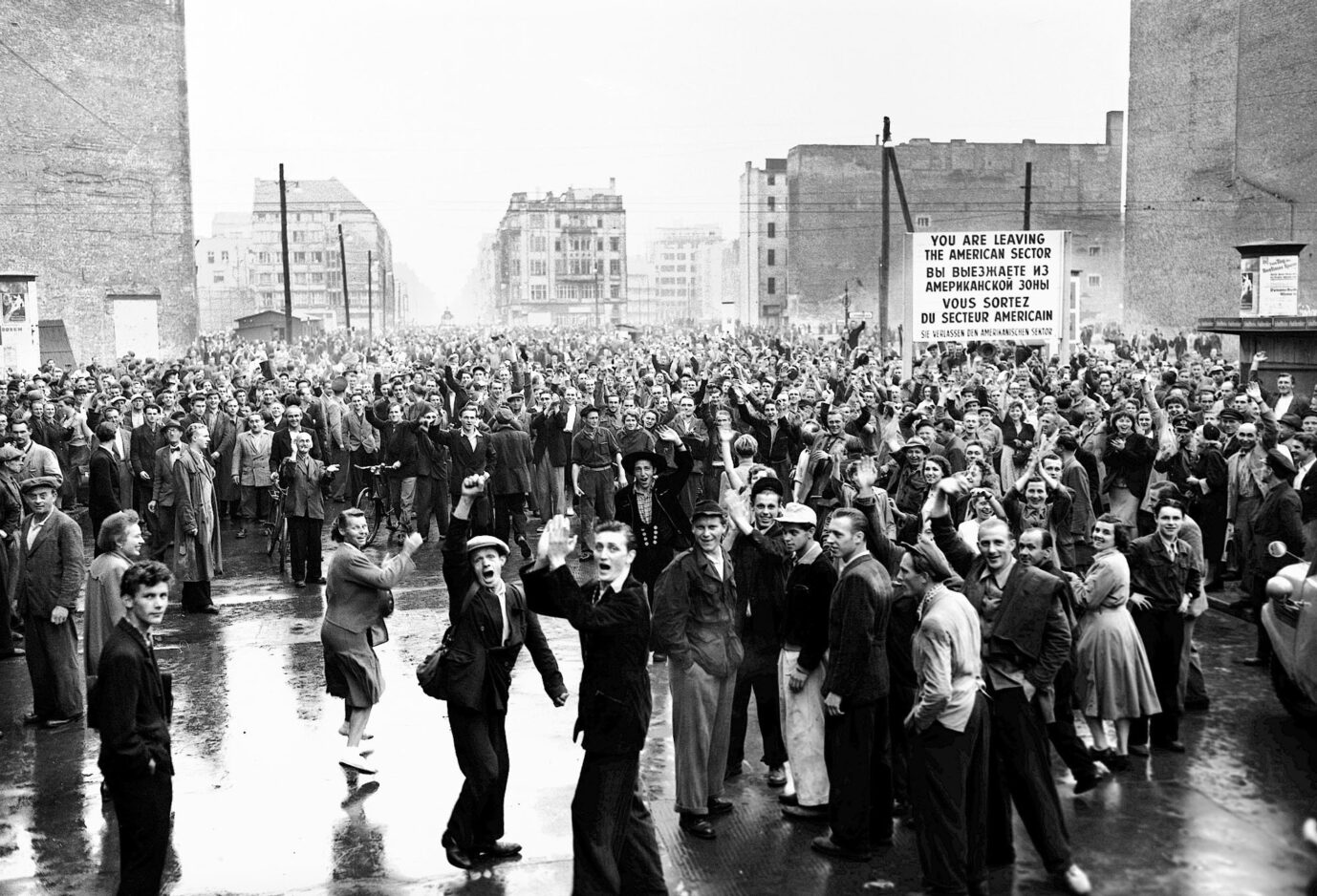
According to Junge Freiheit, the rebellion began with a provocative banner hung at the Handel monument in Halle’s marketplace: “Goatee, belly and glasses are not the people’s will!” The characterizations targeted the communist leadership triumvirate. “Glasses” referred to Prime Minister Otto Grotewohl, “belly” to President Wilhelm Pieck, and “goatee” to Walter Ulbricht, General Secretary of the Socialist Unity Party’s Central Committee and by far the most powerful politician in Soviet-occupied Germany. Approximately 90,000 people took to the streets in Halle alone, representing nearly one-third of the city’s population at the time.
The uprising actually began before that Wednesday and continued beyond it in various locations across central Germany. While the protests in East Berlin gained international attention, demonstrations in the central German regions developed the greatest impact. In Görlitz, protesters succeeded in overthrowing the regime for several hours. An elderly Social Democrat proclaimed the moment as the hour of freedom after eight years of enforced silence.
Economic Mismanagement Fueled Discontent
The groundwork for the revolt was laid long before June 1953. Since the formation of the German Democratic Republic, support for Socialist Unity Party policies had steadily eroded, even among those initially sympathetic to left-wing ideals. Ilko-Sascha Kowalczuk, an historian of the period, now characterizes the party’s pre-uprising policies as a “cold war against its own society.”
At its Second Party Conference in July 1952, the Socialist Unity Party had decreed that socialism would be “systematically constructed” in East Germany. This decision intensified the Sovietization of the country and solidified German division. The regime increasingly militarized society and persecuted churches, particularly targeting the Protestant “Young Congregation” youth movement.
The economy was reoriented toward heavy industry at the expense of other sectors. Central planning drove expansion of the “people’s own sector” and forced collectivization of agriculture while suppressing private enterprise. These measures were implemented under the slogan of “intensification of class struggle” through massive coercion and terror. The regime destroyed existing or newly rebuilt economic structures for ideological reasons, worsening the already war-damaged supply situation for the population. Inflation climbed.
Increased Work Quotas Sparked the Revolt
The trigger point came with increased work norms imposed by the East German leadership attempting to remedy an economic crisis largely of its own making. Berlin planned to make distribution of factory canteen meals contingent on meeting work quotas. These decrees markedly increased dissatisfaction and strengthened flight movements to West Germany. Even before the turn of 1952-53, numerous strikes had been recorded.
Moscow monitored developments in its occupation zone with growing concern about declining stability. In early June 1953, the Kremlin summoned a Socialist Unity Party delegation to Moscow with instructions to implement “measures to restore the political situation.” The party was forced to engage in self-criticism and announce significant corrections. The population received the resulting communiqué with mixed feelings: satisfaction on one hand, but also viewing it as proof of Berlin’s political incompetence. Critically, the work norm increases were initially not addressed, then later explicitly justified.
On June 15 and 16, construction workers on Stalinallee (now Karl-Marx-Allee) and employees of Friedrichhain Hospital demonstrated. A general strike was called for June 17. Many citizens saw the weakness of the Socialist Unity Party system, exposed after the Moscow rebuke, as an opportunity to express dissatisfaction and push for changes up to and including regime overthrow. A conflagration spread rapidly. People demonstrated, struck, and stormed facilities of the party, People’s Police, and Ministry for State Security. Protesters vandalized particularly hated symbols and freed prisoners.
Social Demands Quickly Turned Political
Social grievances rapidly transformed into political demands. People called for price reductions and withdrawal of new work norms in many locations. Calls arose for free elections, freedom of speech and press, removal of party functionaries from workplaces, and German reunification. Citizens repeatedly sang the German national anthem.
While leadership groups like strike committees formed locally and individuals spontaneously assumed leadership roles, no coordinated approach, agreed-upon goals, or concrete plans for post-regime governance emerged. Each participating location had its own uprising narrative. The overall picture of the popular revolt stands as a mosaic of numerous individual events.
In one emblematic moment, Minister Fritz Selbmann called out to protesting workers in Berlin that he himself was a worker, only to hear the retort that he had long since forgotten that fact. At least Selbmann confronted the demonstrators, while Ulbricht and other party leadership sought protection from Soviet occupiers in Karlshorst.
The uprising was ultimately crushed by Soviet military force. The events of June 17, 1953 demonstrated that even under totalitarian conditions, popular resistance remained possible, foreshadowing the eventual collapse of communist rule in Germany decades later.
With information from Junge Freiheit