Necessary Cookies

Required for the site to function. Cannot be disabled.

Analytics Cookies

Help us understand how visitors interact with our site (Google Analytics via GTM).

Marketing Cookies

Used to track visitors and deliver personalised advertisements.

We use cookies to enhance your browsing experience and analyse site traffic. By clicking Accept All, you consent to our use of cookies. Privacy Policy
NewsFire Global
Home News Europe World Christianity Culture Wars Opinion Video
Information
About Us Authors Advertising Terms & Conditions Privacy Policy Contact
R2B Media
R2B NEWSFIRE.GR PAPAFOTIS.GR THRACTION HELLENIC CONSERVATIVES RIGHT2THEBONE YT
News Europe

Berlin convicted of racism for police overweighting skin color

A Berlin court ordered the city to pay 500 euros to a black man after police ran a data check on him despite his hairstyle not matching a suspect's description, ruling it racial discrimination.

Stefanos Banos
Stefanos Banos Staff Writer
JUNE 17, 2026 AT 3:45 PM

The case, decided by the Mitte District Court, stems from an incident in January 2023 when officers in Berlin’s Friedrichshain district observed what they believed to be a drug transaction on Revaler Street, an area known locally as the “Technostrich” and notorious for its nightlife and drug trade.

When police moved to conduct a check, one suspect fled the scene. Officers recovered a micro test tube containing a suspicious substance from the ground. The fleeing individual was described as a black man wearing a dark hooded jacket and sporting dreadlocks.

Shortly afterward, police spotted another black man inside a burger restaurant across the street. He was also wearing a dark hooded jacket, but had short, curly hair rather than dreadlocks. Officers demanded his identification, leading to an extended verbal exchange. The man repeatedly pointed out that his hairstyle did not match the description of the suspect. Police nevertheless proceeded to run a data check on him.
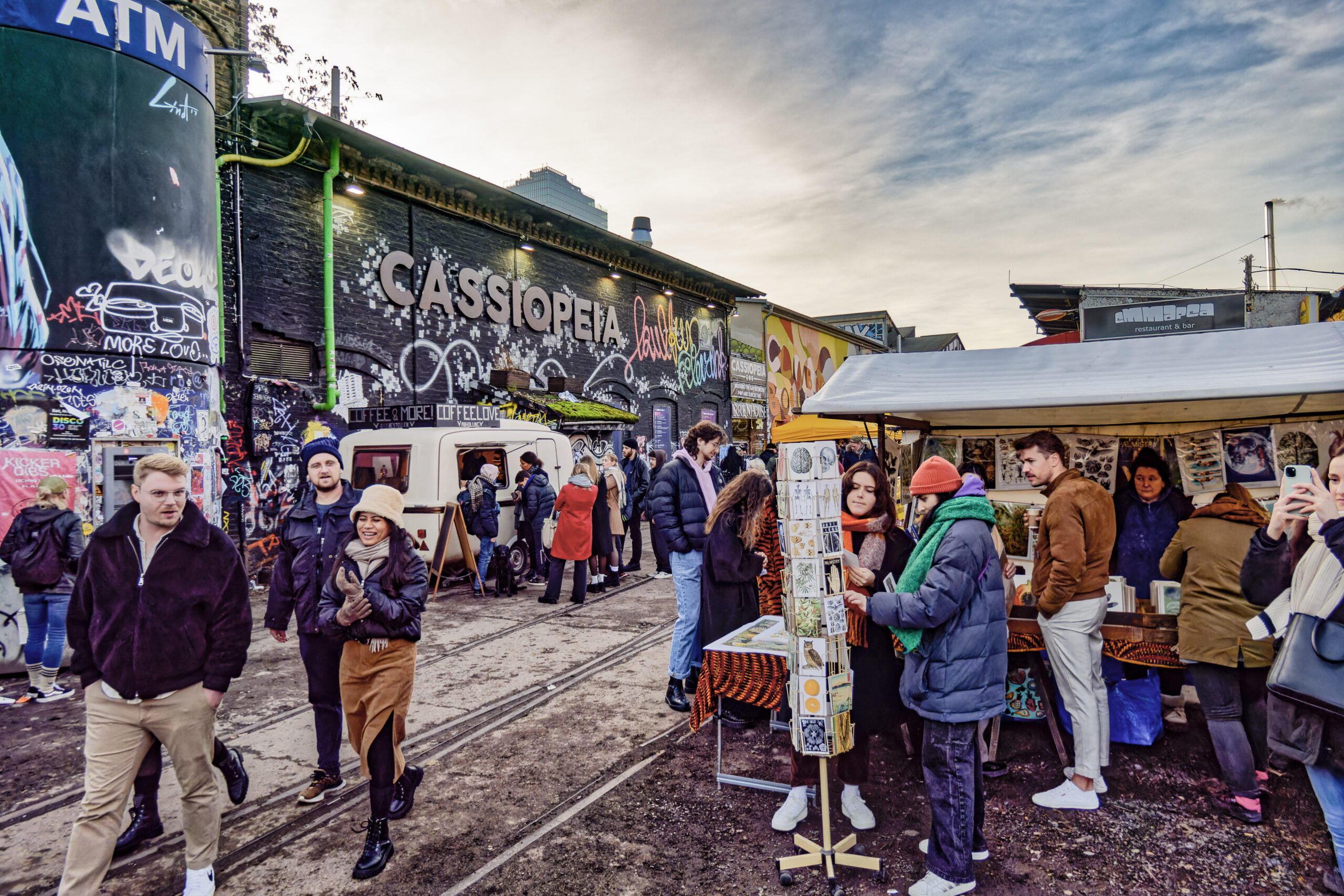
Auf dem Berliner RAW-Gelände befinden sich diverse Clubs und Bars. Gleichzeitig ist es ein Hotspot des Drogenmarktes.
Photo: nius.de

The judge ruled that this data check constituted a racist act. In her reasoning, she applied a hypothetical comparison test: if police had been searching for a white man with a dark jacket, blond hair, and longer braided hair, would they have stopped and run a data check on a white man with short blond hair under the same circumstances? The court’s answer was probably not.

The court found that the suspect description consisted of only four characteristics and was relatively vague: male, black, dreadlocks, and dark hooded jacket. The hairstyle characteristic clearly did not match the plaintiff. This led the court to conclude that officers had given dominant weight to the characteristic of skin color.

The judge stated it was sufficiently probable that the officers fell victim to confirmation bias. They unconsciously overlooked the mismatch in hairstyle because the skin color matched, the ruling found.

The verdict hinges on Berlin’s Anti-Discrimination Act, known by its German acronym LADG. This law, unique in Germany, dramatically eases the burden of proof for plaintiffs in discrimination cases. Claimants need only present evidence suggesting discrimination occurred. The burden then shifts to the state to prove that no discrimination took place. In this case, police were unable to demonstrate they acted on motives other than race.

The RAW area where the incident occurred houses numerous clubs and bars in the German capital, but is simultaneously recognized as a hotspot for drug trafficking. The case highlights the controversial nature of Berlin’s anti-discrimination legislation, which critics argue hamstrings law enforcement in high-crime areas by making routine police work legally risky.

The ruling sets a precedent that could significantly impact how Berlin police conduct investigations and identity checks in areas with active criminal activity, particularly when suspect descriptions include racial characteristics.

With information from Nius

Share:
Stefanos Banos
Stefanos Banos

Stefanos Banos was born in Piraeus and is an editor at NewsFire.GR, specializing in political analysis and international relations. He graduated from the Department of Communication and Media at the University of Bremen in Germany, where he also completed his Master of Arts in Communication and Media Studies. Married to Zoi, he is a proud father of three boys.

The case, decided by the Mitte District Court, stems from an incident in January 2023 when officers in Berlin’s Friedrichshain district observed what they believed to be a drug transaction on Revaler Street, an area known locally as the “Technostrich” and notorious for its nightlife and drug trade.

When police moved to conduct a check, one suspect fled the scene. Officers recovered a micro test tube containing a suspicious substance from the ground. The fleeing individual was described as a black man wearing a dark hooded jacket and sporting dreadlocks.

Shortly afterward, police spotted another black man inside a burger restaurant across the street. He was also wearing a dark hooded jacket, but had short, curly hair rather than dreadlocks. Officers demanded his identification, leading to an extended verbal exchange. The man repeatedly pointed out that his hairstyle did not match the description of the suspect. Police nevertheless proceeded to run a data check on him.

Auf dem Berliner RAW-Gelände befinden sich diverse Clubs und Bars. Gleichzeitig ist es ein Hotspot des Drogenmarktes.
Photo: nius.de

The judge ruled that this data check constituted a racist act. In her reasoning, she applied a hypothetical comparison test: if police had been searching for a white man with a dark jacket, blond hair, and longer braided hair, would they have stopped and run a data check on a white man with short blond hair under the same circumstances? The court’s answer was probably not.

The court found that the suspect description consisted of only four characteristics and was relatively vague: male, black, dreadlocks, and dark hooded jacket. The hairstyle characteristic clearly did not match the plaintiff. This led the court to conclude that officers had given dominant weight to the characteristic of skin color.

The judge stated it was sufficiently probable that the officers fell victim to confirmation bias. They unconsciously overlooked the mismatch in hairstyle because the skin color matched, the ruling found.

The verdict hinges on Berlin’s Anti-Discrimination Act, known by its German acronym LADG. This law, unique in Germany, dramatically eases the burden of proof for plaintiffs in discrimination cases. Claimants need only present evidence suggesting discrimination occurred. The burden then shifts to the state to prove that no discrimination took place. In this case, police were unable to demonstrate they acted on motives other than race.

The RAW area where the incident occurred houses numerous clubs and bars in the German capital, but is simultaneously recognized as a hotspot for drug trafficking. The case highlights the controversial nature of Berlin’s anti-discrimination legislation, which critics argue hamstrings law enforcement in high-crime areas by making routine police work legally risky.

The ruling sets a precedent that could significantly impact how Berlin police conduct investigations and identity checks in areas with active criminal activity, particularly when suspect descriptions include racial characteristics.

With information from Nius