Necessary Cookies

Required for the site to function. Cannot be disabled.

Analytics Cookies

Help us understand how visitors interact with our site (Google Analytics via GTM).

Marketing Cookies

Used to track visitors and deliver personalised advertisements.

We use cookies to enhance your browsing experience and analyse site traffic. By clicking Accept All, you consent to our use of cookies. Privacy Policy
NewsFire Global
Home News Europe World Christianity Culture Wars Opinion Video
Information
About Us Authors Advertising Terms & Conditions Privacy Policy Contact
R2B Media
R2B NEWSFIRE.GR PAPAFOTIS.GR THRACTION HELLENIC CONSERVATIVES RIGHT2THEBONE YT
News Culture Wars

Lutheran Theology Too Much for Protestant University to Handle

A German evangelical university publicly disavowed theology professor Ralf Frisch after he criticized Protestant churches for abandoning biblical faith in favor of humanistic ideology.
Stefanos Banos
Stefanos Banos Staff Writer
JUNE 17, 2026 AT 3:25 AM

Ralf Frisch, who teaches systematic theology and philosophy at the Evangelical University of Applied Sciences in Nuremberg, has become the target of institutional rebuke following a series of outspoken interviews and opinion pieces in which he argued that Germany’s Protestant state churches have abandoned their Reformation heritage, according to Junge Freiheit.

The university leadership issued a public statement last week distancing itself from Frisch’s theological views, declaring that his position is not representative of the theology taught at the institution. The statement emphasized the university’s commitment to diversity and rejected what it characterized as sweeping defamations.

Interview Sparks Controversy

The rebuke came after Frisch gave an interview to the Evangelical Press Service in which he sharply criticized the direction of Germany’s state Lutheran churches. He argued that the narrative of the modern church has become that of an enlightened moral and social actor, with belief in humanity and the goodness of man seemingly becoming the actual creed of the evangelical church.

When asked what was wrong with believing in the good in people, Frisch responded that he is deeply convinced such belief has nothing to do with Christian faith. He argued that the cross contradicts the illusion of moralistic and humanistic narratives, and that the failure of morality runs like a thread through the Bible.

The professor further stated that as a Lutheran, he cannot embrace the notion of harmonious cooperation between God and man that such thinking implies. He added that when reading Protestant church statements, he often feels as though he is reading texts from the German Trade Union Federation, the Social Democratic Party, or the Greens. Today’s church, he said, is a humanistic church.

Luther Would Turn in His Grave

Frisch’s critique builds on a longer record of commentary in which he has positioned himself as a defender of authentic Reformation theology against what he sees as its contemporary distortion. The professor, who describes himself as formerly left-leaning but now a critic of wind turbines, a supporter of the social market economy, and someone who refuses to whitewash political Islam, has been writing columns calling for a reformation of the church.

In a Pentecost message, Frisch warned against what he described as a downright demented left-liberal Protestantism. He referred to social media shitstorms as the stakes of the present day, revealing what people truly hold sacred. In the church itself, he observed, one can discredit God with fewer consequences than criticizing climate protection.

In May 2025, writing in his regular column in the evangelical Sunday newspaper, Frisch described a prevailing spiritual sleep that leaves people defenseless. The enemy, he wrote, is a deep metaphysical or existential indifference that disguises and glorifies itself as religious tolerance and advocacy for diversity.

Structural Reform Proposals

In April 2026, Frisch took aim at state church structures themselves, advocating that all funding should go directly to local congregations rather than to regional church administrations. His reasoning was that many special interest bubbles would burst and many luxury creatures born of excess within the church would tumble into poverty.

The professor’s work represents a continuation of Martin Luther’s own theological project, which sought to humble human pride before God and lead believers away from self-centered thinking toward acceptance of the finished work of the cross through grace alone and faith alone. Luther’s conflict with Roman Catholic theology was in part a dispute with the humanistic exaltation of human capabilities in the work of salvation, as expressed in the thought of his Catholic contemporary Erasmus of Rotterdam.

According to its original principles, biblical Protestant theology cannot proceed from an optimistic anthropology that affirms man in himself. In this sense, Frisch argues, today’s evangelical church is no longer actually Protestant.

Courage Under Fire

The case illustrates the precarious position of theologically conservative voices within Germany’s state Protestant churches. While such figures continue to work within these institutions and thereby demonstrate considerable courage, the institutional response to them reveals that the church has substantively ceased to be what it claims to be in name.

Frisch represents a dwindling cohort willing to preserve Luther’s legacy from within, even as the dominant culture of the institution moves in the opposite direction. His public censure by his own university suggests that orthodox Protestant theology is now viewed as incompatible with the values of diversity and inclusivity that govern contemporary German ecclesiastical institutions.

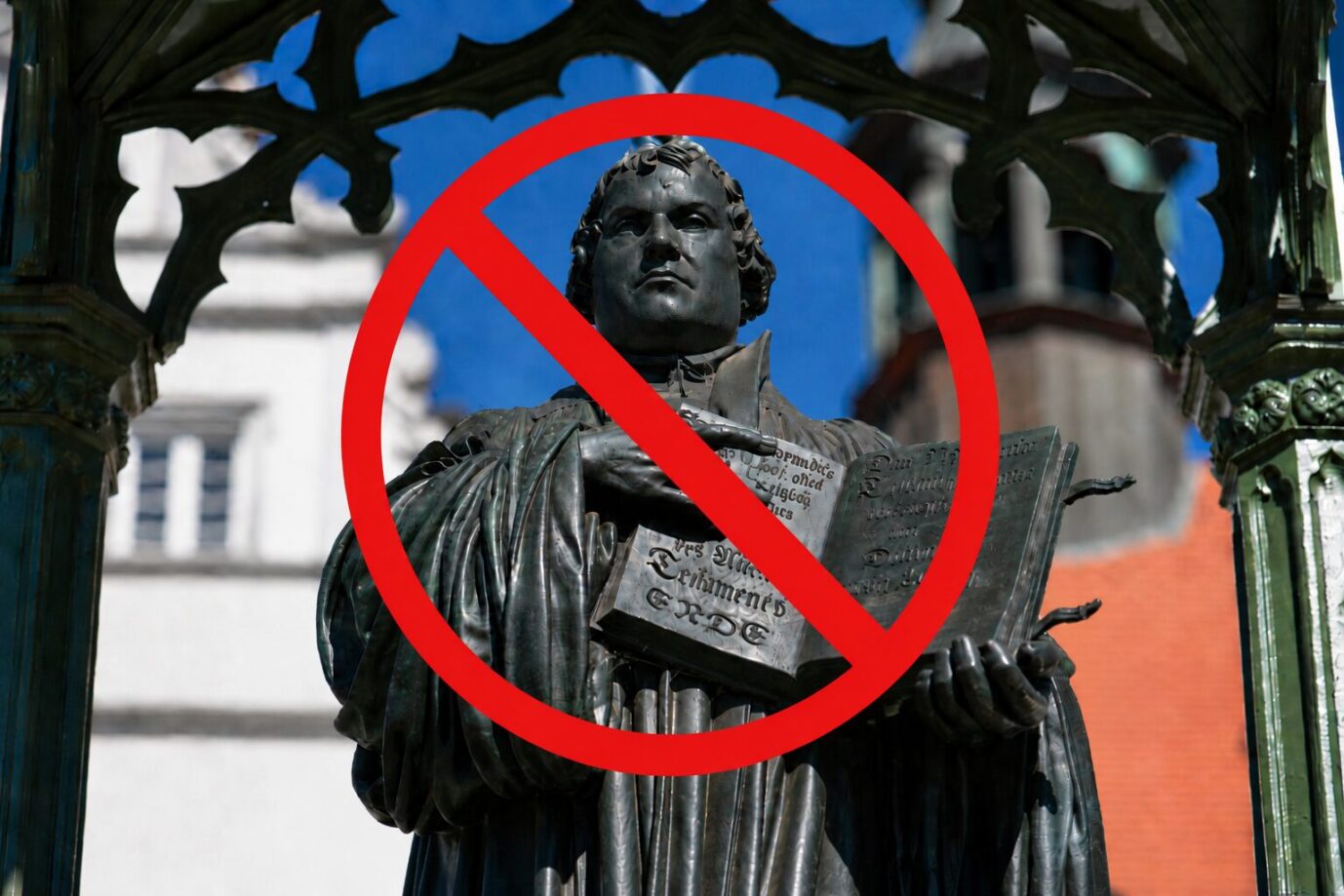
The average German citizen today associates evangelical Christianity with liberal theology, blessing of polyamorous relationships, rainbow flags displayed at church buildings, and declarations that God is either female or queer. Protestant theology, in the popular understanding, has become an anything-goes theology that places man and his self-redemption at the center. This development represents a tragic deformation of what Protestantism actually means, and Luther himself would turn in his grave at how his formal successors have distorted his righteous theology into such an unrighteous caricature.

With information from Junge Freiheit

Share:
Stefanos Banos
Stefanos Banos

Stefanos Banos was born in Piraeus and is an editor at NewsFire.GR, specializing in political analysis and international relations. He graduated from the Department of Communication and Media at the University of Bremen in Germany, where he also completed his Master of Arts in Communication and Media Studies. Married to Zoi, he is a proud father of three boys.

Ralf Frisch, who teaches systematic theology and philosophy at the Evangelical University of Applied Sciences in Nuremberg, has become the target of institutional rebuke following a series of outspoken interviews and opinion pieces in which he argued that Germany’s Protestant state churches have abandoned their Reformation heritage, according to Junge Freiheit.

The university leadership issued a public statement last week distancing itself from Frisch’s theological views, declaring that his position is not representative of the theology taught at the institution. The statement emphasized the university’s commitment to diversity and rejected what it characterized as sweeping defamations.

Interview Sparks Controversy

The rebuke came after Frisch gave an interview to the Evangelical Press Service in which he sharply criticized the direction of Germany’s state Lutheran churches. He argued that the narrative of the modern church has become that of an enlightened moral and social actor, with belief in humanity and the goodness of man seemingly becoming the actual creed of the evangelical church.

When asked what was wrong with believing in the good in people, Frisch responded that he is deeply convinced such belief has nothing to do with Christian faith. He argued that the cross contradicts the illusion of moralistic and humanistic narratives, and that the failure of morality runs like a thread through the Bible.

The professor further stated that as a Lutheran, he cannot embrace the notion of harmonious cooperation between God and man that such thinking implies. He added that when reading Protestant church statements, he often feels as though he is reading texts from the German Trade Union Federation, the Social Democratic Party, or the Greens. Today’s church, he said, is a humanistic church.

Luther Would Turn in His Grave

Frisch’s critique builds on a longer record of commentary in which he has positioned himself as a defender of authentic Reformation theology against what he sees as its contemporary distortion. The professor, who describes himself as formerly left-leaning but now a critic of wind turbines, a supporter of the social market economy, and someone who refuses to whitewash political Islam, has been writing columns calling for a reformation of the church.

In a Pentecost message, Frisch warned against what he described as a downright demented left-liberal Protestantism. He referred to social media shitstorms as the stakes of the present day, revealing what people truly hold sacred. In the church itself, he observed, one can discredit God with fewer consequences than criticizing climate protection.

In May 2025, writing in his regular column in the evangelical Sunday newspaper, Frisch described a prevailing spiritual sleep that leaves people defenseless. The enemy, he wrote, is a deep metaphysical or existential indifference that disguises and glorifies itself as religious tolerance and advocacy for diversity.

Structural Reform Proposals

In April 2026, Frisch took aim at state church structures themselves, advocating that all funding should go directly to local congregations rather than to regional church administrations. His reasoning was that many special interest bubbles would burst and many luxury creatures born of excess within the church would tumble into poverty.

The professor’s work represents a continuation of Martin Luther’s own theological project, which sought to humble human pride before God and lead believers away from self-centered thinking toward acceptance of the finished work of the cross through grace alone and faith alone. Luther’s conflict with Roman Catholic theology was in part a dispute with the humanistic exaltation of human capabilities in the work of salvation, as expressed in the thought of his Catholic contemporary Erasmus of Rotterdam.

According to its original principles, biblical Protestant theology cannot proceed from an optimistic anthropology that affirms man in himself. In this sense, Frisch argues, today’s evangelical church is no longer actually Protestant.

Courage Under Fire

The case illustrates the precarious position of theologically conservative voices within Germany’s state Protestant churches. While such figures continue to work within these institutions and thereby demonstrate considerable courage, the institutional response to them reveals that the church has substantively ceased to be what it claims to be in name.

Frisch represents a dwindling cohort willing to preserve Luther’s legacy from within, even as the dominant culture of the institution moves in the opposite direction. His public censure by his own university suggests that orthodox Protestant theology is now viewed as incompatible with the values of diversity and inclusivity that govern contemporary German ecclesiastical institutions.

The average German citizen today associates evangelical Christianity with liberal theology, blessing of polyamorous relationships, rainbow flags displayed at church buildings, and declarations that God is either female or queer. Protestant theology, in the popular understanding, has become an anything-goes theology that places man and his self-redemption at the center. This development represents a tragic deformation of what Protestantism actually means, and Luther himself would turn in his grave at how his formal successors have distorted his righteous theology into such an unrighteous caricature.

With information from Junge Freiheit