The Suppressed Suffering of German Expulsion Victims
Berlin's Documentation Center for Flight, Expulsion and Reconciliation has failed to spark meaningful debate seven years after opening due to its flawed attempt to merge German expulsion history with global migration narratives.
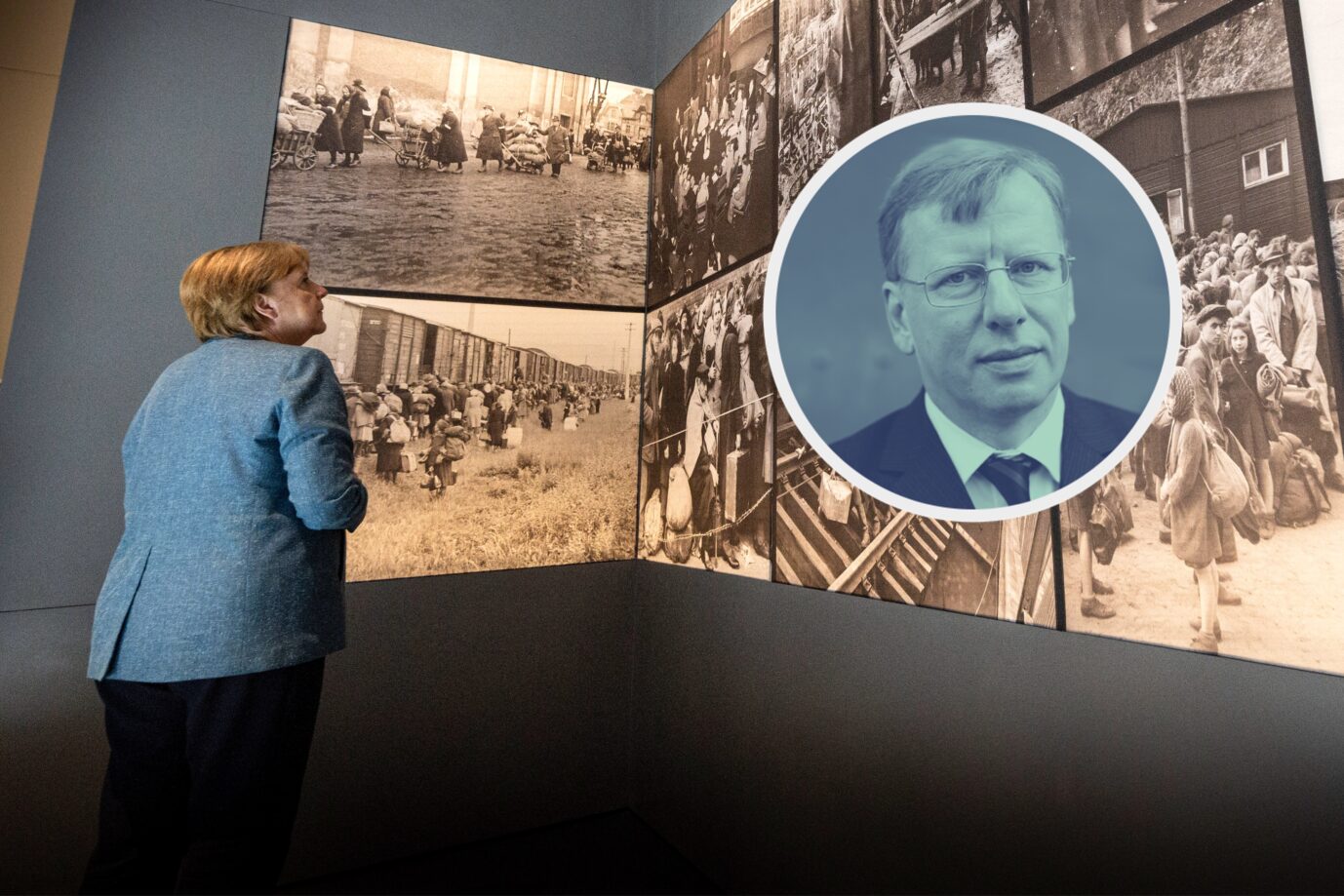

Seven years after opening its doors, Berlin’s Documentation Center for Flight, Expulsion and Reconciliation remains a largely ignored institution despite its central location, imposing architecture, and free admission, according to Junge Freiheit. The center has failed to generate meaningful public debate, spark societal insights, or contribute new historical understanding, leading to the non-renewal of director Gundula Bavendamm’s contract.
The problem, however, lies not with Bavendamm’s leadership but with the fundamentally flawed concept behind the institution itself. The center attempts to merge incompatible narratives by examining flight, expulsion and forced migration in the twentieth and twenty-first centuries from what it calls a European and global perspective.
According to the center’s own mission statement, it remembers more than fourteen million Germans who were forced to leave the former Prussian eastern provinces and their settlement areas in Central, Southeastern and Eastern Europe as a consequence of the Second World War initiated by Germany and the policies of National Socialism. A recent draft from the Federal Ministry of the Interior replaces the word “also” with “particularly” when referencing German expellees, though this semantic adjustment does little to address the core issue.
The project was originally initiated by the Federation of Expellees and its longtime president Erika Steinbach. What began as an effort to bring attention to the largely unknown, untold and suppressed expulsion of Germans from the East has been diluted and essentially inverted from its original purpose.
German Tragedy Buried Beneath Global Migration Narratives
While regional museums exist in Lüneburg, Görlitz, Greifswald and Munich dedicated to specific former German territories, none are positioned or equipped to elevate the expulsion story as the nationally catastrophic event that continues to reverberate beneath the surface of German consciousness. At least one quarter of German state territory has been lost since 1914, with more than one third of settlements gone. Two million deaths resulted from these expulsions. The cultural and economic losses, along with immeasurable human suffering, remain largely unacknowledged.
The Berlin center appears deliberately designed to avoid conveying these realities. The spacious, well-lit first floor is devoted to global migration movements triggered by wars, civil conflicts, religious strife and economic hardship. A porthole from the refugee ship Wilhelm Gustloff, sunk in the Baltic Sea in January 1945, stands alongside an iris-scanner payment system from a Jordanian refugee camp. A fur coat worn by an East Prussian refugee girl in winter 1945 is displayed next to a folding bicycle used by a Syrian who cycled from Russia to Norway.
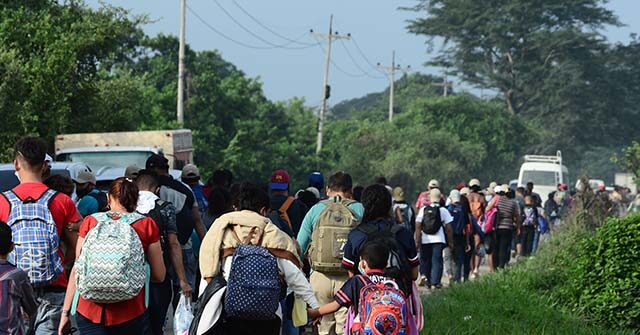
Accounts from war refugees from former Yugoslavia and Vietnamese boat people receive equal prominence with testimonies from German expellees. The exhibition presents Germany as a diverse mixture of forced migrants from various backgrounds, subtly suggesting that the 2015 border opening was merely the next logical step in this narrative.
Actual Expulsion Exhibition Hidden and Sterile
As Junge Freiheit reported in 2019 under the headline “Expelled into Context,” the actual expulsion exhibition is relegated to the second floor, accessible only via a spiral staircase. This section is windowless, dimly lit, rigidly arranged and almost aseptically cold in its presentation.
Federation of Expellees President Bernd Fabritius recently criticized the exhibition for its lack of empathy. The scale and drama of what occurred, the horror experienced by victims, remains buried in footnotes and hints, relativized through references to Nazi crimes or, more elegantly put, contextualized.
Steinbach had emphasized from the beginning that the center would avoid score-settling and revanchism, and would not present the expulsion as an isolated or singular event. A Franz Werfel Human Rights Prize was established, named after the German-Jewish author whose novel “The Forty Days of Musa Dagh” brought international attention to the Turkish genocide of Armenians in 1915. The prize honors efforts against expulsions worldwide.
Political Compromise Undermined Original Mission
While admirable, this approach signaled a conceptual overreach that pushed the original mission to the margins. However, it represented the only way to gain public acceptance and coalition partners for the project.
Steinbach’s most important ally was SPD politician Peter Glotz, born in Eger to a Czech mother and German father. In 2001, Glotz declared the center should not primarily preserve memories but rather contribute to stigmatizing expulsions worldwide, sensitizing the international community, and systematically confronting ethno-nationalism and the idea of the ethnically homogeneous nation-state. In this sense, he said, the center would be a contribution to combating right-wing radicalism and right-wing populism.
Chancellor Merkel spoke of setting a “visible sign” with the center. The political platitude, delivered with tautological redundancy, revealed the lack of genuine enthusiasm with which official Berlin approached the project.
With information from Junge Freiheit