Necessary Cookies

Required for the site to function. Cannot be disabled.

Analytics Cookies

Help us understand how visitors interact with our site (Google Analytics via GTM).

Marketing Cookies

Used to track visitors and deliver personalised advertisements.

We use cookies to enhance your browsing experience and analyse site traffic. By clicking Accept All, you consent to our use of cookies. Privacy Policy
NewsFire Global
Home News Europe World Christianity Culture Wars Opinion Video
Information
About Us Authors Advertising Terms & Conditions Privacy Policy Contact
R2B Media
R2B NEWSFIRE.GR PAPAFOTIS.GR THRACTION HELLENIC CONSERVATIVES RIGHT2THEBONE YT
News Europe

Switzerland Seeks 10M Population Cap as Foreigners Hit 33%

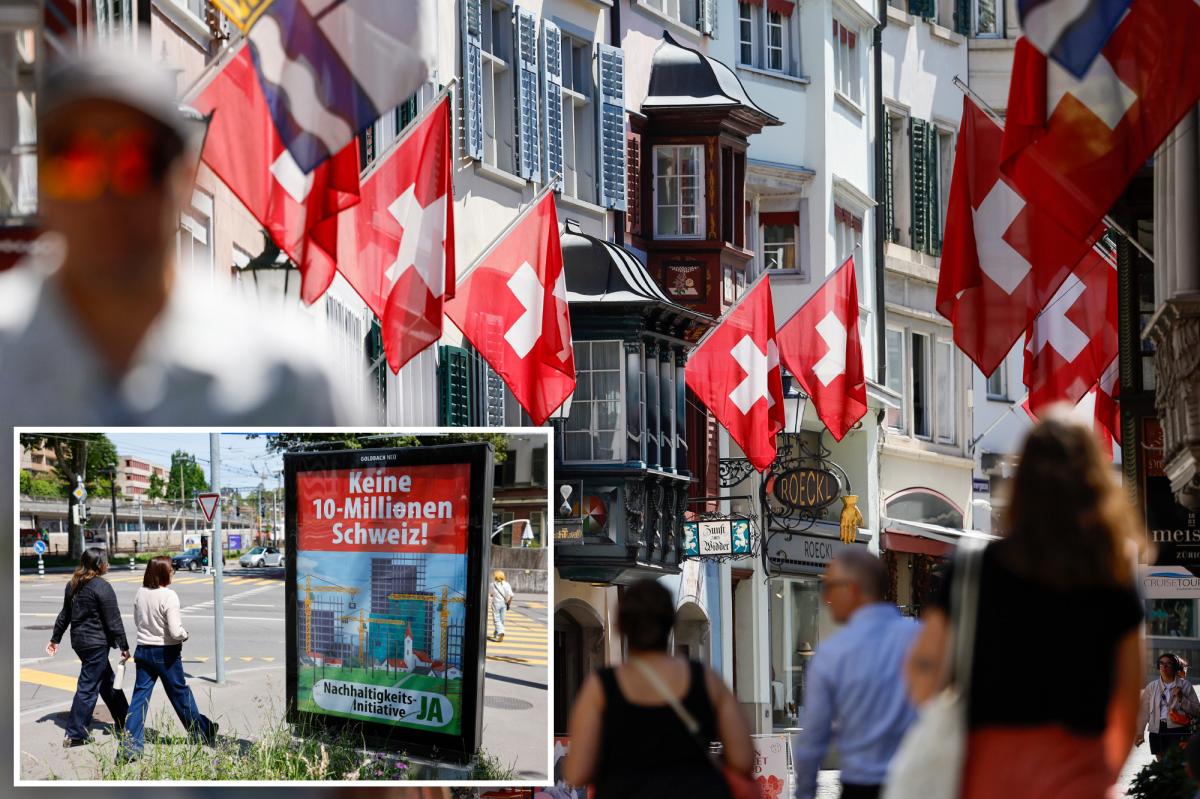
Switzerland votes Sunday on capping its population at 10 million by 2050, a measure that could end free-movement agreements with the EU amid rising concerns over immigration and living costs.

Dimitris Papafotis
Dimitris Papafotis Editor in Chief
JUNE 12, 2026 AT 9:31 PM

The Swiss People’s Party, a right-leaning political formation, has put forward the initiative as polling indicates a tight race among voters who will decide the measure’s fate, according to New York Post. Swiss citizens aged 18 and older are eligible to cast ballots on the proposal, which comes amid mounting public frustration over rising living costs tied to years of aggressive recruitment of foreign workers.

Heinz Tännler, Switzerland’s finance minister, has championed a multi-year campaign to draw highly skilled immigrants to the Alpine nation, whose current population stands at 9.1 million residents. The demographic transformation has been striking: foreign-born individuals now represent one in three Swiss residents, up from one in five in 2000, as New York Post reports. By comparison, the United States maintains a foreign-born population ratio of one in six.

Phased Implementation Would Trigger EU Break

The SVP’s “No to a 10 million Switzerland” initiative would activate in stages if approved by voters. Once the population reaches 9.5 million, Bern would impose restrictions on family reunification for immigrant residents and new asylum applicants.

Should the population hit the 10 million threshold, Switzerland’s de facto capital would face a constitutional obligation to terminate its free-movement pact with the European Union. That agreement currently permits EU citizens to reside, work, and acquire property in Switzerland provided they satisfy specific income or financial self-sufficiency standards.

Housing Strain and Service Pressure Mount

Western political establishments have consistently promoted mass immigration as a solution to labor market gaps and stagnant productivity metrics. Yet the wave of newcomers has generated unforeseen consequences, including escalating housing expenses and overwhelmed social service infrastructure.

Critics of the population cap warn it could damage Switzerland’s trade-dependent economy, generate business uncertainty, and worsen existing workforce shortages.

Parliament Circumvented Previous Immigration Curbs

Swiss voters narrowly approved a 2014 referendum designed to establish quotas on foreign-born residents, but the measure never reached full implementation. The Swiss parliament exploited a legal loophole to maintain ties with the European Union and effectively neutralize the vote’s intent, according to New York Post.

The upcoming referendum represents a renewed test of Swiss public sentiment on immigration policy and national sovereignty versus economic integration with Brussels.

With information from New York Post
Share:
Dimitris Papafotis
Dimitris Papafotis

Dimitris Papafotis is the editor-in-chief of NewsFire.GR. He was born and raised in Athens. He studied at the Journalism Workshop (1991-1993). He currently lives in Pyrgos, Ilia, where he has been active in radio and various newspapers, while also maintaining his personal blog, Papafotis.gr.

The Swiss People’s Party, a right-leaning political formation, has put forward the initiative as polling indicates a tight race among voters who will decide the measure’s fate, according to New York Post. Swiss citizens aged 18 and older are eligible to cast ballots on the proposal, which comes amid mounting public frustration over rising living costs tied to years of aggressive recruitment of foreign workers.

Heinz Tännler, Switzerland’s finance minister, has championed a multi-year campaign to draw highly skilled immigrants to the Alpine nation, whose current population stands at 9.1 million residents. The demographic transformation has been striking: foreign-born individuals now represent one in three Swiss residents, up from one in five in 2000, as New York Post reports. By comparison, the United States maintains a foreign-born population ratio of one in six.

Phased Implementation Would Trigger EU Break

The SVP’s “No to a 10 million Switzerland” initiative would activate in stages if approved by voters. Once the population reaches 9.5 million, Bern would impose restrictions on family reunification for immigrant residents and new asylum applicants.

Should the population hit the 10 million threshold, Switzerland’s de facto capital would face a constitutional obligation to terminate its free-movement pact with the European Union. That agreement currently permits EU citizens to reside, work, and acquire property in Switzerland provided they satisfy specific income or financial self-sufficiency standards.

Housing Strain and Service Pressure Mount

Western political establishments have consistently promoted mass immigration as a solution to labor market gaps and stagnant productivity metrics. Yet the wave of newcomers has generated unforeseen consequences, including escalating housing expenses and overwhelmed social service infrastructure.

Critics of the population cap warn it could damage Switzerland’s trade-dependent economy, generate business uncertainty, and worsen existing workforce shortages.

Parliament Circumvented Previous Immigration Curbs

Swiss voters narrowly approved a 2014 referendum designed to establish quotas on foreign-born residents, but the measure never reached full implementation. The Swiss parliament exploited a legal loophole to maintain ties with the European Union and effectively neutralize the vote’s intent, according to New York Post.

The upcoming referendum represents a renewed test of Swiss public sentiment on immigration policy and national sovereignty versus economic integration with Brussels.

With information from New York Post