Necessary Cookies

Required for the site to function. Cannot be disabled.

Analytics Cookies

Help us understand how visitors interact with our site (Google Analytics via GTM).

Marketing Cookies

Used to track visitors and deliver personalised advertisements.

We use cookies to enhance your browsing experience and analyse site traffic. By clicking Accept All, you consent to our use of cookies. Privacy Policy
NewsFire Global
Home News Europe World Christianity Culture Wars Opinion Video
Information
About Us Authors Advertising Terms & Conditions Privacy Policy Contact
R2B Media
R2B NEWSFIRE.GR PAPAFOTIS.GR THRACTION HELLENIC CONSERVATIVES RIGHT2THEBONE YT
News Europe

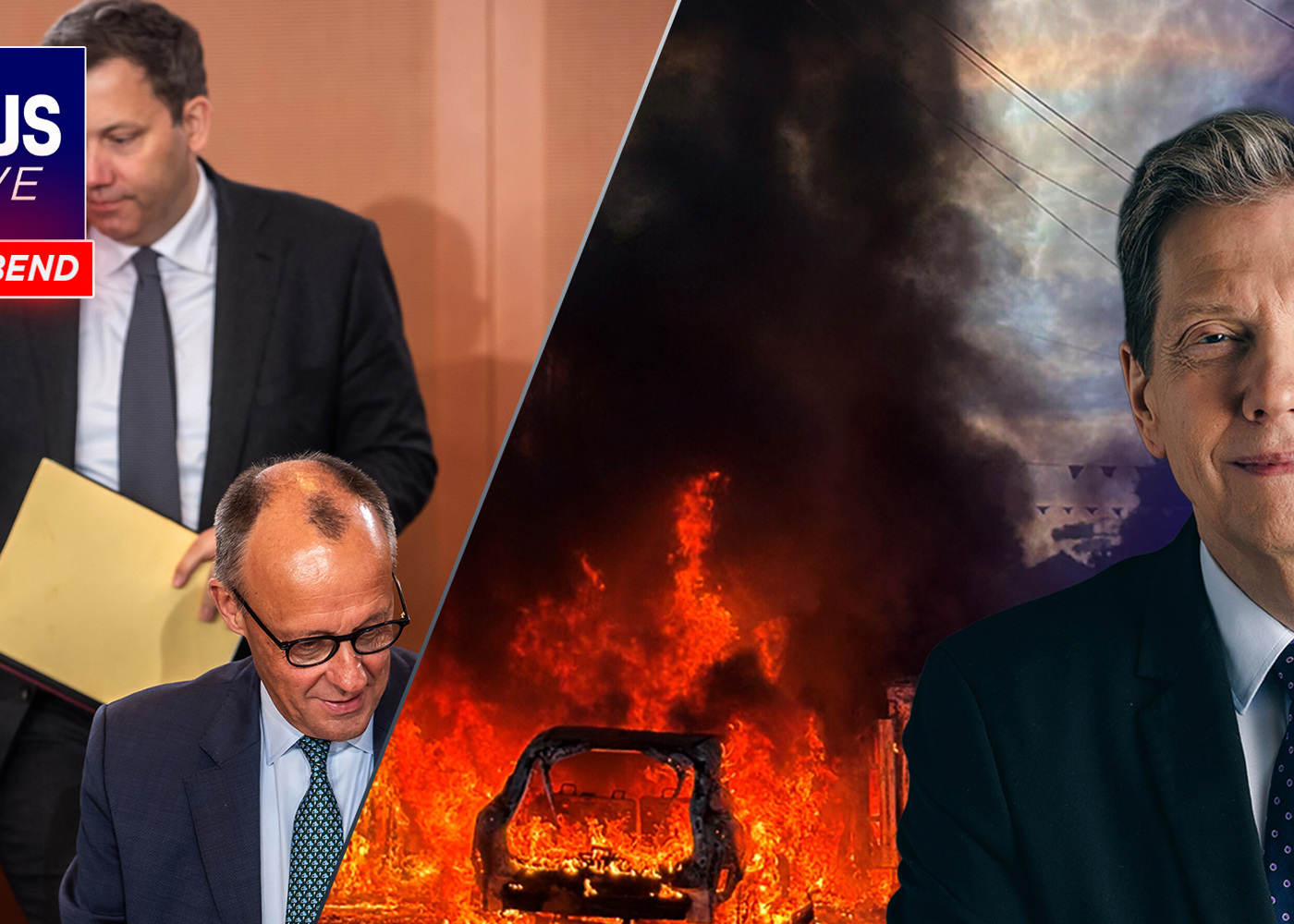
Tonight on NIUS Live: Will Belfast Trigger a Wildfire?

Germany confronts economic recession warnings, security concerns following a Belfast beheading attempt, and waning public interest in the World Cup, according to Nius.
Dimitris Papafotis
Dimitris Papafotis Editor in Chief
JUNE 11, 2026 AT 4:00 AM

According to Nius, the key issues dominating German political discourse include a high-stakes meeting of social ministers with Chancellor Friedrich Merz at the chancellery, described as a tense summit addressing critical domestic policy matters.

The situation in Europe has reached what analysts are calling a tipping point. A shocking attempted beheading in the Northern Irish capital has triggered widespread outrage across the continent, raising fears that Belfast could spark broader unrest. The incident has prompted serious questions about security and stability in the region.

On the economic front, the German Institute for Economic Research has issued an alarming assessment, warning that Germany is sliding into recession. The troubling forecast comes as major German industrial giants Mercedes and Ferrari announce restructuring plans aimed at regaining competitiveness in the global marketplace.

Public enthusiasm for international sporting events appears to be waning significantly. A Forsa poll reveals that only one in four Germans is looking forward to the upcoming Football World Cup, reflecting broader dissatisfaction and changing priorities among the population.

The Nius broadcast featured host Andreas Dorfmann alongside reporter Philippe Fischer and political chief Ralf Schuler in the radio studio, analyzing these developments and their implications for Germany’s future direction.

The convergence of economic uncertainty, security threats, and declining public morale presents a challenging landscape for German policymakers as they navigate domestic and international pressures in an increasingly volatile European environment.

With information from Nius
Share:
Dimitris Papafotis
Dimitris Papafotis

Dimitris Papafotis is the editor-in-chief of NewsFire.GR. He was born and raised in Athens. He studied at the Journalism Workshop (1991-1993). He currently lives in Pyrgos, Ilia, where he has been active in radio and various newspapers, while also maintaining his personal blog, Papafotis.gr.

According to Nius, the key issues dominating German political discourse include a high-stakes meeting of social ministers with Chancellor Friedrich Merz at the chancellery, described as a tense summit addressing critical domestic policy matters.

The situation in Europe has reached what analysts are calling a tipping point. A shocking attempted beheading in the Northern Irish capital has triggered widespread outrage across the continent, raising fears that Belfast could spark broader unrest. The incident has prompted serious questions about security and stability in the region.

On the economic front, the German Institute for Economic Research has issued an alarming assessment, warning that Germany is sliding into recession. The troubling forecast comes as major German industrial giants Mercedes and Ferrari announce restructuring plans aimed at regaining competitiveness in the global marketplace.

Public enthusiasm for international sporting events appears to be waning significantly. A Forsa poll reveals that only one in four Germans is looking forward to the upcoming Football World Cup, reflecting broader dissatisfaction and changing priorities among the population.

The Nius broadcast featured host Andreas Dorfmann alongside reporter Philippe Fischer and political chief Ralf Schuler in the radio studio, analyzing these developments and their implications for Germany’s future direction.

The convergence of economic uncertainty, security threats, and declining public morale presents a challenging landscape for German policymakers as they navigate domestic and international pressures in an increasingly volatile European environment.

With information from Nius