Necessary Cookies

Required for the site to function. Cannot be disabled.

Analytics Cookies

Help us understand how visitors interact with our site (Google Analytics via GTM).

Marketing Cookies

Used to track visitors and deliver personalised advertisements.

We use cookies to enhance your browsing experience and analyse site traffic. By clicking Accept All, you consent to our use of cookies. Privacy Policy
NewsFire Global
Home News Europe World Christianity Culture Wars Opinion
Information
About Us Authors Advertising Terms & Conditions Privacy Policy Contact
R2B Media
R2B NEWSFIRE.GR PAPAFOTIS.GR THRACTION HELLENIC CONSERVATIVES RIGHT2THEBONE YT
News World

US: Lebanon and Israel agree – Terms for Hezbollah

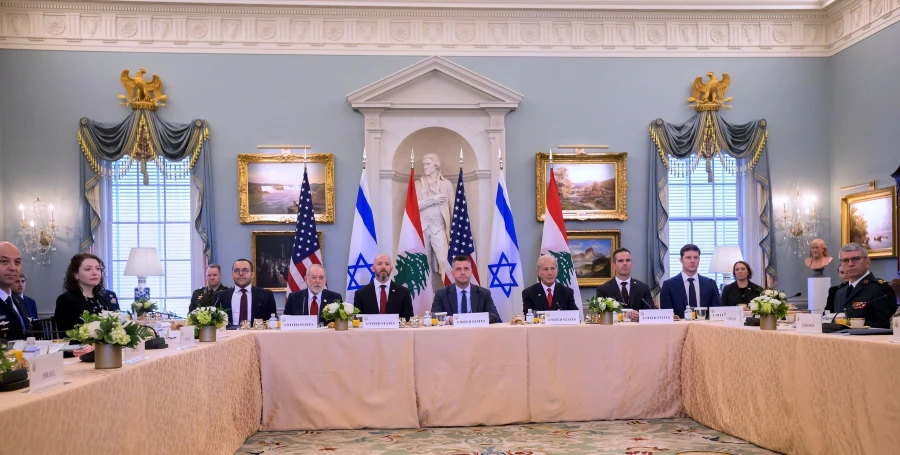
Lebanon and Israel reached a U.S.-brokered ceasefire requiring Hezbollah's withdrawal south of the Litani River and Lebanese army control of pilot zones, with talks continuing June 22.
Stefanos Banos
Stefanos Banos Staff Writer
JUNE 4, 2026 AT 7:30 AM

According to the joint statement, the agreement includes the complete cessation of attacks by Hezbollah and the withdrawal of all its members and forces from the area south of the Litani River. The two sides, under U.S. guidance, will immediately proceed to establish pilot zones where the Lebanese army will have exclusive control, without the presence of non-state armed groups.

The Key Role for Lebanon’s Army

The plan is also based on previous contacts held at the American Pentagon on May 29. The goal is to ensure the sovereignty, security, and territorial integrity of both Lebanon and Israel. The State Department emphasizes that this requires the disarmament of non-state armed organizations and preventing their reemergence in the region.

The U.S. has committed to supporting the Lebanese Armed Forces to strengthen their operational capacity and enable them to effectively control the entire territory of the country.

Direct Negotiations and Next Meeting

The statement emphasizes that the future of relations between Israel and Lebanon must be determined by the two sovereign governments. Any attempt, whether by a state or non-state actor, to hold the future of Lebanon “hostage” is rejected.

The two sides reiterated that they have no hostile intentions toward one another and committed to continuing direct talks to build trust, resolve pending issues, and reach a comprehensive agreement.

They agreed to repeat the political and military discussions during the week of June 22, with the U.S. continuing to mediate in the interim.

Tough Stance Toward Iran

The joint statement includes a clear reference to Iran. All parties condemn Tehran’s attacks and activities that undermine stability in the Middle East.

Israel reiterated that its security and territorial integrity can only be ensured through the complete disarmament of Hezbollah and the dismantling of its infrastructure throughout Lebanon.

For its part, Lebanon stressed the need to respect internationally recognized borders, territorial integrity, and its full state sovereignty.


Share:
Stefanos Banos
Stefanos Banos

Stefanos Banos was born in Piraeus and is an editor at NewsFire.GR, specializing in political analysis and international relations. He graduated from the Department of Communication and Media at the University of Bremen in Germany, where he also completed his Master of Arts in Communication and Media Studies. Married to Zoi, he is a proud father of three boys.

According to the joint statement, the agreement includes the complete cessation of attacks by Hezbollah and the withdrawal of all its members and forces from the area south of the Litani River. The two sides, under U.S. guidance, will immediately proceed to establish pilot zones where the Lebanese army will have exclusive control, without the presence of non-state armed groups.

The Key Role for Lebanon’s Army

The plan is also based on previous contacts held at the American Pentagon on May 29. The goal is to ensure the sovereignty, security, and territorial integrity of both Lebanon and Israel. The State Department emphasizes that this requires the disarmament of non-state armed organizations and preventing their reemergence in the region.

The U.S. has committed to supporting the Lebanese Armed Forces to strengthen their operational capacity and enable them to effectively control the entire territory of the country.

Direct Negotiations and Next Meeting

The statement emphasizes that the future of relations between Israel and Lebanon must be determined by the two sovereign governments. Any attempt, whether by a state or non-state actor, to hold the future of Lebanon “hostage” is rejected.

The two sides reiterated that they have no hostile intentions toward one another and committed to continuing direct talks to build trust, resolve pending issues, and reach a comprehensive agreement.

They agreed to repeat the political and military discussions during the week of June 22, with the U.S. continuing to mediate in the interim.

Tough Stance Toward Iran

The joint statement includes a clear reference to Iran. All parties condemn Tehran’s attacks and activities that undermine stability in the Middle East.

Israel reiterated that its security and territorial integrity can only be ensured through the complete disarmament of Hezbollah and the dismantling of its infrastructure throughout Lebanon.

For its part, Lebanon stressed the need to respect internationally recognized borders, territorial integrity, and its full state sovereignty.