Necessary Cookies

Required for the site to function. Cannot be disabled.

Analytics Cookies

Help us understand how visitors interact with our site (Google Analytics via GTM).

Marketing Cookies

Used to track visitors and deliver personalised advertisements.

We use cookies to enhance your browsing experience and analyse site traffic. By clicking Accept All, you consent to our use of cookies. Privacy Policy
NewsFire Global
Home News Europe World Christianity Culture Wars Opinion Video
Information
About Us Authors Advertising Terms & Conditions Privacy Policy Contact
R2B Media
R2B NEWSFIRE.GR PAPAFOTIS.GR THRACTION HELLENIC CONSERVATIVES RIGHT2THEBONE YT
News World

Trump’s War on Drug Cartels Expanding—Guatemala Agrees to Joint Strikes

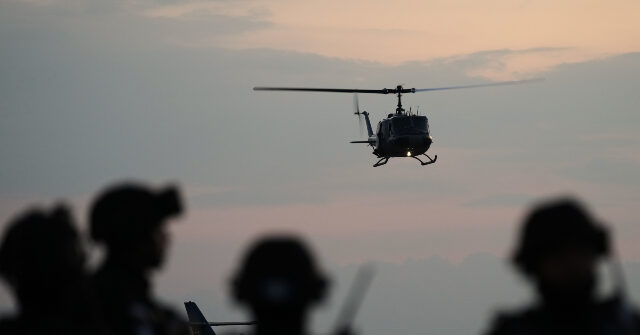
President Trump has ordered a major expansion of U.S. counter-narcotics operations including an agreement allowing American forces to conduct joint strikes against cartels in Guatemala.

Newsroom
Newsroom Staff Writer
MAY 28, 2026 AT 9:25 PM

According to Breitbart News, the directive includes a landmark agreement with Guatemala permitting U.S. forces to conduct joint strikes against drug trafficking organizations operating inside Guatemalan territory. The move represents a sharp departure from previous enforcement models and signals the administration’s intent to treat cartels as military adversaries rather than merely criminal enterprises.

The new operational framework builds on earlier maritime interdiction efforts that have already resulted in the destruction of dozens of cartel-linked vessels and record-breaking narcotics seizures before those substances could reach American communities.

Following high-level talks between Trump administration officials and their Guatemalan counterparts in January, officials from Guatemala announced what they termed a “strong alliance” with Washington, as reported by the New York Times. Subsequent discussions aboard the USS Nimitz aircraft carrier produced an agreement allowing U.S. military personnel to deploy on Guatemalan soil for training operations with local armed forces.

Senior defense and homeland security officials say the expanded mission goes beyond interdiction, granting U.S. forces authority to strike cartel infrastructure, logistics hubs, and financial networks in coordination with allied governments throughout the Western Hemisphere. The White House has framed the escalation as a necessary response to what Trump has consistently characterized as a narco-terrorist threat fueling violence, human trafficking, and the fentanyl epidemic devastating American families.

Senior administration officials made clear that the administration views the cartel threat in existential terms. Cartels are waging war on the United States, one official stated, adding that President Trump intends to wage war right back.

The broadened campaign incorporates intensified intelligence-sharing with regional partners, targeted operations against cartel leadership, and new authorities enabling U.S. military assets to support foreign governments confronting entrenched trafficking networks. Defense officials say the strategy draws from counterterrorism frameworks developed against ISIS and al-Qaeda, adapted specifically for transnational criminal organizations that exploit weak governance and operate across international borders.

Trump has repeatedly argued that the fentanyl crisis, which has claimed tens of thousands of American lives annually, demands a more forceful posture. Administration officials indicate the president’s directive reflects growing consensus within the Pentagon and Department of Homeland Security that cartel activity now constitutes a national security threat rather than simply a law enforcement challenge.

While critics contend the approach risks escalating tensions with foreign governments, supporters argue that previous administrations permitted cartels to evolve into paramilitary forces with global reach. Trump advisers say the president is determined to reverse that trajectory through sustained pressure.

Officials emphasized that the campaign represents a fundamental shift in posture. This is not symbolic, one stated, but rather a sustained, long-term effort to break the cartels’ operational capacity.

The White House is expected to release additional operational details in coming weeks, including new cooperative agreements with Latin American partners and expanded authorities for U.S. Southern Command.

For Trump, the message appears unambiguous: the war on drugs is no longer rhetorical but a literal military campaign, and one he intends to prosecute to victory.

With information from Breitbart News
Share:
Newsroom
Newsroom

NewsFire.GR is a website created with the hope that the media will rediscover their true identity, which is none other than informing the public about the real stakes of our times. Journalism and political analysis must hold power accountable, not serve it.

According to Breitbart News, the directive includes a landmark agreement with Guatemala permitting U.S. forces to conduct joint strikes against drug trafficking organizations operating inside Guatemalan territory. The move represents a sharp departure from previous enforcement models and signals the administration’s intent to treat cartels as military adversaries rather than merely criminal enterprises.

The new operational framework builds on earlier maritime interdiction efforts that have already resulted in the destruction of dozens of cartel-linked vessels and record-breaking narcotics seizures before those substances could reach American communities.

Following high-level talks between Trump administration officials and their Guatemalan counterparts in January, officials from Guatemala announced what they termed a “strong alliance” with Washington, as reported by the New York Times. Subsequent discussions aboard the USS Nimitz aircraft carrier produced an agreement allowing U.S. military personnel to deploy on Guatemalan soil for training operations with local armed forces.

Senior defense and homeland security officials say the expanded mission goes beyond interdiction, granting U.S. forces authority to strike cartel infrastructure, logistics hubs, and financial networks in coordination with allied governments throughout the Western Hemisphere. The White House has framed the escalation as a necessary response to what Trump has consistently characterized as a narco-terrorist threat fueling violence, human trafficking, and the fentanyl epidemic devastating American families.

Senior administration officials made clear that the administration views the cartel threat in existential terms. Cartels are waging war on the United States, one official stated, adding that President Trump intends to wage war right back.

The broadened campaign incorporates intensified intelligence-sharing with regional partners, targeted operations against cartel leadership, and new authorities enabling U.S. military assets to support foreign governments confronting entrenched trafficking networks. Defense officials say the strategy draws from counterterrorism frameworks developed against ISIS and al-Qaeda, adapted specifically for transnational criminal organizations that exploit weak governance and operate across international borders.

Trump has repeatedly argued that the fentanyl crisis, which has claimed tens of thousands of American lives annually, demands a more forceful posture. Administration officials indicate the president’s directive reflects growing consensus within the Pentagon and Department of Homeland Security that cartel activity now constitutes a national security threat rather than simply a law enforcement challenge.

While critics contend the approach risks escalating tensions with foreign governments, supporters argue that previous administrations permitted cartels to evolve into paramilitary forces with global reach. Trump advisers say the president is determined to reverse that trajectory through sustained pressure.

Officials emphasized that the campaign represents a fundamental shift in posture. This is not symbolic, one stated, but rather a sustained, long-term effort to break the cartels’ operational capacity.

The White House is expected to release additional operational details in coming weeks, including new cooperative agreements with Latin American partners and expanded authorities for U.S. Southern Command.

For Trump, the message appears unambiguous: the war on drugs is no longer rhetorical but a literal military campaign, and one he intends to prosecute to victory.

With information from Breitbart News