Necessary Cookies

Required for the site to function. Cannot be disabled.

Analytics Cookies

Help us understand how visitors interact with our site (Google Analytics via GTM).

Marketing Cookies

Used to track visitors and deliver personalised advertisements.

We use cookies to enhance your browsing experience and analyse site traffic. By clicking Accept All, you consent to our use of cookies. Privacy Policy
NewsFire Global
Home News Europe World Christianity Culture Wars Opinion
Information
About Us Authors Advertising Terms & Conditions Privacy Policy Contact
R2B Media
R2B NEWSFIRE.GR PAPAFOTIS.GR THRACTION HELLENIC CONSERVATIVES RIGHT2THEBONE YT
Opinion World

Raphael Kalyviotis on the nature of power in the U.S.

American corporate power was legally entrenched through three Supreme Court decisions that granted corporations constitutional rights nearly equal to natural persons, fundamentally transforming U.S. law.
MAY 25, 2026 AT 11:06 PM

Rafail Kalyviotis writes on his personal page:

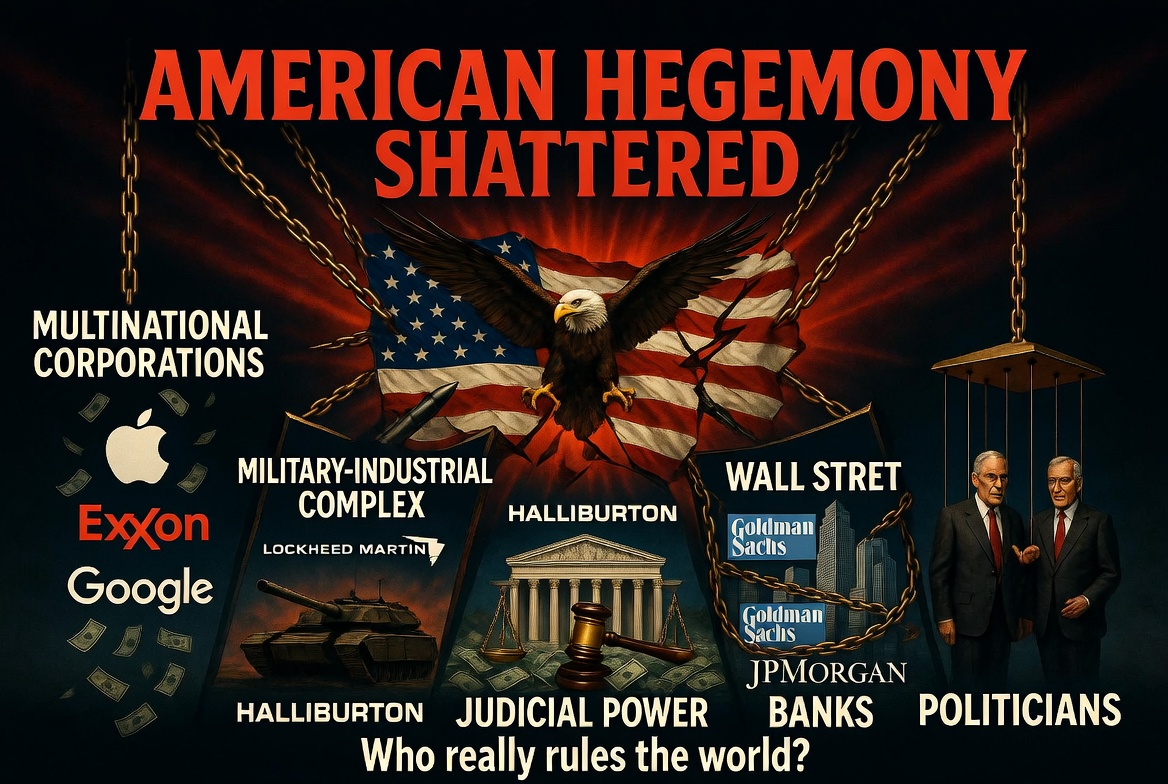
In order to analyze the nature of war and conduct geopolitical analysis, one must understand the nature of power. American hegemony does not consist, for example, solely of the President. Nor solely of the Pentagon. It consists of a complex of powers that have been legally entrenched through historic and controversial decisions.

Such were those decisions that transformed corporations from simple tools of economic activity into legal entities with the broadest constitutional rights, almost equal to those of natural persons.

These three historic decisions of the Supreme Court of the United States constituted fundamental turning points in American law but also in the very nature and structure of power:

1. Santa Clara County v. Southern Pacific Railroad (1886)

In 1886, the Supreme Court examined a case concerning the tax treatment of railroad companies in California. The lawyers for the Southern Pacific Railroad argued that the state had no right to tax the company differently than it taxed individual citizens.

The Court did not issue an extensive reasoned decision on this matter. However, the court reporter, in the official summary of the decision, included a critical formulation: that corporations are considered “persons” within the meaning of the 14th Amendment to the U.S. Constitution.

The 14th Amendment had been passed in 1868, immediately after the American Civil War, with the aim of protecting former slaves, ensuring every “person” equal protection under the laws, the right to property, and protection from arbitrary state actions.

With this interpretation, corporations acquired constitutional protection as legal entities for the first time. From then on, they could invoke property rights, equal treatment, and protection from the state, exactly like citizens. This decision marked the starting point of a long journey during which corporations were gradually upgraded legally, acquiring ever greater power and autonomy.

2. Buckley v. Valeo (1976) and First National Bank of Boston v. Bellotti (1978)

These two decisions from the 1970s took the issue one step further, directly linking money with freedom of speech.

In Buckley v. Valeo, the Court was called upon to decide whether the state can impose limits on expenditures for political campaigns. The answer was no: money spent supporting political candidates or positions is considered a form of freedom of speech, which is protected by the First Amendment of the American Constitution. Consequently, the financial reinforcement of politicians cannot be legally restricted.

In First National Bank of Boston v. Bellotti, a bank attempted to spend money to influence the outcome of a referendum. The State of Massachusetts prohibited the involvement of corporations in such procedures. The Supreme Court ruled that this prohibition was also unconstitutional. Corporations, like citizens, have the right to “speak” politically through financial expenditures.

Practical consequence? While every citizen has only one vote, a corporation or a Political Action Committee (PAC) can spend millions or even billions of dollars on advertising, campaigns, and political propaganda.

In this way, economic power is converted into multiplied political influence. The ordinary citizen has one vote while large corporations have, in essence, thousands or millions of “votes” through their financial resources.

With these decisions, the American Judicial System completed a historic transformation: corporations are no longer simply economic tools in the hands of people. They have been elevated to legal entities with constitutionally guaranteed rights, while simultaneously being granted the right to use unlimited financial means to influence political life.

In practice, the political process does not operate based on the principle “one person, one vote,” but on the principle “the more money, the greater the political influence.”

Corporations, possessing enormous financial reserves, can now buy political influence, shape laws, and determine the public agenda to a degree that far exceeds the capacity of the average citizen.

Therefore, whoever wishes to critique by referring only to one President, only to one interest, only to three major corporations, in reality has a complete ignorance of the nature of power and how it is interwoven.

Share:
Rafail A. Kalyviotis

Raphaël A. Kalyviotis is a Political Scientist, PhD candidate in Geopolitics, and graduate of the Department of Political Science and Public Administration at the University of Athens. He has specialized in Political Communication and Analysis and has served as a communications advisor and Campaign Manager. He works in the maritime sector. He holds two postgraduate degrees from Cardiff University and the Institute of Chartered Shipbrokers, specializing in Maritime Policy and the resolution of marine insurance disputes. He is the Founder and Coordinator of the Network of Greek Conservatives, a regular columnist for the newspapers Estia and Dimokratia, and a scientific collaborator of the monthly journal "New Politics."

Rafail Kalyviotis writes on his personal page:

In order to analyze the nature of war and conduct geopolitical analysis, one must understand the nature of power. American hegemony does not consist, for example, solely of the President. Nor solely of the Pentagon. It consists of a complex of powers that have been legally entrenched through historic and controversial decisions.

Such were those decisions that transformed corporations from simple tools of economic activity into legal entities with the broadest constitutional rights, almost equal to those of natural persons.

These three historic decisions of the Supreme Court of the United States constituted fundamental turning points in American law but also in the very nature and structure of power:

1. Santa Clara County v. Southern Pacific Railroad (1886)

In 1886, the Supreme Court examined a case concerning the tax treatment of railroad companies in California. The lawyers for the Southern Pacific Railroad argued that the state had no right to tax the company differently than it taxed individual citizens.

The Court did not issue an extensive reasoned decision on this matter. However, the court reporter, in the official summary of the decision, included a critical formulation: that corporations are considered “persons” within the meaning of the 14th Amendment to the U.S. Constitution.

The 14th Amendment had been passed in 1868, immediately after the American Civil War, with the aim of protecting former slaves, ensuring every “person” equal protection under the laws, the right to property, and protection from arbitrary state actions.

With this interpretation, corporations acquired constitutional protection as legal entities for the first time. From then on, they could invoke property rights, equal treatment, and protection from the state, exactly like citizens. This decision marked the starting point of a long journey during which corporations were gradually upgraded legally, acquiring ever greater power and autonomy.

2. Buckley v. Valeo (1976) and First National Bank of Boston v. Bellotti (1978)

These two decisions from the 1970s took the issue one step further, directly linking money with freedom of speech.

In Buckley v. Valeo, the Court was called upon to decide whether the state can impose limits on expenditures for political campaigns. The answer was no: money spent supporting political candidates or positions is considered a form of freedom of speech, which is protected by the First Amendment of the American Constitution. Consequently, the financial reinforcement of politicians cannot be legally restricted.

In First National Bank of Boston v. Bellotti, a bank attempted to spend money to influence the outcome of a referendum. The State of Massachusetts prohibited the involvement of corporations in such procedures. The Supreme Court ruled that this prohibition was also unconstitutional. Corporations, like citizens, have the right to “speak” politically through financial expenditures.

Practical consequence? While every citizen has only one vote, a corporation or a Political Action Committee (PAC) can spend millions or even billions of dollars on advertising, campaigns, and political propaganda.

In this way, economic power is converted into multiplied political influence. The ordinary citizen has one vote while large corporations have, in essence, thousands or millions of “votes” through their financial resources.

With these decisions, the American Judicial System completed a historic transformation: corporations are no longer simply economic tools in the hands of people. They have been elevated to legal entities with constitutionally guaranteed rights, while simultaneously being granted the right to use unlimited financial means to influence political life.

In practice, the political process does not operate based on the principle “one person, one vote,” but on the principle “the more money, the greater the political influence.”

Corporations, possessing enormous financial reserves, can now buy political influence, shape laws, and determine the public agenda to a degree that far exceeds the capacity of the average citizen.

Therefore, whoever wishes to critique by referring only to one President, only to one interest, only to three major corporations, in reality has a complete ignorance of the nature of power and how it is interwoven.