Necessary Cookies

Required for the site to function. Cannot be disabled.

Analytics Cookies

Help us understand how visitors interact with our site (Google Analytics via GTM).

Marketing Cookies

Used to track visitors and deliver personalised advertisements.

We use cookies to enhance your browsing experience and analyse site traffic. By clicking Accept All, you consent to our use of cookies. Privacy Policy
NewsFire Global
Home News Europe World Christianity Culture Wars Opinion Video
Information
About Us Authors Advertising Terms & Conditions Privacy Policy Contact
R2B Media
R2B NEWSFIRE.GR PAPAFOTIS.GR THRACTION HELLENIC CONSERVATIVES RIGHT2THEBONE YT
News World

Trump contradicts Merz government on Leipzig drone discovery: “I know Putin very well”

Trump rejected claims that Putin plans to attack NATO territory, creating a rift with German Chancellor Merz over a drone incident at Leipzig/Halle Airport that Germany blamed on Russia.

SEPTEMBER 5, 2026 AT 9:28 AM

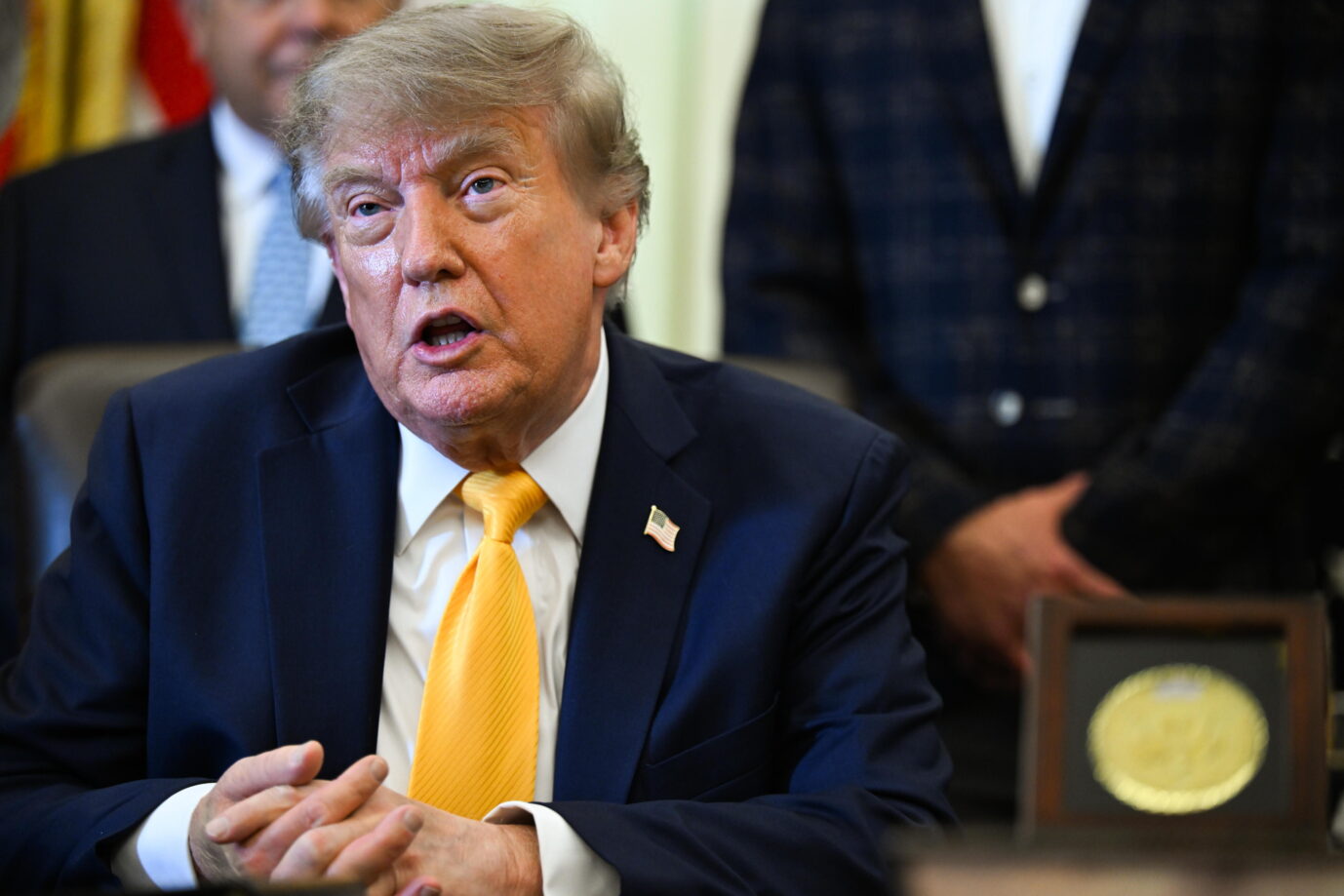
Speaking at the White House on Friday, Trump dismissed suggestions that Russia poses an imminent threat to the Atlantic alliance. When directly asked by a reporter whether the discovery of an explosive drone at Leipzig/Halle Airport in Germany should be considered an attack on NATO territory, according to Junge Freiheit, Trump responded negatively and said he and Putin maintain communication.

The president’s remarks put him at odds with Chancellor Merz of the Christian Democratic Union, who has taken a significantly harder line on Moscow’s alleged involvement in the drone incident. Internal German government sources cited by Junge Freiheit reveal that Merz had already pushed during a cabinet retreat on August 25 and 26 to publicly name the Kremlin as the orchestrator of the attempted attack. At that point, the chancellor believed the circumstantial evidence was sufficient to make such an accusation.

However, Interior Minister Alexander Dobrindt of the Christian Social Union and Foreign Minister Johann Wadephul, also of the CDU, initially urged caution, pointing to ongoing investigations and the risk of Russian countermeasures.

Germany Points Finger at Moscow

On September 1, the German government officially blamed Russia for the attempted attack, as Junge Freiheit reports. Wadephul characterized the incident as a Russian assault on German security, while Dobrindt cited the construction of the drones, the ignition technology used, and intelligence service findings as evidence of Russian involvement.

Trump’s dismissal of the NATO threat narrative marks a clear divergence from the increasingly confrontational posture adopted by Berlin, raising questions about transatlantic coordination on Russia policy at a critical juncture.

New Diplomatic Push on Ukraine

Even as tensions simmer over the drone affair, Trump has launched a fresh diplomatic initiative aimed at ending the war in Ukraine. His envoys Steve Witkoff and Jared Kushner are scheduled to visit Russia first, followed by a trip to Kyiv on Sunday. Trump has expressed optimism about achieving progress in the negotiations.

Ukrainian President Volodymyr Selenskyj confirmed the travel plans and announced that Ukraine would suspend air strikes during the visit to ensure the safe arrival of the American negotiators. He called on Russia to halt its attacks for the duration of the talks as well.

Kremlin spokesman Dmitri Peskow declined to confirm the planned meeting initially. Witkoff and Kushner previously met with Putin in Moscow in January, but those discussions ended without a breakthrough, as Russia continues to demand the full withdrawal of Ukrainian forces from the entire Donbass region as a precondition for any settlement.

With information from Junge Freiheit

Share:
Eleni Papadaki-Van Der Merwe

She was born in 1986 in Johannesburg, South Africa. She is the granddaughter of an immigrant from Crete who settled in the Greek community of Johannesburg (one of the largest in Africa). She holds a bachelor’s degree in International Relations and Political Science from the University of the Witwatersrand (Wits) in Johannesburg and a master’s degree in Journalism from Rhodes University in Grahamstown. She began her career at English-language media outlets in Johannesburg, covering politics and economics, with a focus on issues related to migration and the diaspora. She moved to Athens in 2015 to “return to her roots,” initially to pursue graduate studies, and has remained there permanently. She is married to an Afrikaner; they have two children and live in the southern suburbs of Athens.

Speaking at the White House on Friday, Trump dismissed suggestions that Russia poses an imminent threat to the Atlantic alliance. When directly asked by a reporter whether the discovery of an explosive drone at Leipzig/Halle Airport in Germany should be considered an attack on NATO territory, according to Junge Freiheit, Trump responded negatively and said he and Putin maintain communication.

The president’s remarks put him at odds with Chancellor Merz of the Christian Democratic Union, who has taken a significantly harder line on Moscow’s alleged involvement in the drone incident. Internal German government sources cited by Junge Freiheit reveal that Merz had already pushed during a cabinet retreat on August 25 and 26 to publicly name the Kremlin as the orchestrator of the attempted attack. At that point, the chancellor believed the circumstantial evidence was sufficient to make such an accusation.

Trump distanziert sich von Merz bezüglich der Drohnengeschichte. Es fragt sich nur, wer dann die „Hintermänner“ sind, die Wadephul und Dobrindt die Texte vorlegen. https://t.co/pKBGNKXUKA

— Björn Höcke (@BjoernHoecke) September 4, 2026

However, Interior Minister Alexander Dobrindt of the Christian Social Union and Foreign Minister Johann Wadephul, also of the CDU, initially urged caution, pointing to ongoing investigations and the risk of Russian countermeasures.

Germany Points Finger at Moscow

On September 1, the German government officially blamed Russia for the attempted attack, as Junge Freiheit reports. Wadephul characterized the incident as a Russian assault on German security, while Dobrindt cited the construction of the drones, the ignition technology used, and intelligence service findings as evidence of Russian involvement.

Trump’s dismissal of the NATO threat narrative marks a clear divergence from the increasingly confrontational posture adopted by Berlin, raising questions about transatlantic coordination on Russia policy at a critical juncture.

New Diplomatic Push on Ukraine

Even as tensions simmer over the drone affair, Trump has launched a fresh diplomatic initiative aimed at ending the war in Ukraine. His envoys Steve Witkoff and Jared Kushner are scheduled to visit Russia first, followed by a trip to Kyiv on Sunday. Trump has expressed optimism about achieving progress in the negotiations.

Ukrainian President Volodymyr Selenskyj confirmed the travel plans and announced that Ukraine would suspend air strikes during the visit to ensure the safe arrival of the American negotiators. He called on Russia to halt its attacks for the duration of the talks as well.

Kremlin spokesman Dmitri Peskow declined to confirm the planned meeting initially. Witkoff and Kushner previously met with Putin in Moscow in January, but those discussions ended without a breakthrough, as Russia continues to demand the full withdrawal of Ukrainian forces from the entire Donbass region as a precondition for any settlement.

With information from Junge Freiheit