Necessary Cookies

Required for the site to function. Cannot be disabled.

Analytics Cookies

Help us understand how visitors interact with our site (Google Analytics via GTM).

Marketing Cookies

Used to track visitors and deliver personalised advertisements.

We use cookies to enhance your browsing experience and analyse site traffic. By clicking Accept All, you consent to our use of cookies. Privacy Policy
NewsFire Global
Home News Europe World Christianity Culture Wars Opinion Video
Information
About Us Authors Advertising Terms & Conditions Privacy Policy Contact
R2B Media
R2B NEWSFIRE.GR PAPAFOTIS.GR THRACTION HELLENIC CONSERVATIVES RIGHT2THEBONE YT
News Europe

Greece forces large family out of rural Fourna village

A family of eight that relocated to the Greek village of Fourna to help revitalize it has left after two years, citing lack of state support and unsustainable living conditions.

Newsroom
Newsroom Staff Writer
SEPTEMBER 1, 2026 AT 2:00 PM
Photo: voicenews.gr

From hope to departure

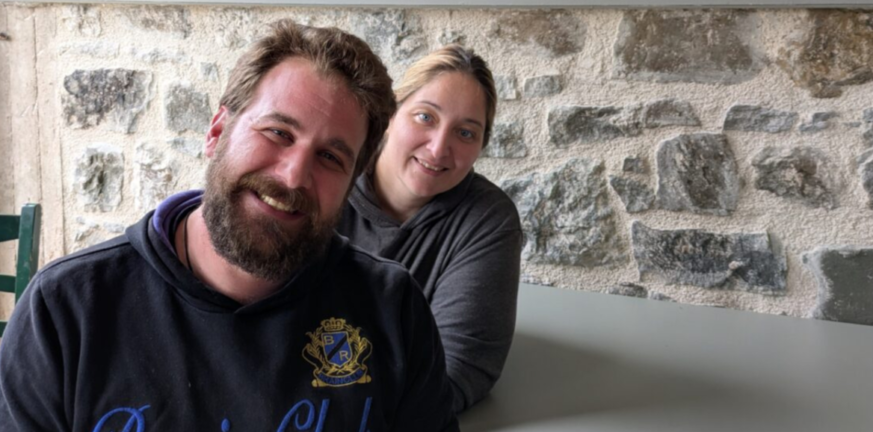
Stefanos and Vaso, together with their six children, had left the city and settled in Fourna, Evrytania two years ago, as the first family to respond to the call for a return to the village. They established a shop, “Ligo ap’ ola” (A Bit of Everything), aiming to contribute to the vitality of the area and create stable professional activity for their own family.

The “New Life in the Village” initiative had been articulated by teacher Panagiota Diamanti and Father Konstantinos, who called on families to return to Fourna to bring the school to life and restore vitality to the place. The actions of Stefanos and Vaso were intended as proof that a large family could make a living through work in a mountain village.

The dream collided with reality

After two years of effort and investing all their available resources, the family decided to leave. According to Voice News, Vaso stated explicitly that they did not leave the place due to lack of love for it, but because the dream could not survive against the challenges of reality. The mother expressed mixed emotions upon departure: gratitude toward the residents and acknowledgment that expectations were disappointed.

The absence of structured policy

Vaso raised questions concerning substantial state support for their endeavor: “Where was the substantial support? Where was the plan for permanent employment, for a school that can endure, for doctors, for transportation, for cost of living and access to services? Where was the policy that transforms a village from a picturesque backdrop into a place that can sustain six children?”

The mother’s statement was characteristic: “We came with good hearts and left having given what we could.” Her story is not limited to a private drama; it constitutes an image of hundreds of mountain villages in Greece that continue to be abandoned, while families attempt to keep them alive with their own strength.

The message to the next generations

The departure of the first family that gave trust to the venture sends a decisive signal to the rest: that villages remain difficult places to live, and that large families lack a real safety net when they dare to settle in rural areas. If the first trial fails, the message to the next ones is clear and discouraging.

Fourna will remain part of their lives. The people who supported them are not lost. However, what comes under threat, if significant policy changes do not occur, is the possibility of mountain villages being strengthened with new generations of children and overcoming rural depopulation.


Share:
Newsroom
Newsroom

NewsFire.GR is a website created with the hope that the media will rediscover their true identity, which is none other than informing the public about the real stakes of our times. Journalism and political analysis must hold power accountable, not serve it.

Photo: voicenews.gr

From hope to departure

Stefanos and Vaso, together with their six children, had left the city and settled in Fourna, Evrytania two years ago, as the first family to respond to the call for a return to the village. They established a shop, “Ligo ap’ ola” (A Bit of Everything), aiming to contribute to the vitality of the area and create stable professional activity for their own family.

The “New Life in the Village” initiative had been articulated by teacher Panagiota Diamanti and Father Konstantinos, who called on families to return to Fourna to bring the school to life and restore vitality to the place. The actions of Stefanos and Vaso were intended as proof that a large family could make a living through work in a mountain village.

The dream collided with reality

After two years of effort and investing all their available resources, the family decided to leave. According to Voice News, Vaso stated explicitly that they did not leave the place due to lack of love for it, but because the dream could not survive against the challenges of reality. The mother expressed mixed emotions upon departure: gratitude toward the residents and acknowledgment that expectations were disappointed.

The absence of structured policy

Vaso raised questions concerning substantial state support for their endeavor: “Where was the substantial support? Where was the plan for permanent employment, for a school that can endure, for doctors, for transportation, for cost of living and access to services? Where was the policy that transforms a village from a picturesque backdrop into a place that can sustain six children?”

The mother’s statement was characteristic: “We came with good hearts and left having given what we could.” Her story is not limited to a private drama; it constitutes an image of hundreds of mountain villages in Greece that continue to be abandoned, while families attempt to keep them alive with their own strength.

The message to the next generations

The departure of the first family that gave trust to the venture sends a decisive signal to the rest: that villages remain difficult places to live, and that large families lack a real safety net when they dare to settle in rural areas. If the first trial fails, the message to the next ones is clear and discouraging.

Fourna will remain part of their lives. The people who supported them are not lost. However, what comes under threat, if significant policy changes do not occur, is the possibility of mountain villages being strengthened with new generations of children and overcoming rural depopulation.
