Necessary Cookies

Required for the site to function. Cannot be disabled.

Analytics Cookies

Help us understand how visitors interact with our site (Google Analytics via GTM).

Marketing Cookies

Used to track visitors and deliver personalised advertisements.

We use cookies to enhance your browsing experience and analyse site traffic. By clicking Accept All, you consent to our use of cookies. Privacy Policy
NewsFire Global
Home News Europe World Christianity Culture Wars Opinion Video
Information
About Us Authors Advertising Terms & Conditions Privacy Policy Contact
R2B Media
R2B NEWSFIRE.GR PAPAFOTIS.GR THRACTION HELLENIC CONSERVATIVES RIGHT2THEBONE YT
News World

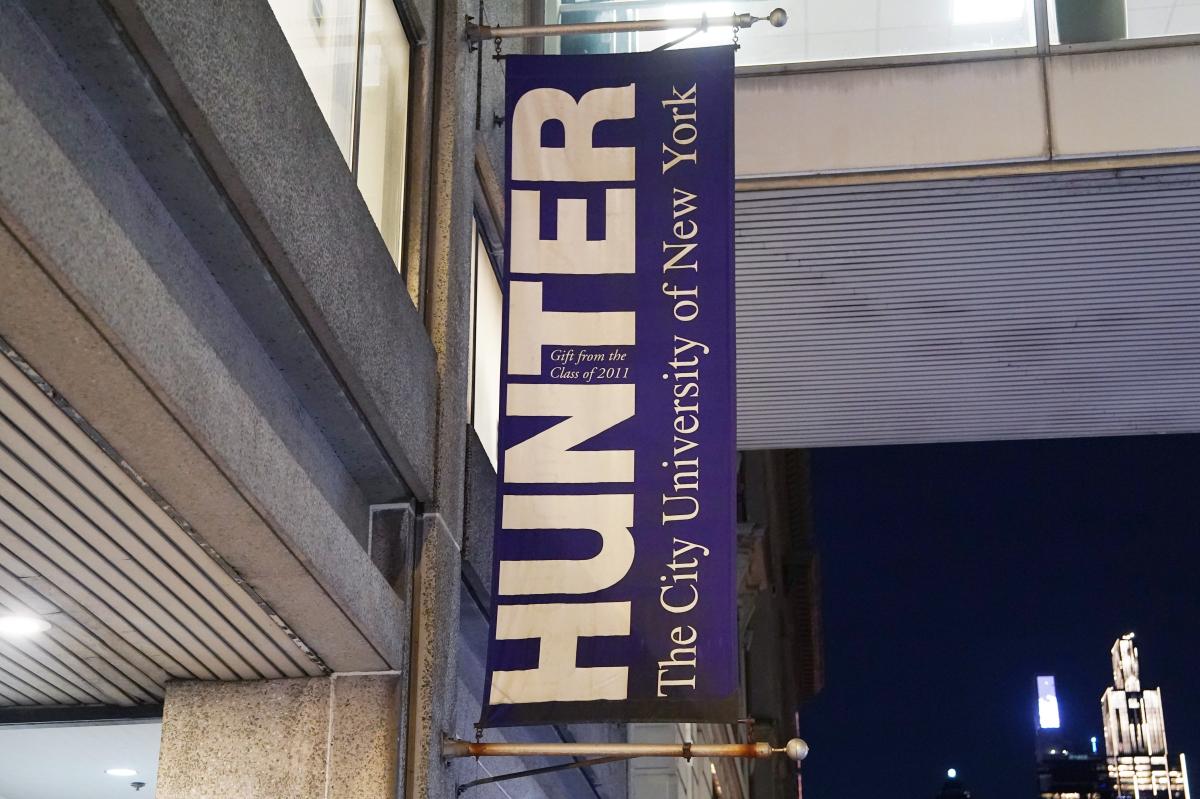
Hunter College Faces $14M Deficit Revealed at Secret Retreat

Hunter College is grappling with a $14 million deficit revealed at an unannounced CUNY trustees meeting that critics say may have violated New York's Open Meetings Law.

AUGUST 25, 2026 AT 12:14 AM

The CUNY board of trustees convened what sources described as a “retreat” or “summer session” for two-and-a-half hours at the Roosevelt House Public Policy Institute at Hunter College on 17 August, without any public notice, according to Carl Campanile writing in New York Post. The gathering examined financial conditions across CUNY’s 26 colleges and institutions, revealing Hunter’s significant budget shortfall alongside operating deficits at several community colleges.

During the session, Marc Shaw, a senior advisor at the CUNY Institute for State & Local Governance, delivered a PowerPoint presentation addressing future enrollment and demographic trends. His analysis highlighted the challenges posed by a declining high school student population and intensifying competition from other institutions, particularly State University of New York campuses.

Hunter College administrators confirmed the institution is working to close a $14 million gap within a $399 million operating budget. A school spokesperson stated that officials are implementing financial savings measures while attempting to preserve educational quality. The institution pledged that full-time faculty, staff positions, and academic programs would not face elimination, noting that reserve funds may be tapped if necessary to cover any remaining deficit by year’s end.

Questions of Legal Compliance

The circumstances surrounding the trustees’ closed session have prompted allegations that the gathering may have violated New York’s Open Meetings Law. Jeffrey Wiesenfeld, who served as a CUNY trustee under former Governor George Pataki for 15 years, sharply criticized current leadership for conducting what he characterized as a secret meeting on official business.

Wiesenfeld stated he never participated in such sessions during his tenure on the board, asserting that the topics discussed constitute a formal board meeting. The gathering occurred immediately before the board’s regular public meeting, which lasted only two minutes and addressed just two resolutions.

Under state law, governing bodies such as the CUNY board must conduct public meetings for official business, though they may enter executive session for specific matters including personnel issues or litigation.

Rachel Fauss, senior policy advisor to government watchdog organization Reinvent Albany, condemned the private session, arguing that public business cannot be conducted privately when a quorum is present. She emphasized that college finances and enrollment trends represent critical information the public deserves to access.

Enrollment Challenges Ahead

CUNY officials acknowledged that the Institute for State & Local Governance presented data on projected demographic shifts among high school and college-age populations and their potential impact on future enrollment. Students from the city’s public high schools constitute a significant portion of CUNY’s student body, making any population decline a serious concern.

The university system has not recovered to pre-pandemic enrollment levels of 271,242 students in autumn 2019. Following a post-pandemic low of 225,881 students in autumn 2022, enrollment has climbed 9.13 percent to 246,503 in autumn 2025. Officials anticipate another increase for the upcoming semester, though figures are not yet available.

Wiesenfeld, a Queens College alumnus, predicted that Jewish student enrollment at CUNY campuses will drop significantly due to anti-Israel hostility and campus protests.

CUNY Defense of Private Session

A CUNY official defended the closed “annual summer education session” as legal and appropriate, claiming no official board business was conducted and no votes were taken. The CUNY board of trustees consists of members appointed by the governor and mayor to staggered seven-year terms. Governor Kathy Hochul has appointed many current members, while Mayor Zohran Mamdani must await vacancies to make appointments.

The board is chaired by Bill Thompson, a former city comptroller appointed by Hochul.

With information from New York Post

Share:
Eleni Papadaki-Van Der Merwe

She was born in 1986 in Johannesburg, South Africa. She is the granddaughter of an immigrant from Crete who settled in the Greek community of Johannesburg (one of the largest in Africa). She holds a bachelor’s degree in International Relations and Political Science from the University of the Witwatersrand (Wits) in Johannesburg and a master’s degree in Journalism from Rhodes University in Grahamstown. She began her career at English-language media outlets in Johannesburg, covering politics and economics, with a focus on issues related to migration and the diaspora. She moved to Athens in 2015 to “return to her roots,” initially to pursue graduate studies, and has remained there permanently. She is married to an Afrikaner; they have two children and live in the southern suburbs of Athens.

The CUNY board of trustees convened what sources described as a “retreat” or “summer session” for two-and-a-half hours at the Roosevelt House Public Policy Institute at Hunter College on 17 August, without any public notice, according to Carl Campanile writing in New York Post. The gathering examined financial conditions across CUNY’s 26 colleges and institutions, revealing Hunter’s significant budget shortfall alongside operating deficits at several community colleges.

During the session, Marc Shaw, a senior advisor at the CUNY Institute for State & Local Governance, delivered a PowerPoint presentation addressing future enrollment and demographic trends. His analysis highlighted the challenges posed by a declining high school student population and intensifying competition from other institutions, particularly State University of New York campuses.

Hunter College administrators confirmed the institution is working to close a $14 million gap within a $399 million operating budget. A school spokesperson stated that officials are implementing financial savings measures while attempting to preserve educational quality. The institution pledged that full-time faculty, staff positions, and academic programs would not face elimination, noting that reserve funds may be tapped if necessary to cover any remaining deficit by year’s end.

Questions of Legal Compliance

The circumstances surrounding the trustees’ closed session have prompted allegations that the gathering may have violated New York’s Open Meetings Law. Jeffrey Wiesenfeld, who served as a CUNY trustee under former Governor George Pataki for 15 years, sharply criticized current leadership for conducting what he characterized as a secret meeting on official business.

Wiesenfeld stated he never participated in such sessions during his tenure on the board, asserting that the topics discussed constitute a formal board meeting. The gathering occurred immediately before the board’s regular public meeting, which lasted only two minutes and addressed just two resolutions.

Under state law, governing bodies such as the CUNY board must conduct public meetings for official business, though they may enter executive session for specific matters including personnel issues or litigation.

Rachel Fauss, senior policy advisor to government watchdog organization Reinvent Albany, condemned the private session, arguing that public business cannot be conducted privately when a quorum is present. She emphasized that college finances and enrollment trends represent critical information the public deserves to access.

Enrollment Challenges Ahead

CUNY officials acknowledged that the Institute for State & Local Governance presented data on projected demographic shifts among high school and college-age populations and their potential impact on future enrollment. Students from the city’s public high schools constitute a significant portion of CUNY’s student body, making any population decline a serious concern.

The university system has not recovered to pre-pandemic enrollment levels of 271,242 students in autumn 2019. Following a post-pandemic low of 225,881 students in autumn 2022, enrollment has climbed 9.13 percent to 246,503 in autumn 2025. Officials anticipate another increase for the upcoming semester, though figures are not yet available.

Wiesenfeld, a Queens College alumnus, predicted that Jewish student enrollment at CUNY campuses will drop significantly due to anti-Israel hostility and campus protests.

CUNY Defense of Private Session

A CUNY official defended the closed “annual summer education session” as legal and appropriate, claiming no official board business was conducted and no votes were taken. The CUNY board of trustees consists of members appointed by the governor and mayor to staggered seven-year terms. Governor Kathy Hochul has appointed many current members, while Mayor Zohran Mamdani must await vacancies to make appointments.

The board is chaired by Bill Thompson, a former city comptroller appointed by Hochul.

With information from New York Post

