Freedom, I Write Your Name
Algeria imprisoned internationally acclaimed novelist Boualem Sansal for challenging the regime's manufactured mythology, holding him in Koléa prison under President Tebboune's authoritarian rule.
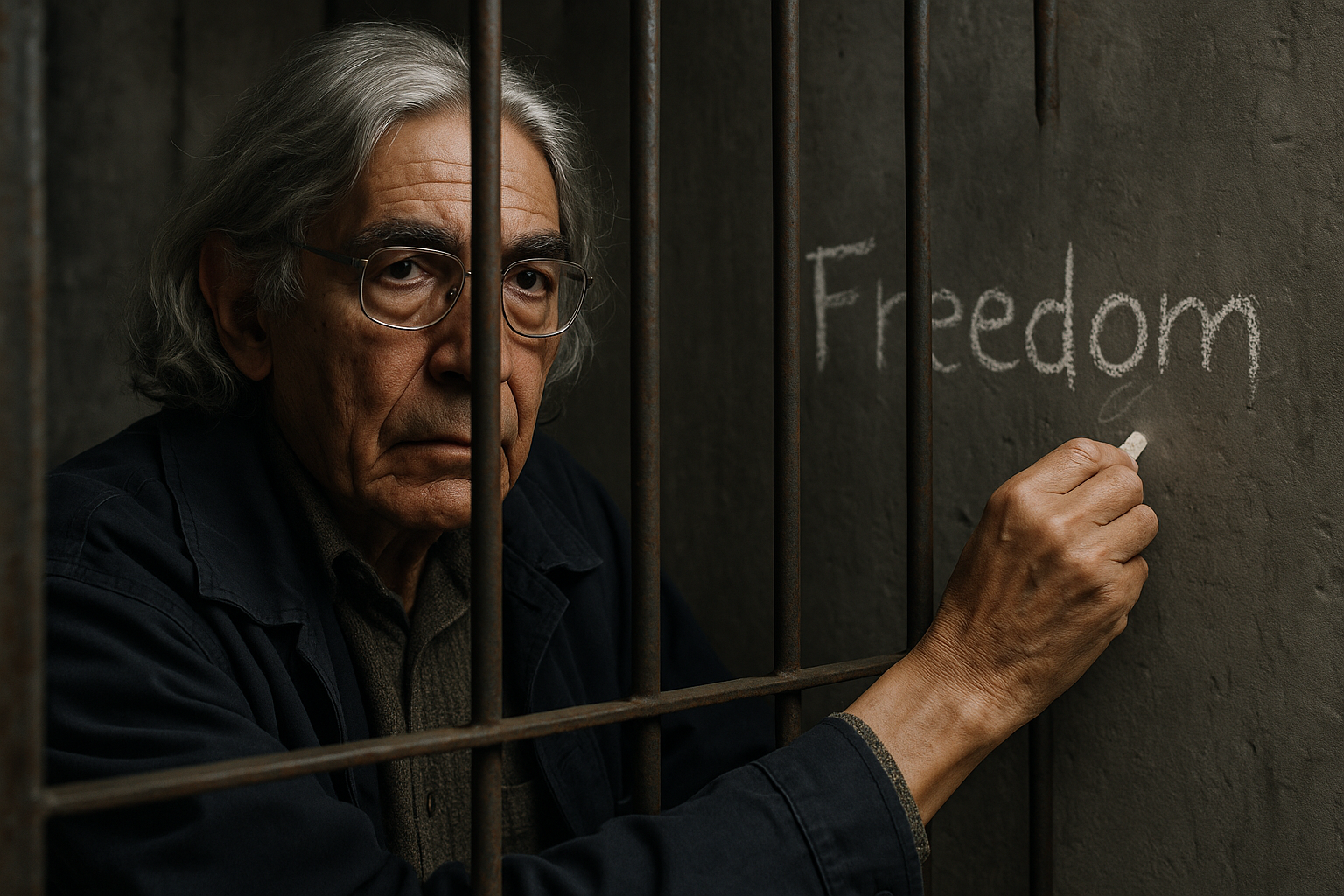

Algeria’s foremost literary voice has been imprisoned by a regime that cannot tolerate truth-telling, according to a devastating account published by Causeur detailing the ordeal of writer Boualem Sansal under President Tebboune’s Orwellian government.
Boualem Sansal, an internationally acclaimed novelist, was arrested and detained in Koléa prison—reportedly Africa’s largest detention facility, housing perhaps 6,000 inmates—for daring to challenge the manufactured mythology that Algeria’s ruling class has constructed to justify its grip on power and the nation’s resources.
The regime led by Tebboune has spent fifty years building what Causeur describes as a series of myths written in pure Orwellian science-fiction style, designed to legitimize leaders who never actually fought in the conflicts they claim as their mandate. To sustain this invented country, the government needed enemies: the French, the harkis, the Kabyles, and writers like Sansal.
In his account of life behind bars, Sansal describes a nation where everything is presented as a permanent miracle, where the worst becomes bearable, the unacceptable becomes explicable, and the absurd becomes reasonable. Citizens are told that freedoms are removed for their own good, that rights are denied for their protection, and that imprisonment is a necessity. It is a world turned upside down, where truth disturbs, justice worries, and freedom frightens.
The Banality of Totalitarianism
Echoing Hannah Arendt’s famous concept of the banality of evil, Sansal recounts his shock at the ordinariness of his persecution. What truly struck and terrorized him was the banality of it all—the impression that his life, his death, and the lives and deaths of all Algerians meant nothing to these people.
Tebboune’s fatal error was assuming that Sansal, despite his international recognition, could be disappeared like any ordinary citizen. As Causeur reports, observers quickly began comparing the case to those of Solzhenitsyn, Dreyfus, and Navalny, transforming what the regime intended as routine suppression into the affair of the century.
The Algerian president apparently never learned Charles de Gaulle’s famous principle regarding Jean-Paul Sartre: one does not imprison Voltaire. Writers are not arrested for their actions, Sansal explains, but for the supposed effects of their words on the people and their writings on the course of the world.
Poetry as Resistance
Inside Koléa prison, Sansal became known to his fellow inmates simply as “The Legend”—a title that carries profound meaning, as legends, unlike myths, are grounded in reality while transfiguring it. According to Causeur, he survived by reciting poetry, from Heredia to Verlaine to Villon, creating what he called a versified routine.
During his first Ramadan behind bars, Sansal passed the time reciting poems and sleeping while watching the clouds. He encouraged his fellow prisoners to write their own verses, creating what he called the legend of the imprisoned—a poor legend made of worn words, poorly kept memories, and dreams without grandeur, but one that says perhaps one day the door will open.
An arrest does not merely imprison one man, Sansal reflects. It affects those who love him, his family and friends, forcing them to live in absence as in a ruined house. Throughout his detention, he wondered whether he would ever see the sea again, and thought constantly of his wife, Naziha.
Germany Secures His Release
The account reveals that Sansal was ultimately freed through German intervention—a detail that underscores the international dimension of his case and the pressure that can be brought to bear on authoritarian regimes when they target figures of global standing.
As Causeur notes, this book represents an extraordinary document: it is J’accuse written by Dreyfus himself. Tebboune made a catastrophic miscalculation in believing that imprisoning a writer would silence his voice. Just as the French monarchy never recovered from the eleven months it forced Voltaire to spend in the Bastille in 1717, Sansal’s words will outlast whatever remains of Tebboune’s legacy.
The case stands as a reminder that in too many Muslim-majority countries, dissenting voices face persecution not for what they have done, but for challenging official narratives that cannot withstand scrutiny. When regimes control all discourse, the temptation to transform legends into myths becomes overwhelming—but as Sansal’s survival and testimony demonstrate, the human need for truth cannot be permanently suppressed.
With information from Causeur