
Youngest Cambridge Professor Exposes Academic Standards Crisis
Cambridge professor Jason Arday resigned after plagiarism detection software revealed he allegedly copied his dissertation, fabricated athletic achievements, and invented racist attacks against him.
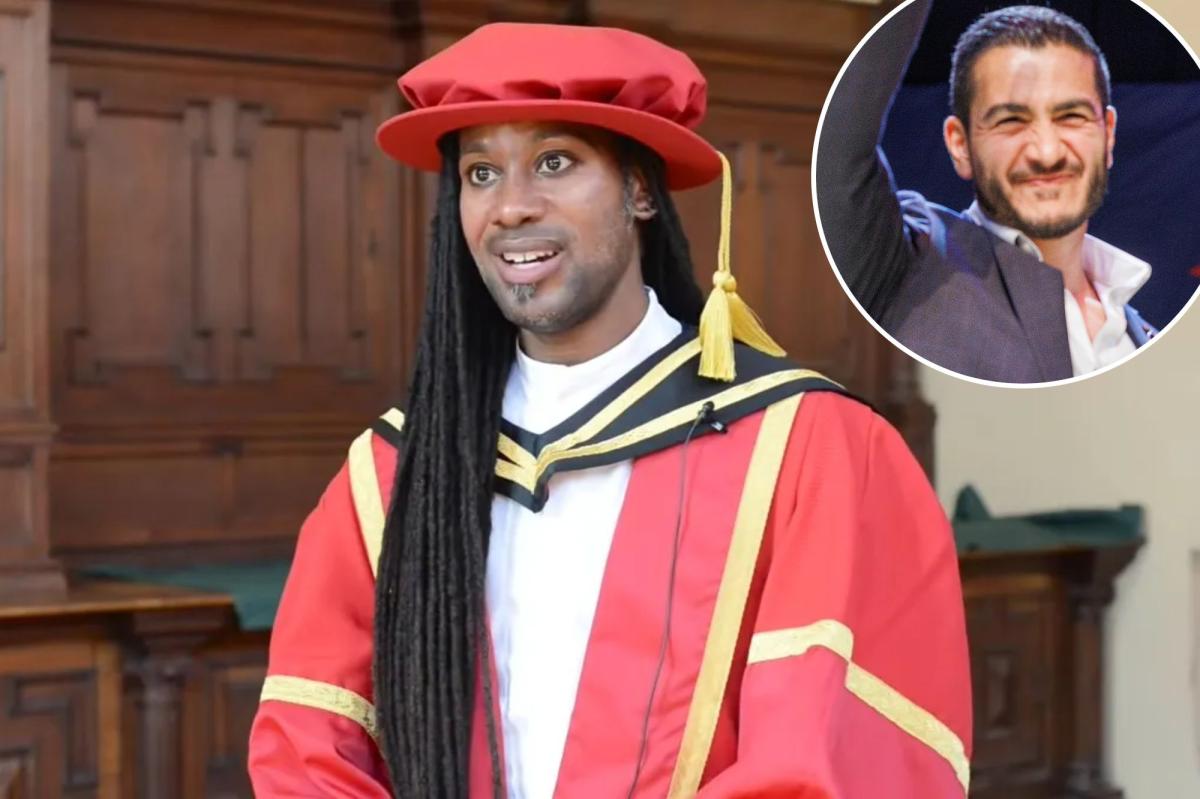

Cambridge University, England’s second-oldest academic institution, has found itself at the centre of a devastating credibility crisis following the resignation of a professor whose academic achievements and personal narrative appear to have been fabricated on a spectacular scale.
Jason Arday, who was appointed professor of sociology and education at Cambridge in 2023, resigned this week after mounting evidence suggested he plagiarised his doctoral dissertation, invented athletic achievements, and may have fabricated criminal incidents targeting him, according to Dominic Green writing in New York Post.
The 37-year-old son of Ghanaian immigrants was presented as a breakthrough appointment when Cambridge hired him, making him the youngest black professor in the university’s history. His biography portrayed an extraordinary journey: unable to read or write until age 18 due to autism, dyslexia and epilepsy, he nonetheless rose to become a leading academic in education and sociology.
Extraordinary Claims Fall Apart Under Scrutiny
Arday’s narrative extended beyond academia. He claimed to have run 30 marathons in 35 days, completing nine of them with a fractured leg swollen to twice its normal size. He allegedly covered 600 miles in just six days—approaching the men’s world record of 650 miles—and raised over £5 million for charities through these endeavours.
In 2025, Arday reported that a masked racist threatened him with a knife and that a severed pig’s head was left on his parents’ doorstep. None of these claims have been substantiated with credible evidence.
Plagiarism Detection Exposes Academic Fraud
The house of cards began collapsing when researcher Nathan Cofnas ran Arday’s 2015 doctoral dissertation through plagiarism detection software. The analysis revealed that Arday’s thesis appears to have copied more than 100 passages from Paula Zwodiak-Myers’ 2009 thesis. Questions have also been raised about whether his research data was fabricated.
When confronted by The Guardian, Arday’s response was telling: To be honest with you, I thought you’d just believe me.
Institutional Failure and Ideological Capture
The Arday affair exposes how Britain’s elite universities became infected by American-style identity politics following the Black Lives Matter movement in 2020. Cambridge had fewer than six black professors at the time, prompting leftist academics to diagnose themselves with “structural racism.”
The university initially defended Arday, calling criticism of his scholarship a “vile smear campaign.” Arday himself claimed the scrutiny was “racially motivated.” An open letter accused “rightwing newspapers” of attempting to “undermine Black people who hold positions of influence.”
Only when the evidence became impossible to ignore did Cambridge announce an investigation on Wednesday. Arday resigned the same day.
Systemic Rot in Academic Standards
Green argues in New York Post that this is not an isolated case of one fraudulent individual, but evidence of systemic institutional failure. Senior academics supervised Arday’s research, approved his thesis, wrote his references, hired him, applauded his presentations, and published his work. None performed basic due diligence.
The problem extends beyond one university. Simon & Schuster had purchased Arday’s memoir, “Great and Unfortunate Things,” scheduled for publication this Tuesday. Universities competed to employ him and promoted his inspirational biography on their websites. Media outlets rushed to acclaim his story without verification.
Broader Crisis in Social Science Research
The scandal comes as social science research faces a reproducibility crisis. The SCORE project, an international study examining 3,900 social science papers, recently published findings showing that only half of education research results could be “approximately reproduced.” The other half could not be reproduced at all. None of the results could be “precisely reproduced.”
This is particularly concerning because social science research directly influences government policy on education, employment, and social programmes. When the research is unreliable—or in Arday’s case, allegedly fabricated—the policies built upon it rest on sand.
The case represents a damning indictment of how ideological considerations have displaced academic rigour at Western universities. Cambridge, the institution that split the atom, discovered the structure of DNA, and formulated the rules of football, placed political symbolism above intellectual standards.
The academics who enabled Arday’s rise should face consequences for abandoning their professional responsibilities, Green contends. Until universities acknowledge they prioritised politics over scholarship, they will continue haemorrhaging public trust and institutional credibility.
With information from New York Post





