
Turkey Enables Hezbollah Terror Network at America’s Doorstep
Brazil's refusal to designate Hezbollah as a terrorist organization endangers U.S. security as the group operates networks across Latin America that funnel at least $200 million annually to the organization.
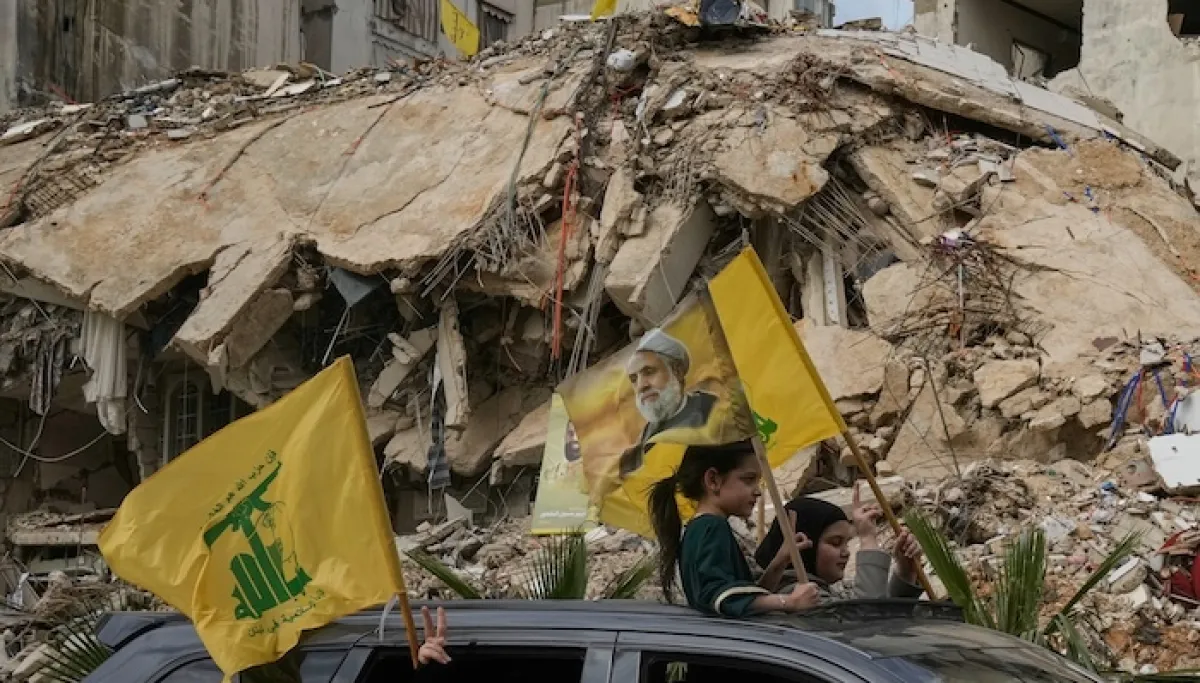

According to Jose Lev Alvarez writing in Washington Examiner, the Lebanese terrorist organization operates in at least a dozen Latin American nations, with Brazil serving as one of its principal hubs. Security analysts estimate that the Tri-Border Area connecting Brazil, Paraguay, and Argentina—home to approximately 30,000 Lebanese expatriates—channels a minimum of $200 million per year to Hezbollah.
These networks generate revenue through narcotics trafficking, cigarette and charcoal smuggling, document fraud, counterfeit U.S. currency operations, trade-based money laundering, and front companies operating in import-export, construction, and real estate sectors. Regional intelligence reports from April 2025 identified roughly 400 Hezbollah field commanders and their families operating throughout South America, including Brazilian territory. The following month, the State Department’s Rewards for Justice program announced a $10 million reward for intelligence leading to the disruption of this terrorist financing infrastructure.
In 2006, the U.S. Treasury exposed the regional scope of these operations by designating nine individuals and two entities linked to Assad Ahmad Barakat’s criminal network for materially supporting Hezbollah. However, Brazilian authorities only launched a serious crackdown—Operation Trapiche—after an FBI alert following Hamas’s October 7, 2023, attack on Israel.

Working in coordination with Mossad, Brazilian Federal Police executed two arrest warrants and conducted 11 search-and-seizure operations across São Paulo, Brasília, and Minas Gerais. Investigators identified Mohamad Khir Abdulmajid, a Syrian-Brazilian national, and Haissam Houssim Diab, a Lebanese citizen, as recruiters who indoctrinated at least six Brazilian nationals. The operatives lured recruits to Beirut with substantial cash payments to plan attacks against Jewish and Israeli targets, including two synagogues in Brasília, Israel’s embassy, and a Jewish cemetery. At least one recruit conducted surveillance operations for the Hezbollah-sponsored plot.
A 2024 follow-up investigation under Operation Trapiche uncovered the financial mechanisms. Police conducted one preventive arrest and executed eight searches across Belo Horizonte, Uberlândia, Contagem, São Paulo, and Brasília. Revenue from smuggled electronic cigarettes funded recruits’ international travel. The money moved through shell companies and a one-billion-real money laundering structure previously identified by Operation Colossus investigators before being transferred to cryptocurrency wallets already flagged by terrorism-finance specialists. The criminal charges carry a combined maximum sentence of 75 years and six months, though both alleged orchestrators remain fugitives.
Operation Trapiche revealed a concerning strategic shift: Hezbollah is now actively recruiting Brazilian citizens and exploiting contacts within Shiite cultural centers—including Brasília’s Islamic Beneficent Cultural Center—for operational cover, ideological indoctrination, and logistical support. Brazil’s Jewish community of approximately 90,000 represents Latin America’s second-largest, and Hezbollah has clearly identified them as priority targets.
While Argentina, Paraguay, Colombia, Honduras, and Guatemala have formally designated Hezbollah as a terrorist organization, Brazil continues to refuse, effectively leaving Iran’s proxy militia intact and operational within its borders. This is not neutrality—it is active protection of a terrorist infrastructure.
The United States is now paying the price for Brasília’s complicity. Hezbollah’s Latin American networks finance operations targeting American interests and allies, while their operatives exploit trafficking corridors along the southern U.S. border. Congress and the Trump administration must therefore force a binary choice.
Alvarez, an American-Israeli scholar specializing in international security policy and a veteran of both IDF special forces and the U.S. Army, recommends that the U.S. Treasury publish a quarterly Hezbollah Crypto and Shell Company Watchlist specifically targeting illicit transactions in the Tri-Border Area, with automatic freezing of all U.S.-linked digital wallets and entities upon designation. Washington must condition all non-humanitarian aid, Export-Import Bank financing, and preferential trade access for Brazil on two non-negotiable requirements: formal designation of Hezbollah as a terrorist organization and establishment of a permanent U.S.-Brazilian intelligence fusion cell dedicated to dismantling terrorist pipelines in the Tri-Border Area.
Every day Brazil denies this threat, Hezbollah gains additional operational space on America’s doorstep.
With information from Washington Examiner





