Necessary Cookies

Required for the site to function. Cannot be disabled.

Analytics Cookies

Help us understand how visitors interact with our site (Google Analytics via GTM).

Marketing Cookies

Used to track visitors and deliver personalised advertisements.

We use cookies to enhance your browsing experience and analyse site traffic. By clicking Accept All, you consent to our use of cookies. Privacy Policy
NewsFire Global
Home News Europe World Christianity Culture Wars Opinion Video
Information
About Us Authors Advertising Terms & Conditions Privacy Policy Contact
R2B Media
R2B NEWSFIRE.GR PAPAFOTIS.GR THRACTION HELLENIC CONSERVATIVES RIGHT2THEBONE YT
News World

Monster Beauty

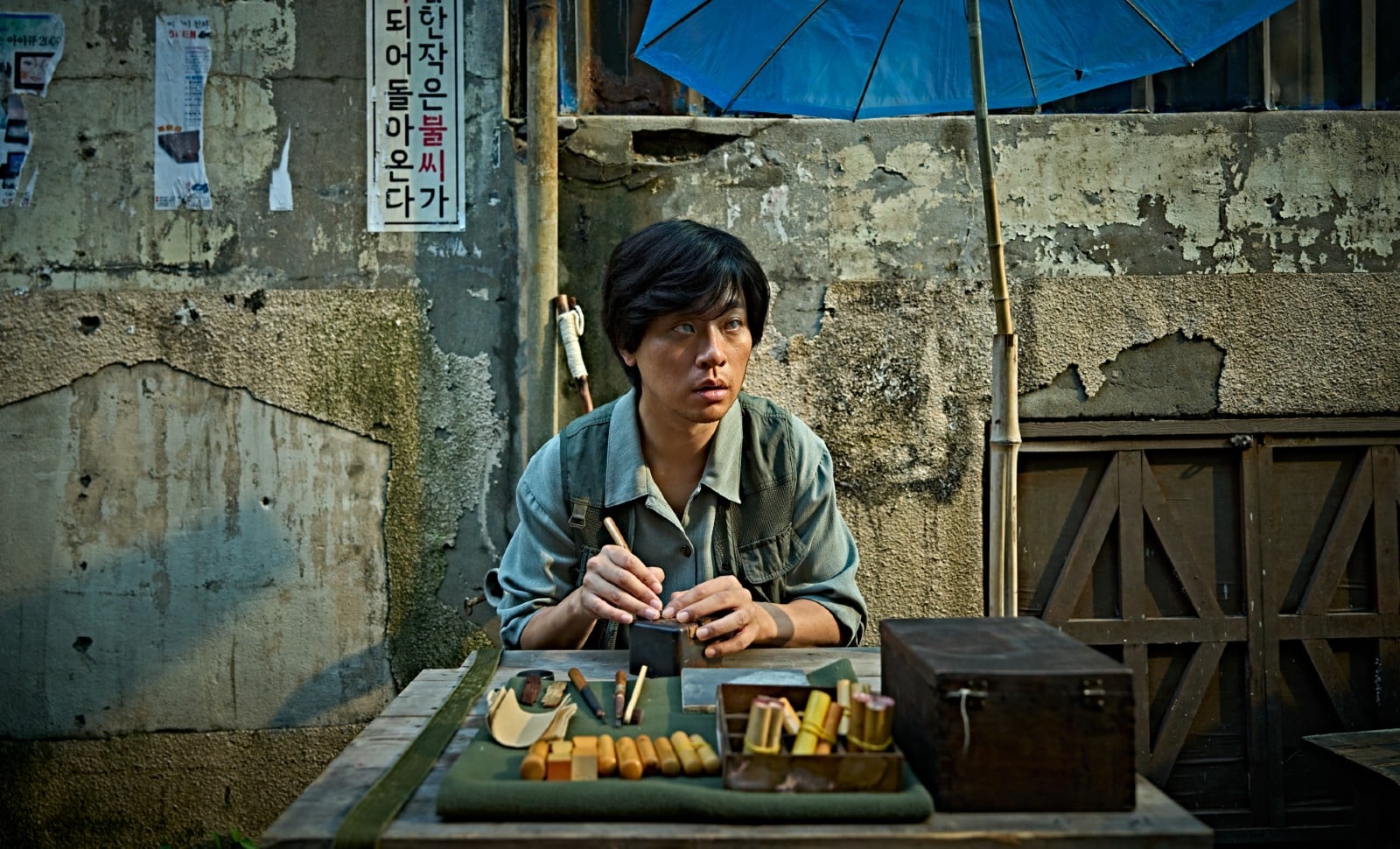
Director Yeon Sang-ho's psychological thriller "The Ugly" explores societal cruelty through a blind craftsman who discovers his wife's remains forty years after she vanished.

JULY 25, 2026 AT 11:03 PM

A haunting South Korean psychological thriller explores the devastating consequences of physical appearance and societal cruelty in a tale that turns conventional notions of monstrosity on their head.

Director Yeon Sang-ho, known for his adrenaline-fueled zombie blockbuster Train to Busan, has crafted a more intimate but equally dark narrative with The Ugly, according to Causeur. The film, an adaptation of the director’s own graphic novel Face, marks a departure from his high-octane horror spectacles while maintaining his trademark exploration of human depravity.

The story centers on Im Yeang-gyu, a blind master craftsman who has achieved considerable fame in South Korea for his exquisite seal engraving. These seals are not mere artistic flourishes in Korean culture—they function as legal signatures on contracts, banking documents, and administrative papers, making Im’s artistry both culturally significant and practically essential.

Living in seclusion with his middle-aged son, the elderly artisan becomes the subject of television interviews conducted by an intrusive young journalist. The interviews serve as the narrative framework for a story that gradually peels back layers of family tragedy.

A Skeleton Surfaces After Four Decades

The past violently intrudes on the present when authorities discover the decomposed remains of Im’s wife, who vanished forty years earlier when their son was still an infant. The craftsman had raised the boy alone, believing his wife had simply abandoned the family one day without explanation.

As Causeur reports, flashbacks reveal the harsh realities of pre-economic miracle South Korea, where Im’s wife toiled in brutal conditions at a textile mill. According to witness testimony accumulated during the police investigation, she suffered from what contemporaries described as monstrous ugliness—a disfigurement she attempted to conceal behind her hair, which she wore draped across her face.

The Cruel Deception

Remarkably, no photographs of the woman exist, and the film’s flashback sequences deliberately conceal her features from viewers. The blind Im, misled by his disability and secretly mocked by neighbors, had long believed himself married to a beautiful woman whom others envied. His world collapsed when he eventually discovered the truth.

The film’s title takes on multiple meanings as the narrative progresses through carefully calibrated revelations. The son, learning of his mother’s fate decades later, becomes witness to family secrets that reshape his understanding of his childhood.

A Twist That Redefines Ugliness

While less ambitious in scope than Yeon’s zombie epics Train to Busan and Peninsula, The Ugly builds toward a climactic twist that inverts the entire narrative. The concluding revelation demonstrates that true monstrosity lies not in physical appearance but in human cruelty—a thematic concern that connects this quieter film to the director’s more explosive horror work.

What initially appears to be a minor horror film transforms into an allegorical meditation on superficiality, prejudice, and the genuine sources of human ugliness. The predictable elements give way to a darker, more personal vision that reflects Yeon’s origins in animation and graphic storytelling.

The film stars Park Jeong-min and Kwan Hae-hyo in this 102-minute South Korean production from 2024, scheduled for theatrical release on July 29, 2026.

With information from Causeur

Share:
Eleni Papadaki-Van Der Merwe

She was born in 1986 in Johannesburg, South Africa. She is the granddaughter of an immigrant from Crete who settled in the Greek community of Johannesburg (one of the largest in Africa). She holds a bachelor’s degree in International Relations and Political Science from the University of the Witwatersrand (Wits) in Johannesburg and a master’s degree in Journalism from Rhodes University in Grahamstown. She began her career at English-language media outlets in Johannesburg, covering politics and economics, with a focus on issues related to migration and the diaspora. She moved to Athens in 2015 to “return to her roots,” initially to pursue graduate studies, and has remained there permanently. She is married to an Afrikaner; they have two children and live in the southern suburbs of Athens.

A haunting South Korean psychological thriller explores the devastating consequences of physical appearance and societal cruelty in a tale that turns conventional notions of monstrosity on their head.

Director Yeon Sang-ho, known for his adrenaline-fueled zombie blockbuster Train to Busan, has crafted a more intimate but equally dark narrative with The Ugly, according to Causeur. The film, an adaptation of the director’s own graphic novel Face, marks a departure from his high-octane horror spectacles while maintaining his trademark exploration of human depravity.

The story centers on Im Yeang-gyu, a blind master craftsman who has achieved considerable fame in South Korea for his exquisite seal engraving. These seals are not mere artistic flourishes in Korean culture—they function as legal signatures on contracts, banking documents, and administrative papers, making Im’s artistry both culturally significant and practically essential.

Living in seclusion with his middle-aged son, the elderly artisan becomes the subject of television interviews conducted by an intrusive young journalist. The interviews serve as the narrative framework for a story that gradually peels back layers of family tragedy.

A Skeleton Surfaces After Four Decades

The past violently intrudes on the present when authorities discover the decomposed remains of Im’s wife, who vanished forty years earlier when their son was still an infant. The craftsman had raised the boy alone, believing his wife had simply abandoned the family one day without explanation.

As Causeur reports, flashbacks reveal the harsh realities of pre-economic miracle South Korea, where Im’s wife toiled in brutal conditions at a textile mill. According to witness testimony accumulated during the police investigation, she suffered from what contemporaries described as monstrous ugliness—a disfigurement she attempted to conceal behind her hair, which she wore draped across her face.

The Cruel Deception

Remarkably, no photographs of the woman exist, and the film’s flashback sequences deliberately conceal her features from viewers. The blind Im, misled by his disability and secretly mocked by neighbors, had long believed himself married to a beautiful woman whom others envied. His world collapsed when he eventually discovered the truth.

The film’s title takes on multiple meanings as the narrative progresses through carefully calibrated revelations. The son, learning of his mother’s fate decades later, becomes witness to family secrets that reshape his understanding of his childhood.

A Twist That Redefines Ugliness

While less ambitious in scope than Yeon’s zombie epics Train to Busan and Peninsula, The Ugly builds toward a climactic twist that inverts the entire narrative. The concluding revelation demonstrates that true monstrosity lies not in physical appearance but in human cruelty—a thematic concern that connects this quieter film to the director’s more explosive horror work.

What initially appears to be a minor horror film transforms into an allegorical meditation on superficiality, prejudice, and the genuine sources of human ugliness. The predictable elements give way to a darker, more personal vision that reflects Yeon’s origins in animation and graphic storytelling.

The film stars Park Jeong-min and Kwan Hae-hyo in this 102-minute South Korean production from 2024, scheduled for theatrical release on July 29, 2026.

With information from Causeur

