Necessary Cookies

Required for the site to function. Cannot be disabled.

Analytics Cookies

Help us understand how visitors interact with our site (Google Analytics via GTM).

Marketing Cookies

Used to track visitors and deliver personalised advertisements.

We use cookies to enhance your browsing experience and analyse site traffic. By clicking Accept All, you consent to our use of cookies. Privacy Policy
NewsFire Global
Home News Europe World Christianity Culture Wars Opinion Video
Information
About Us Authors Advertising Terms & Conditions Privacy Policy Contact
R2B Media
R2B NEWSFIRE.GR PAPAFOTIS.GR THRACTION HELLENIC CONSERVATIVES RIGHT2THEBONE YT
News Europe

Zelensky Yields to Ukraine’s Military Modernizers

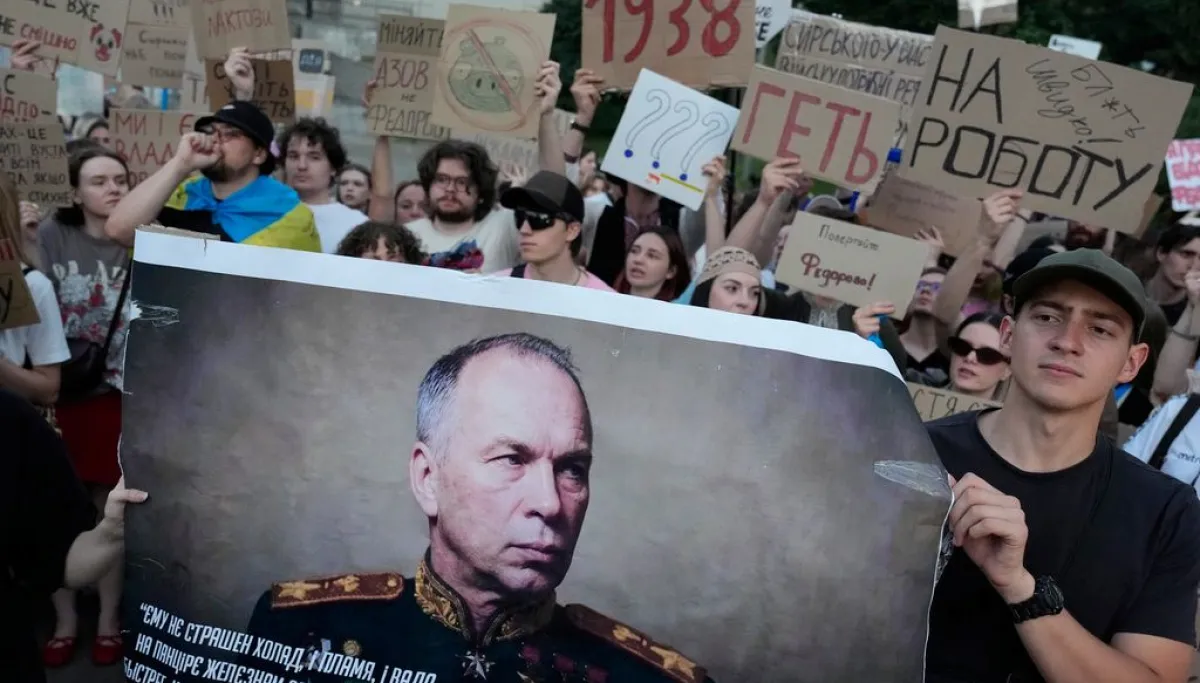
Ukrainian President Volodymyr Zelensky dismissed top military commander Gen. Oleksandr Syrskyi following the largest street protests since Russia's 2022 invasion began.

Dimitris Papafotis
Dimitris Papafotis Editor in Chief
JULY 22, 2026 AT 1:49 PM

On Tuesday, Zelensky removed Gen. Oleksandr Syrskyi from his position as commander in chief of the armed forces, according to Ani Chkhikvadze writing in Washington Examiner. The decision came after protest organizers imposed a July 24 deadline demanding Syrskyi’s dismissal and the reinstatement of Mykhailo Fedorov as defense minister.

The crisis exposes a fundamental generational divide within Ukraine’s military and political leadership. Fedorov, a 35-year-old technocrat who previously built Ukraine’s acclaimed Diia digital state services platform, pushed aggressively to modernize the armed forces by removing the old guard and promoting younger commanders versed in advanced technologies. His reform agenda collided directly with Syrskyi, a 60-year-old general steeped in Soviet military doctrine.
Syrskyi earned widespread recognition for successfully defending Kyiv in the war’s most decisive early battle, which led to his appointment as chief of the General Staff. However, his subsequent military record has drawn harsh criticism from soldiers and observers alike.

Following the costly battles of Bakhmut and Avdiivka, troops gave Syrskyi the grim nickname “The Butcher.” Critics charge that he rigidly insisted on holding indefensible positions at devastating human cost, depleting an already stretched military. His delayed withdrawal from Kursk reportedly left soldiers stranded, while detractors accuse him of Soviet-style micromanagement that extended command decisions down to company level and crushed battlefield initiative.

Public Confrontation Escalates Tensions

The dispute between Fedorov and Syrskyi erupted into public view when Fedorov accused the general during a press conference of deliberately obstructing reform efforts. Fedorov further alleged that Syrskyi had engineered his removal by issuing an ultimatum to President Zelensky.

Fedorov himself faces criticism for pushing reforms too aggressively without adequately considering legitimate alternative perspectives. Syrskyi eventually attempted to defend his position through an op-ed in which he apologized to Fedorov while insisting his true adversary was Russia, not the Defense Ministry. The piece appeared defensive, noting that only approximately 2,000 servicemen had signed Fedorov’s new fixed-term contracts within a month of their introduction and warning that soldiers’ salaries had been diverted to purchase drones.

New Commander Signals Shift

Syrskyi’s replacement, 43-year-old Mykhailo Drapatyi, enjoys strong respect within military ranks and public support. His appointment appears calculated to address demonstrators’ concerns. Drapatyi built his reputation stabilizing collapsing front-line sectors and notably resigned his command of the Ground Forces following a Russian strike that killed trainees under his authority—an uncommon display of accountability.

Drapatyi has publicly praised Fedorov’s six-month ministerial tenure as a genuine attempt to reform entrenched military practices and confront systemic problems the establishment had long ignored.

Political Calculations and Future Uncertainty

Zelensky initially backed his veteran general but reversed course under sustained public pressure. The question of Fedorov’s political future remains unresolved. Reports indicate he has been offered a position overseeing military technology and modernization, though it remains unclear whether he will accept this role or insist on returning only as defense minister.

Fedorov’s potential comeback carries significant political risk for Zelensky. The dismissal has inadvertently transformed a loyal minister into a potential independent political force whose authority now derives as much from street support as presidential appointment. He could emerge as a challenger when elections eventually occur.

This scenario echoes the removal of former Army commander Valeryi Zaluzhnyi, whose popularity was widely viewed as a factor in his dismissal and subsequent posting to London—seen by many as an effort to neutralize him politically. While Ukrainians expressed displeasure at that time but ultimately accepted it, the current situation suggests public tolerance has reached its limit.

The only comparable episode occurred last summer when street pressure forced the government to abandon plans to curtail anti-corruption agencies. Zelensky yielded to demonstrators then as well.

Whether these policy reversals reflect genuine responsiveness to public sentiment or merely tactical political maneuvering remains uncertain. What stands beyond doubt is that Ukraine’s streets have now demonstrated twice within a year their capacity to compel the president to change course.

With information from Washington Examiner

Share:
Dimitris Papafotis
Dimitris Papafotis

Dimitris Papafotis is the editor-in-chief of NewsFire.GR. He was born and raised in Athens. He studied at the Journalism Workshop (1991-1993). He currently lives in Pyrgos, Ilia, where he has been active in radio and various newspapers, while also maintaining his personal blog, Papafotis.gr.

On Tuesday, Zelensky removed Gen. Oleksandr Syrskyi from his position as commander in chief of the armed forces, according to Ani Chkhikvadze writing in Washington Examiner. The decision came after protest organizers imposed a July 24 deadline demanding Syrskyi’s dismissal and the reinstatement of Mykhailo Fedorov as defense minister.

The crisis exposes a fundamental generational divide within Ukraine’s military and political leadership. Fedorov, a 35-year-old technocrat who previously built Ukraine’s acclaimed Diia digital state services platform, pushed aggressively to modernize the armed forces by removing the old guard and promoting younger commanders versed in advanced technologies. His reform agenda collided directly with Syrskyi, a 60-year-old general steeped in Soviet military doctrine.

Syrskyi earned widespread recognition for successfully defending Kyiv in the war’s most decisive early battle, which led to his appointment as chief of the General Staff. However, his subsequent military record has drawn harsh criticism from soldiers and observers alike.

Following the costly battles of Bakhmut and Avdiivka, troops gave Syrskyi the grim nickname “The Butcher.” Critics charge that he rigidly insisted on holding indefensible positions at devastating human cost, depleting an already stretched military. His delayed withdrawal from Kursk reportedly left soldiers stranded, while detractors accuse him of Soviet-style micromanagement that extended command decisions down to company level and crushed battlefield initiative.

Public Confrontation Escalates Tensions

The dispute between Fedorov and Syrskyi erupted into public view when Fedorov accused the general during a press conference of deliberately obstructing reform efforts. Fedorov further alleged that Syrskyi had engineered his removal by issuing an ultimatum to President Zelensky.

Fedorov himself faces criticism for pushing reforms too aggressively without adequately considering legitimate alternative perspectives. Syrskyi eventually attempted to defend his position through an op-ed in which he apologized to Fedorov while insisting his true adversary was Russia, not the Defense Ministry. The piece appeared defensive, noting that only approximately 2,000 servicemen had signed Fedorov’s new fixed-term contracts within a month of their introduction and warning that soldiers’ salaries had been diverted to purchase drones.

New Commander Signals Shift

Syrskyi’s replacement, 43-year-old Mykhailo Drapatyi, enjoys strong respect within military ranks and public support. His appointment appears calculated to address demonstrators’ concerns. Drapatyi built his reputation stabilizing collapsing front-line sectors and notably resigned his command of the Ground Forces following a Russian strike that killed trainees under his authority—an uncommon display of accountability.

Drapatyi has publicly praised Fedorov’s six-month ministerial tenure as a genuine attempt to reform entrenched military practices and confront systemic problems the establishment had long ignored.

Political Calculations and Future Uncertainty

Zelensky initially backed his veteran general but reversed course under sustained public pressure. The question of Fedorov’s political future remains unresolved. Reports indicate he has been offered a position overseeing military technology and modernization, though it remains unclear whether he will accept this role or insist on returning only as defense minister.

Fedorov’s potential comeback carries significant political risk for Zelensky. The dismissal has inadvertently transformed a loyal minister into a potential independent political force whose authority now derives as much from street support as presidential appointment. He could emerge as a challenger when elections eventually occur.

This scenario echoes the removal of former Army commander Valeryi Zaluzhnyi, whose popularity was widely viewed as a factor in his dismissal and subsequent posting to London—seen by many as an effort to neutralize him politically. While Ukrainians expressed displeasure at that time but ultimately accepted it, the current situation suggests public tolerance has reached its limit.

The only comparable episode occurred last summer when street pressure forced the government to abandon plans to curtail anti-corruption agencies. Zelensky yielded to demonstrators then as well.

Whether these policy reversals reflect genuine responsiveness to public sentiment or merely tactical political maneuvering remains uncertain. What stands beyond doubt is that Ukraine’s streets have now demonstrated twice within a year their capacity to compel the president to change course.

With information from Washington Examiner

