Necessary Cookies

Required for the site to function. Cannot be disabled.

Analytics Cookies

Help us understand how visitors interact with our site (Google Analytics via GTM).

Marketing Cookies

Used to track visitors and deliver personalised advertisements.

We use cookies to enhance your browsing experience and analyse site traffic. By clicking Accept All, you consent to our use of cookies. Privacy Policy
NewsFire Global
Home News Europe World Christianity Culture Wars Opinion Video
Information
About Us Authors Advertising Terms & Conditions Privacy Policy Contact
R2B Media
R2B NEWSFIRE.GR PAPAFOTIS.GR THRACTION HELLENIC CONSERVATIVES RIGHT2THEBONE YT
News World

What Damascus’s New Leaders Know They Owe Erdogan

Turkey is methodically filling the Syrian power vacuum left by Assad's fall, transforming the country into a de facto Turkish protectorate as Erdogan pursues regional dominance.
JULY 17, 2026 AT 11:35 AM

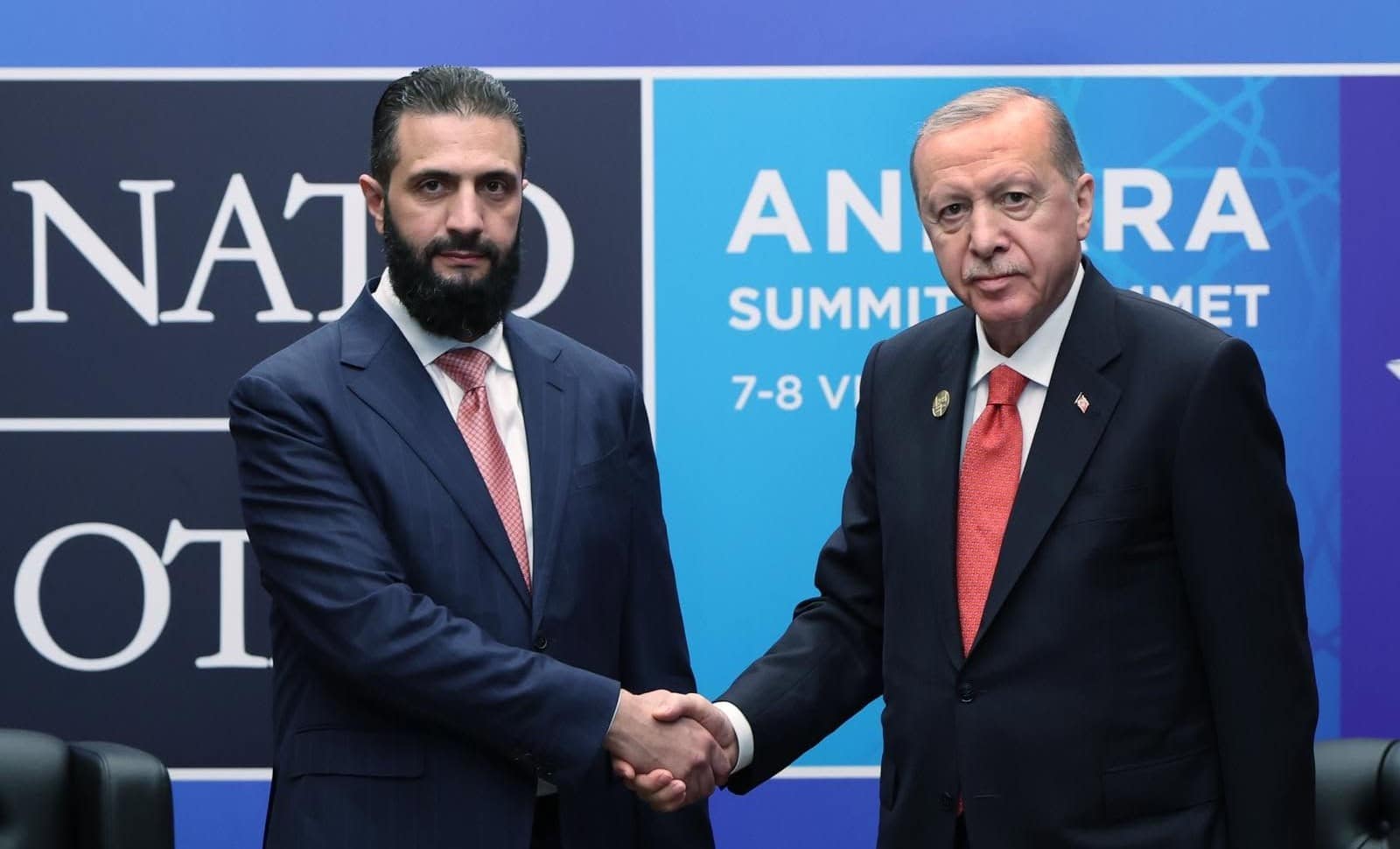
The recent discussion at last week’s NATO summit about readmitting Turkey to the F-35 fighter jet program has distracted attention from a far more consequential strategic reality, according to Causeur. The real issue is not whether Ankara will retain its Russian S-400 missile systems or regain access to America’s most advanced combat aircraft. The fundamental question is why the West would consider strengthening a power that is actively constructing a regional order in Syria increasingly divorced from Western interests.

The F-35 controversy serves merely as a symptom of a deeper problem: the persistent inability of Western democracies to grasp the nature of the project being pursued by Turkish President Recep Tayyip Erdogan. He no longer behaves as the leader of a turbulent NATO ally but rather as the head of a revisionist power convinced that Iran’s retreat, Assad’s fall, and European hesitation have opened a historic window to redraw Middle Eastern power structures.

The Century of Turkey

Erdogan makes no secret of his ambitions. When he proclaims the advent of the “Century of Turkey” or repeats that “the world is bigger than five countries,” he is not merely denouncing the international order established in 1945. He is asserting Turkey’s ambition to become one of the new centers of global gravity, capable of competing with traditional powers and assuming leadership of the Sunni Muslim world.

It is precisely in Syria where this ambition now appears with greatest clarity, Causeur reports. While Western chancelleries congratulate themselves on seeing the United States durably weaken the Iranian axis, Erdogan is already preparing the next phase: transforming Syrian chaos into a strategic springboard, marketed to Westerners under the banner of stability.

In the Middle East, no one tolerates a vacuum. Erdogan least of all. Where the West sees risk, he sees opportunity. He intends to fill this space according to his own interests, worldview, and power project. The question is no longer simply who loses from Iran’s retreat, but who gains. The principal beneficiary may well be Turkey.

Syria as Strategic Cornerstone

For Erdogan, Syria is not one regional file among many. It represents the cornerstone of a strategy elaborated over more than a decade. Ankara has provided political, military, and logistical support to multiple components of the Syrian opposition, notably Islamist factions. Turkey has controlled large portions of northwestern Syria, installed local administrations, trained fighters, imposed the Turkish lira in certain territories, and developed economic, educational, and religious networks that now structure daily life in these areas.

The fall of Bashar al-Assad did not open an entirely new chapter. It allowed Erdogan to harvest the fruits of a patiently constructed strategy. It brought him new legitimacy while consecrating the Islamist groups he had supported for years. In the eyes of regional actors and Western chancelleries alike, his gamble appears to have paid off.

Ahmed al-Sharaa may multiply gestures of openness toward Washington, Paris, or Brussels. He may seek to appear as a pragmatic, independent leader distanced from his jihadist past. Yet his power remains intimately tied to Turkish support, its networks, strategic depth, and capacity to contain Kurdish forces.

Asymmetric Dependence

The relationship between Ankara and Damascus does not constitute a classic alliance between two sovereign states. It is profoundly asymmetric. Erdogan does not seek to annex Syria outright. Such an undertaking would be costly, legally difficult to defend, and politically counterproductive. His objective is more ambitious: fostering the emergence of an officially independent Syria that nonetheless depends on Turkey for security, economic activity, infrastructure, commercial exchanges, and reconstruction of its military apparatus.

In other words, a protectorate without the name. An influence-based protectorate where Turkey exercises decisive control without formal annexation.

Reconstruction as Control Mechanism

The reconstruction of Syria now constitutes the other major lever of Turkish strategy. By positioning Turkish companies, securing contracts for infrastructure projects, and embedding Turkish economic interests throughout Syrian territory, Ankara is building dependencies that will endure long after any political transition. Control over reconstruction means control over Syria’s future trajectory.

This represents a fundamental challenge to Western strategic interests in the region. While the United States and European powers focus on containing Iran and managing the immediate aftermath of Assad’s collapse, Turkey is quietly constructing a sphere of influence that may prove far more durable and consequential than any temporary Iranian setback.

The West’s strategic blind spot regarding Turkey under Erdogan risks allowing the emergence of a regional order shaped by Turkish rather than Western priorities, with profound implications for Middle Eastern stability and the balance of power between NATO allies.

With information from Causeur

Share:
Eleni Papadaki-Van Der Merwe

She was born in 1986 in Johannesburg, South Africa. She is the granddaughter of an immigrant from Crete who settled in the Greek community of Johannesburg (one of the largest in Africa). She holds a bachelor’s degree in International Relations and Political Science from the University of the Witwatersrand (Wits) in Johannesburg and a master’s degree in Journalism from Rhodes University in Grahamstown. She began her career at English-language media outlets in Johannesburg, covering politics and economics, with a focus on issues related to migration and the diaspora. She moved to Athens in 2015 to “return to her roots,” initially to pursue graduate studies, and has remained there permanently. She is married to an Afrikaner; they have two children and live in the southern suburbs of Athens.

The recent discussion at last week’s NATO summit about readmitting Turkey to the F-35 fighter jet program has distracted attention from a far more consequential strategic reality, according to Causeur. The real issue is not whether Ankara will retain its Russian S-400 missile systems or regain access to America’s most advanced combat aircraft. The fundamental question is why the West would consider strengthening a power that is actively constructing a regional order in Syria increasingly divorced from Western interests.

The F-35 controversy serves merely as a symptom of a deeper problem: the persistent inability of Western democracies to grasp the nature of the project being pursued by Turkish President Recep Tayyip Erdogan. He no longer behaves as the leader of a turbulent NATO ally but rather as the head of a revisionist power convinced that Iran’s retreat, Assad’s fall, and European hesitation have opened a historic window to redraw Middle Eastern power structures.

The Century of Turkey

Erdogan makes no secret of his ambitions. When he proclaims the advent of the “Century of Turkey” or repeats that “the world is bigger than five countries,” he is not merely denouncing the international order established in 1945. He is asserting Turkey’s ambition to become one of the new centers of global gravity, capable of competing with traditional powers and assuming leadership of the Sunni Muslim world.

It is precisely in Syria where this ambition now appears with greatest clarity, Causeur reports. While Western chancelleries congratulate themselves on seeing the United States durably weaken the Iranian axis, Erdogan is already preparing the next phase: transforming Syrian chaos into a strategic springboard, marketed to Westerners under the banner of stability.

In the Middle East, no one tolerates a vacuum. Erdogan least of all. Where the West sees risk, he sees opportunity. He intends to fill this space according to his own interests, worldview, and power project. The question is no longer simply who loses from Iran’s retreat, but who gains. The principal beneficiary may well be Turkey.

Syria as Strategic Cornerstone

For Erdogan, Syria is not one regional file among many. It represents the cornerstone of a strategy elaborated over more than a decade. Ankara has provided political, military, and logistical support to multiple components of the Syrian opposition, notably Islamist factions. Turkey has controlled large portions of northwestern Syria, installed local administrations, trained fighters, imposed the Turkish lira in certain territories, and developed economic, educational, and religious networks that now structure daily life in these areas.

The fall of Bashar al-Assad did not open an entirely new chapter. It allowed Erdogan to harvest the fruits of a patiently constructed strategy. It brought him new legitimacy while consecrating the Islamist groups he had supported for years. In the eyes of regional actors and Western chancelleries alike, his gamble appears to have paid off.

Ahmed al-Sharaa may multiply gestures of openness toward Washington, Paris, or Brussels. He may seek to appear as a pragmatic, independent leader distanced from his jihadist past. Yet his power remains intimately tied to Turkish support, its networks, strategic depth, and capacity to contain Kurdish forces.

Asymmetric Dependence

The relationship between Ankara and Damascus does not constitute a classic alliance between two sovereign states. It is profoundly asymmetric. Erdogan does not seek to annex Syria outright. Such an undertaking would be costly, legally difficult to defend, and politically counterproductive. His objective is more ambitious: fostering the emergence of an officially independent Syria that nonetheless depends on Turkey for security, economic activity, infrastructure, commercial exchanges, and reconstruction of its military apparatus.

In other words, a protectorate without the name. An influence-based protectorate where Turkey exercises decisive control without formal annexation.

Reconstruction as Control Mechanism

The reconstruction of Syria now constitutes the other major lever of Turkish strategy. By positioning Turkish companies, securing contracts for infrastructure projects, and embedding Turkish economic interests throughout Syrian territory, Ankara is building dependencies that will endure long after any political transition. Control over reconstruction means control over Syria’s future trajectory.

This represents a fundamental challenge to Western strategic interests in the region. While the United States and European powers focus on containing Iran and managing the immediate aftermath of Assad’s collapse, Turkey is quietly constructing a sphere of influence that may prove far more durable and consequential than any temporary Iranian setback.

The West’s strategic blind spot regarding Turkey under Erdogan risks allowing the emergence of a regional order shaped by Turkish rather than Western priorities, with profound implications for Middle Eastern stability and the balance of power between NATO allies.

With information from Causeur

