Necessary Cookies

Required for the site to function. Cannot be disabled.

Analytics Cookies

Help us understand how visitors interact with our site (Google Analytics via GTM).

Marketing Cookies

Used to track visitors and deliver personalised advertisements.

We use cookies to enhance your browsing experience and analyse site traffic. By clicking Accept All, you consent to our use of cookies. Privacy Policy
NewsFire Global
Home News Europe World Christianity Culture Wars Opinion Video
Information
About Us Authors Advertising Terms & Conditions Privacy Policy Contact
R2B Media
R2B NEWSFIRE.GR PAPAFOTIS.GR THRACTION HELLENIC CONSERVATIVES RIGHT2THEBONE YT
News World

IRGC Threatens Kuwait Military Sites in Escalating Warning

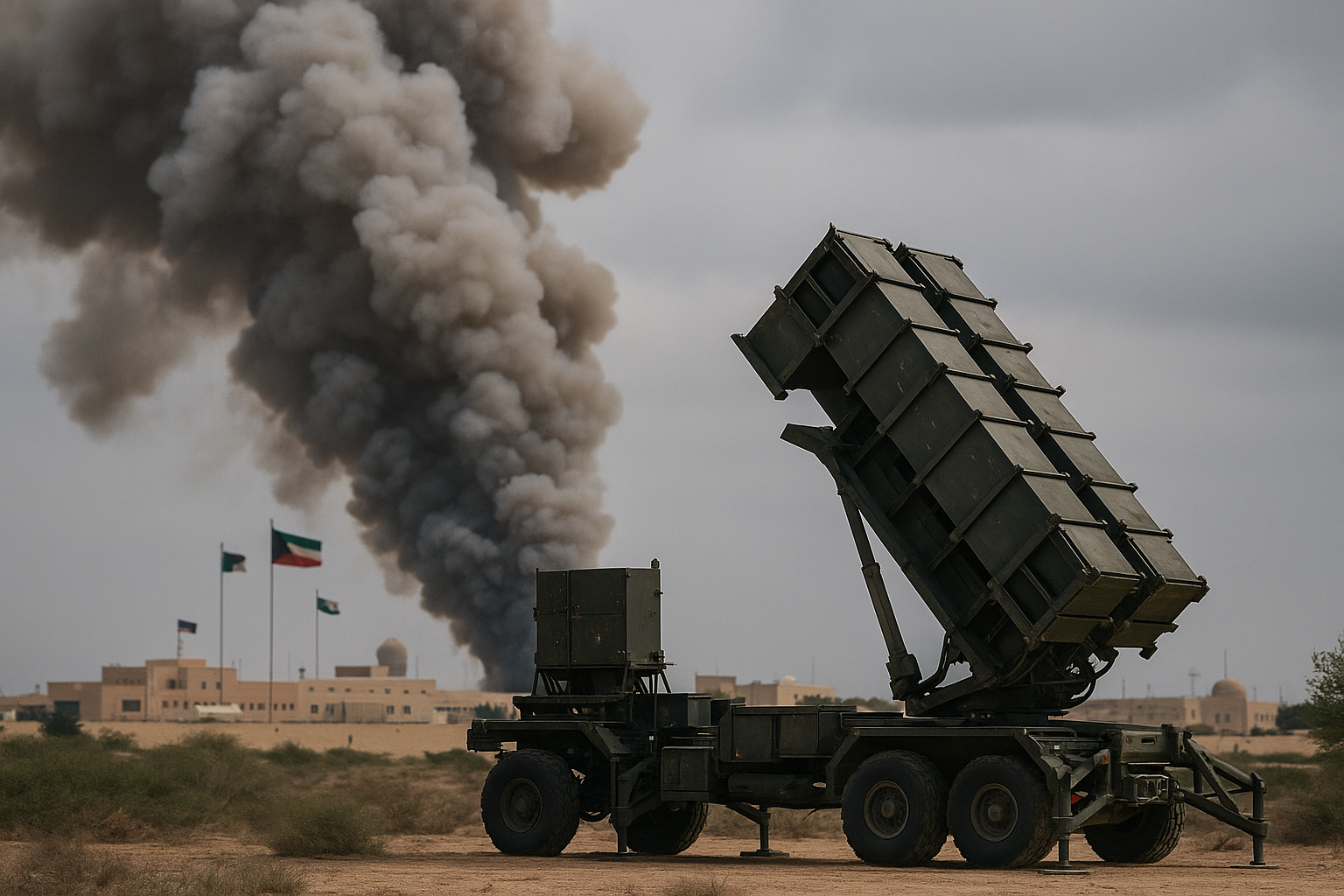
Reports of Patriot air defense systems apparently failing to intercept Iranian missiles striking Israel raise concerns for Greece and other nations heavily invested in the platform.

JULY 16, 2026 AT 8:38 AM

According to Telegram @me_observer_TG, citing analysis from Ethnika Monitor, the potential confirmation of Patriot system failures against Iranian missiles would represent a critical juncture for the credibility of Western anti-missile defense architecture, with direct implications for Greek national defense strategy.

The development comes as multiple reports indicate that Iranian ballistic missiles successfully penetrated Israeli air defenses during retaliatory strikes, despite the presence of multiple Patriot batteries deployed across Israeli territory. While official confirmation remains pending, preliminary battlefield assessments suggest that several missiles reached their intended targets without interception.

Strategic Implications for Greek Defense Posture

Greece has committed substantial resources to acquiring and deploying Patriot systems as a cornerstone of its air and missile defense capabilities, particularly given ongoing tensions in the Eastern Mediterranean and persistent Turkish provocations. The Hellenic Armed Forces currently operate multiple Patriot batteries as part of their layered defense strategy.

If Iranian missiles—widely considered less sophisticated than Russian or Chinese equivalents—have indeed overwhelmed Patriot defenses, the revelation would force a comprehensive reassessment of Greece’s defensive umbrella against potential threats from Turkey and other regional actors.

Technical Questions Mount

Defense analysts have long debated the Patriot system’s effectiveness against modern ballistic missiles, particularly those employing maneuverable warheads or saturation attack tactics. The Iranian strike may have exploited known vulnerabilities in the system’s tracking and engagement parameters.

Western defense establishments have historically promoted the Patriot as a proven, battle-tested platform capable of intercepting a wide range of aerial threats. Any systematic failure against Iranian missiles would undermine decades of marketing and operational assumptions that have driven billions in international sales.

Wider Western Defense Architecture at Stake

Beyond Greece, numerous NATO allies and partner nations have built their air defense strategies around American-supplied Patriot systems, including Poland, Romania, Sweden, and Germany. A confirmed performance failure would trigger urgent reviews across multiple national defense ministries.

The timing is particularly sensitive as European nations accelerate military modernization efforts in response to the Russian threat and as the United States seeks to maintain its position as the premier supplier of advanced defensive systems to allied nations.

Greek defense planners now face the prospect of either supplementing Patriot capabilities with additional systems—potentially requiring further substantial expenditure—or accepting gaps in the country’s air defense coverage during a period of heightened regional instability.

With information from Telegram @me_observer_TG

Share:
Eleni Papadaki-Van Der Merwe

She was born in 1986 in Johannesburg, South Africa. She is the granddaughter of an immigrant from Crete who settled in the Greek community of Johannesburg (one of the largest in Africa). She holds a bachelor’s degree in International Relations and Political Science from the University of the Witwatersrand (Wits) in Johannesburg and a master’s degree in Journalism from Rhodes University in Grahamstown. She began her career at English-language media outlets in Johannesburg, covering politics and economics, with a focus on issues related to migration and the diaspora. She moved to Athens in 2015 to “return to her roots,” initially to pursue graduate studies, and has remained there permanently. She is married to an Afrikaner; they have two children and live in the southern suburbs of Athens.

According to Telegram @me_observer_TG, citing analysis from Ethnika Monitor, the potential confirmation of Patriot system failures against Iranian missiles would represent a critical juncture for the credibility of Western anti-missile defense architecture, with direct implications for Greek national defense strategy.

The development comes as multiple reports indicate that Iranian ballistic missiles successfully penetrated Israeli air defenses during retaliatory strikes, despite the presence of multiple Patriot batteries deployed across Israeli territory. While official confirmation remains pending, preliminary battlefield assessments suggest that several missiles reached their intended targets without interception.

Strategic Implications for Greek Defense Posture

Greece has committed substantial resources to acquiring and deploying Patriot systems as a cornerstone of its air and missile defense capabilities, particularly given ongoing tensions in the Eastern Mediterranean and persistent Turkish provocations. The Hellenic Armed Forces currently operate multiple Patriot batteries as part of their layered defense strategy.

If Iranian missiles—widely considered less sophisticated than Russian or Chinese equivalents—have indeed overwhelmed Patriot defenses, the revelation would force a comprehensive reassessment of Greece’s defensive umbrella against potential threats from Turkey and other regional actors.

Technical Questions Mount

Defense analysts have long debated the Patriot system’s effectiveness against modern ballistic missiles, particularly those employing maneuverable warheads or saturation attack tactics. The Iranian strike may have exploited known vulnerabilities in the system’s tracking and engagement parameters.

Western defense establishments have historically promoted the Patriot as a proven, battle-tested platform capable of intercepting a wide range of aerial threats. Any systematic failure against Iranian missiles would undermine decades of marketing and operational assumptions that have driven billions in international sales.

Wider Western Defense Architecture at Stake

Beyond Greece, numerous NATO allies and partner nations have built their air defense strategies around American-supplied Patriot systems, including Poland, Romania, Sweden, and Germany. A confirmed performance failure would trigger urgent reviews across multiple national defense ministries.

The timing is particularly sensitive as European nations accelerate military modernization efforts in response to the Russian threat and as the United States seeks to maintain its position as the premier supplier of advanced defensive systems to allied nations.

Greek defense planners now face the prospect of either supplementing Patriot capabilities with additional systems—potentially requiring further substantial expenditure—or accepting gaps in the country’s air defense coverage during a period of heightened regional instability.

With information from Telegram @me_observer_TG

