Necessary Cookies

Required for the site to function. Cannot be disabled.

Analytics Cookies

Help us understand how visitors interact with our site (Google Analytics via GTM).

Marketing Cookies

Used to track visitors and deliver personalised advertisements.

We use cookies to enhance your browsing experience and analyse site traffic. By clicking Accept All, you consent to our use of cookies. Privacy Policy
NewsFire Global
Home News Europe World Christianity Culture Wars Opinion Video
Information
About Us Authors Advertising Terms & Conditions Privacy Policy Contact
R2B Media
R2B NEWSFIRE.GR PAPAFOTIS.GR THRACTION HELLENIC CONSERVATIVES RIGHT2THEBONE YT
News Europe

Fidesz MEP: Magyar settling scores while Brussels turns blind eye

Hungary's new government under Prime Minister Péter Magyar is purging political opponents through retroactive constitutional changes while the EU remains silent, according to senior Fidesz MEP Csaba Dömötör.

Dimitris Papafotis
Dimitris Papafotis Editor in Chief
JULY 15, 2026 AT 9:27 PM
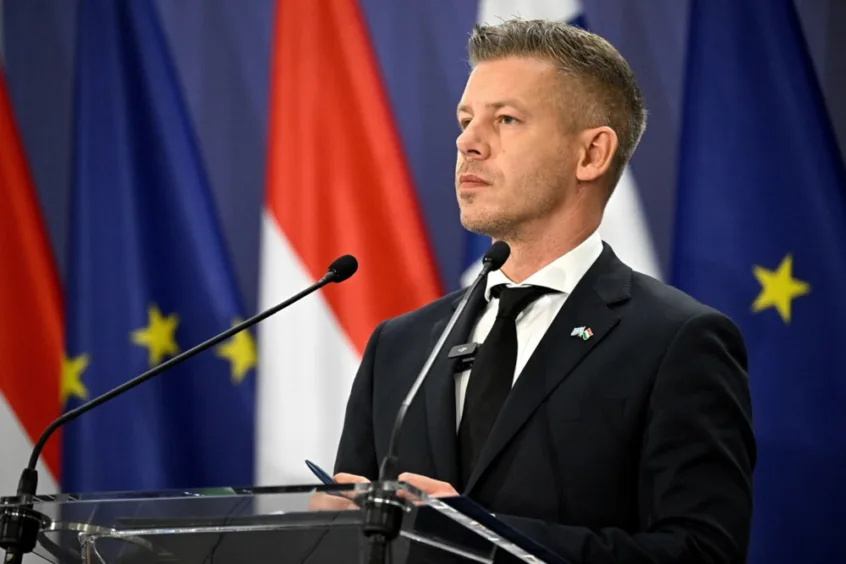
Photo: brusselssignal.eu

Csaba Dömötör, a member of the European Parliament for Fidesz, told Brussels Signal that Magyar’s coalition is prioritizing the systematic elimination of political rivals over actual governance, using retrospective constitutional changes to dismantle Hungary’s established political class.

The constitutional reforms recently passed by Magyar’s parliamentary majority include a series of measures that would fundamentally reshape Hungary’s political system by retroactively barring experienced politicians from holding office, according to Brussels Signal.

Retroactive Purge of Opposition

Dömötör outlined several controversial elements of the constitutional package. The new government removed the democratically elected president without justification, he said. It has introduced a retroactive term limit for the prime minister and ousted the head of the Constitutional Court. Most significantly, parliament approved a retrospective 12-year limit for Members of Parliament.

The measures would disproportionately affect opposition parties whose members possess extensive parliamentary experience, while largely sparing Magyar’s Tisza Party, whose MPs are political newcomers with limited time in office.

They removed the president without any justification, although he had been democratically elected, Dömötör stated.

The Fidesz MEP revealed that discussions have even included reducing the parliamentary service limit to eight years, a restriction that would be unprecedented in any European country.

Brussels’ Double Standard Exposed

The most striking element of the situation, according to Dömötör, is not the reforms themselves but the European Union’s silence in response. For years, Brussels institutions repeatedly criticized Hungarian democracy under Viktor Orbán’s government, he noted. Now those same institutions have fallen silent as Magyar implements far more aggressive changes to the constitutional order.

The rule of law rhetoric was never really about democracy, Dömötör argued, but rather served as a tool of political blackmail. With a prime minister now willing to accept the plans of the left-wing mainstream in Brussels, the European Commission has given Magyar a blank cheque to pursue whatever measures he wishes.

Dömötör said the Commission’s approach demonstrates that governments adopting Brussels’ positions on migration, Ukraine and EU enlargement receive preferential treatment compared to those challenging the bloc’s mainstream consensus.

The measures being pushed by Magyar represent a far greater threat to Hungarian democracy than anything Brussels claimed to fear during the Orbán years, the MEP emphasized, yet European institutions remain conspicuously silent.

Orbán’s Peaceful Transition

Dömötör pointed to the peaceful transfer of power following the election as evidence contradicting years of claims that Orbán would refuse to relinquish office if defeated. Fidesz accepted the election result and facilitated the transition faster than is typical in many European countries, he said.

Hungarian democracy remained stable until now, Dömötör added, but the new government’s measures could fundamentally change that stability.

New Anti-Corruption Body Targets Opposition

Magyar’s government submitted legislation on July 10 to establish the National Asset Protection and Recovery Office, which would function as an ostensibly independent anti-corruption body, according to Brussels Signal.

The proposed office appears designed to target opposition figures, with the current government claiming it will investigate graft from the Orbán era and recover stolen assets. The body would possess jurisdiction over cases involving state assets, public property, government contracts and public subsidies, while wielding unprecedented powers with minimal possibility of appeal against its decisions.

Dömötör dismissed the initiative as a continuation of the political witch hunt through new institutions equipped with extraordinary powers, rather than a genuine effort to improve governance.

The developments in Hungary reveal the selective application of Brussels’ rule of law standards, with the European Commission apparently willing to overlook constitutional changes that would have triggered severe condemnation under the previous government.

With information from Brussels Signal

Share:
Dimitris Papafotis
Dimitris Papafotis

Dimitris Papafotis is the editor-in-chief of NewsFire.GR. He was born and raised in Athens. He studied at the Journalism Workshop (1991-1993). He currently lives in Pyrgos, Ilia, where he has been active in radio and various newspapers, while also maintaining his personal blog, Papafotis.gr.

Photo: brusselssignal.eu

Csaba Dömötör, a member of the European Parliament for Fidesz, told Brussels Signal that Magyar’s coalition is prioritizing the systematic elimination of political rivals over actual governance, using retrospective constitutional changes to dismantle Hungary’s established political class.

The constitutional reforms recently passed by Magyar’s parliamentary majority include a series of measures that would fundamentally reshape Hungary’s political system by retroactively barring experienced politicians from holding office, according to Brussels Signal.

Retroactive Purge of Opposition

Dömötör outlined several controversial elements of the constitutional package. The new government removed the democratically elected president without justification, he said. It has introduced a retroactive term limit for the prime minister and ousted the head of the Constitutional Court. Most significantly, parliament approved a retrospective 12-year limit for Members of Parliament.

The measures would disproportionately affect opposition parties whose members possess extensive parliamentary experience, while largely sparing Magyar’s Tisza Party, whose MPs are political newcomers with limited time in office.

They removed the president without any justification, although he had been democratically elected, Dömötör stated.

The Fidesz MEP revealed that discussions have even included reducing the parliamentary service limit to eight years, a restriction that would be unprecedented in any European country.

Brussels’ Double Standard Exposed

The most striking element of the situation, according to Dömötör, is not the reforms themselves but the European Union’s silence in response. For years, Brussels institutions repeatedly criticized Hungarian democracy under Viktor Orbán’s government, he noted. Now those same institutions have fallen silent as Magyar implements far more aggressive changes to the constitutional order.

The rule of law rhetoric was never really about democracy, Dömötör argued, but rather served as a tool of political blackmail. With a prime minister now willing to accept the plans of the left-wing mainstream in Brussels, the European Commission has given Magyar a blank cheque to pursue whatever measures he wishes.

Dömötör said the Commission’s approach demonstrates that governments adopting Brussels’ positions on migration, Ukraine and EU enlargement receive preferential treatment compared to those challenging the bloc’s mainstream consensus.

The measures being pushed by Magyar represent a far greater threat to Hungarian democracy than anything Brussels claimed to fear during the Orbán years, the MEP emphasized, yet European institutions remain conspicuously silent.

Orbán’s Peaceful Transition

Dömötör pointed to the peaceful transfer of power following the election as evidence contradicting years of claims that Orbán would refuse to relinquish office if defeated. Fidesz accepted the election result and facilitated the transition faster than is typical in many European countries, he said.

Hungarian democracy remained stable until now, Dömötör added, but the new government’s measures could fundamentally change that stability.

New Anti-Corruption Body Targets Opposition

Magyar’s government submitted legislation on July 10 to establish the National Asset Protection and Recovery Office, which would function as an ostensibly independent anti-corruption body, according to Brussels Signal.

The proposed office appears designed to target opposition figures, with the current government claiming it will investigate graft from the Orbán era and recover stolen assets. The body would possess jurisdiction over cases involving state assets, public property, government contracts and public subsidies, while wielding unprecedented powers with minimal possibility of appeal against its decisions.

Dömötör dismissed the initiative as a continuation of the political witch hunt through new institutions equipped with extraordinary powers, rather than a genuine effort to improve governance.

The developments in Hungary reveal the selective application of Brussels’ rule of law standards, with the European Commission apparently willing to overlook constitutional changes that would have triggered severe condemnation under the previous government.

With information from Brussels Signal