Necessary Cookies

Required for the site to function. Cannot be disabled.

Analytics Cookies

Help us understand how visitors interact with our site (Google Analytics via GTM).

Marketing Cookies

Used to track visitors and deliver personalised advertisements.

We use cookies to enhance your browsing experience and analyse site traffic. By clicking Accept All, you consent to our use of cookies. Privacy Policy
NewsFire Global
Home News Europe World Christianity Culture Wars Opinion Video
Information
About Us Authors Advertising Terms & Conditions Privacy Policy Contact
R2B Media
R2B NEWSFIRE.GR PAPAFOTIS.GR THRACTION HELLENIC CONSERVATIVES RIGHT2THEBONE YT
News Europe

EU Ministers Move to Unlock Hungary’s Frozen Recovery Billions

EU finance ministers will vote July 10 to release €10 billion in frozen recovery funds to Hungary after pro-EU Prime Minister Péter Magyar defeated Viktor Orbán in April.

Dimitris Papafotis
Dimitris Papafotis Editor in Chief
JULY 10, 2026 AT 10:21 AM

The Economic and Financial Affairs Council is set to meet in Brussels on July 10 to take the final legal step required before Hungary can access the money, according to Brussels Signal. The decision requires unanimous support from all 27 member states.

Brussels has withheld billions in recovery and cohesion funding from Hungary for several years, citing what the European Commission called systemic corruption risks, along with concerns over judicial independence and academic freedom under the previous government.

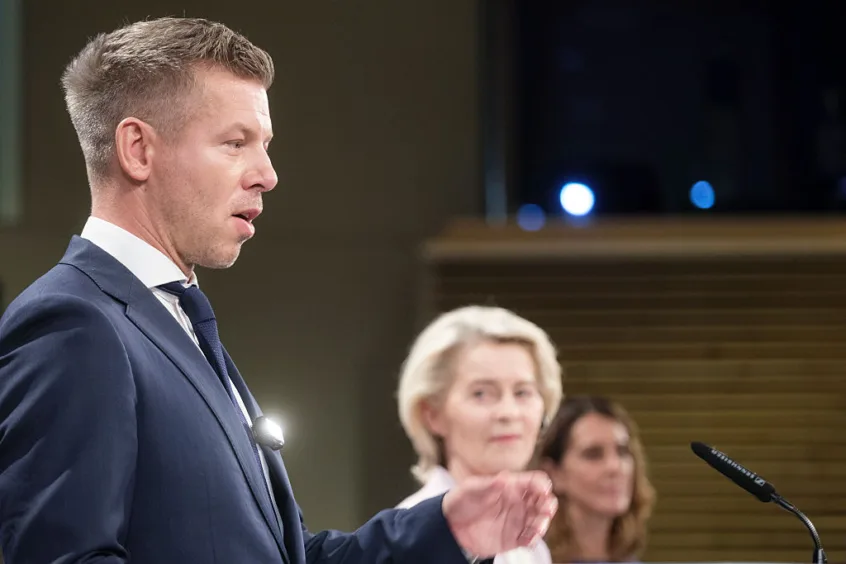
Péter Magyar, whose pro-EU conservative Tisza party defeated Viktor Orbán in April’s parliamentary election, made unlocking the funds a central campaign promise. In late May, he secured a political agreement with European Commission President Ursula von der Leyen covering a total of €16.4 billion.

That sum includes €10 billion from the Recovery and Resilience Facility, €4.2 billion in cohesion funds tied to anti-corruption and judicial reform measures, and an additional €2.2 billion linked to academic freedom requirements.

Following her meeting with Magyar in Brussels on May 29, von der Leyen remarked that a strong wind of change could already be felt across Hungary.

The Magyar administration subsequently rewrote the national recovery plan that had been submitted under Orbán. The revised document outlines spending on suburban rail infrastructure and rolling stock, electricity grid upgrades, support programmes for small and medium-sized enterprises, and a rental housing initiative. The Commission issued a positive recommendation ahead of the Council vote.

Hungary now faces a demanding schedule. Budapest must fulfill 27 so-called super milestones by August 31, submit payment requests by the end of September, and complete all disbursements by December 31. Missing those deadlines could force the government to repay roughly €1 billion in advances already received.

As of June, Hungary had absorbed only about 9 per cent of its Recovery and Resilience Facility allocation—the lowest uptake rate in the entire bloc, according to Commission data. By comparison, France has drawn down 86 per cent of its allocation.

Finance Minister András Kármán said before traveling to Brussels that the government would complete all necessary legal steps to secure the funds. Transport and Investment Minister Dávid Vitézy told parliament that negotiations with the Commission had concluded and all indications pointed toward approval.

Kármán has also indicated that Hungary will submit a revised medium-term fiscal framework later this year, outlining a roadmap toward eventual euro adoption, though he emphasized there is no urgency to enter the Exchange Rate Mechanism II.

With information from Brussels Signal
Share:
Dimitris Papafotis
Dimitris Papafotis

Dimitris Papafotis is the editor-in-chief of NewsFire.GR. He was born and raised in Athens. He studied at the Journalism Workshop (1991-1993). He currently lives in Pyrgos, Ilia, where he has been active in radio and various newspapers, while also maintaining his personal blog, Papafotis.gr.

The Economic and Financial Affairs Council is set to meet in Brussels on July 10 to take the final legal step required before Hungary can access the money, according to Brussels Signal. The decision requires unanimous support from all 27 member states.

Brussels has withheld billions in recovery and cohesion funding from Hungary for several years, citing what the European Commission called systemic corruption risks, along with concerns over judicial independence and academic freedom under the previous government.

Péter Magyar, whose pro-EU conservative Tisza party defeated Viktor Orbán in April’s parliamentary election, made unlocking the funds a central campaign promise. In late May, he secured a political agreement with European Commission President Ursula von der Leyen covering a total of €16.4 billion.

That sum includes €10 billion from the Recovery and Resilience Facility, €4.2 billion in cohesion funds tied to anti-corruption and judicial reform measures, and an additional €2.2 billion linked to academic freedom requirements.

Following her meeting with Magyar in Brussels on May 29, von der Leyen remarked that a strong wind of change could already be felt across Hungary.

The Magyar administration subsequently rewrote the national recovery plan that had been submitted under Orbán. The revised document outlines spending on suburban rail infrastructure and rolling stock, electricity grid upgrades, support programmes for small and medium-sized enterprises, and a rental housing initiative. The Commission issued a positive recommendation ahead of the Council vote.

Hungary now faces a demanding schedule. Budapest must fulfill 27 so-called super milestones by August 31, submit payment requests by the end of September, and complete all disbursements by December 31. Missing those deadlines could force the government to repay roughly €1 billion in advances already received.

As of June, Hungary had absorbed only about 9 per cent of its Recovery and Resilience Facility allocation—the lowest uptake rate in the entire bloc, according to Commission data. By comparison, France has drawn down 86 per cent of its allocation.

Finance Minister András Kármán said before traveling to Brussels that the government would complete all necessary legal steps to secure the funds. Transport and Investment Minister Dávid Vitézy told parliament that negotiations with the Commission had concluded and all indications pointed toward approval.

Kármán has also indicated that Hungary will submit a revised medium-term fiscal framework later this year, outlining a roadmap toward eventual euro adoption, though he emphasized there is no urgency to enter the Exchange Rate Mechanism II.

With information from Brussels Signal