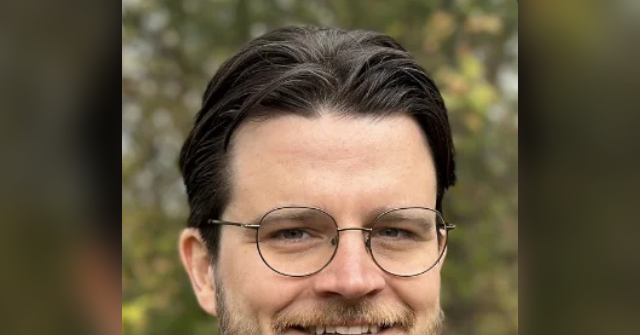
Trans Killer at Rhode Island Hockey Game Had Demons, Estranged Family Before Transition, Daughter Says
Robert Dorgan’s lifelong struggles with deep personal demons and toxic behavior, not his gender transition, drove a painful family estrangement that culminated in tragedy at a Rhode Island hockey game.


Transgender killer Robert Dorgan struggled with “demons” his entire life and had alienated all six of his children due to a pervasive pattern of “toxic” behavior long before he began living as a woman, his daughter told The Post.
Despite years of problematic behavior, his family kept giving him second chances, said Amanda Wallace-Hubbard, 36.
“Gender identity was in no way a factor in his estrangement from the family, at least not for me or my siblings; it was really just a symptom of something much deeper that was going on throughout his adult life. He struggled with some demons his whole life,” she said.
One of the adult daughters of transgender killer Robert Dorgan said her father wrestled with “demons” his entire life, which exacerbated tensions with his six children.
She said she tried for decades to ignore her father’s dark side but ultimately couldn’t bear it once she had her own children.
She eventually cut him out of her life to protect her children from his explosive behavior.
“My siblings and I went through turbulence over how to handle his level of involvement in our lives, because despite his flaws, he did have some redeeming qualities,” Wallace-Hubbard said.
“And from time to time, you could see the hope — like, you know, maybe he could pull it together and be a stable, parental figure in your life,” she added.
His gender confirmation surgery was cited as the main factor in the dissolution, in 2020, of his 30-year marriage to ex-wife Rhonda Dorgan, whom he shot along with their son at Dennis M. Lynch Arena in Pawtucket, Rhode Island.
Despite the family’s efforts to work with him for years, Robert never sought the help he needed nor did he clean up his behavior, Wallace-Hubbard said.
“He never really saw the wrong in his actions. Yeah. I think without meaningful psychiatric help, I don’t think he ever would have seen things that way — but you have to admit you have a problem before you can ask for help,” she said.
“He just wasn’t willing to do that.”
Wallace-Hubbard declined to cite specific examples and made sure to emphasize that she does not speak for her siblings, whom she acknowledged all have their own “complex relationships” with their father.
“For the safety of my children, I’ve had no contact with him in recent years, because I recognized he was not a healthy person for my kids to be around. As an adult, I had already mourned my father’s loss a long time ago. I’m just really devastated that it had to end in a way that also took the lives of two truly wonderful and important people in our lives,” she said of her murdered stepmother Rhonda and her brother, 23-year-old Aidan.
“Rhonda had a very close relationship with all her children, with all her stepchildren, me and my older brother and sister. She was the backbone of our family,” Wallace-Hubbard said, referring to the late stepmother, who was known for her “lively, cheerful, inexhaustible and charismatic” personality.
“Obviously Rob wasn’t well for a very, very long time, and she was always the steady rock that we could all lean on. And it’s hard with her passing, because whenever our family was in crisis, she was the one who organized and was there for everyone.”
She also spoke warmly of her murdered brother.
“Aidan was a very intelligent, hardworking kid. He was an engineer and was studying for a graduate degree. His fiancée Starr was also at the hockey game but wasn’t injured. He was a wonderful uncle to my kids and was very important to the hockey community in Rhode Island as he grew up,” she said.
“He will be missed by so many people.”
About Rhonda, she said, “It will take an entire army to fill her shoes.”