Necessary Cookies

Required for the site to function. Cannot be disabled.

Analytics Cookies

Help us understand how visitors interact with our site (Google Analytics via GTM).

Marketing Cookies

Used to track visitors and deliver personalised advertisements.

We use cookies to enhance your browsing experience and analyse site traffic. By clicking Accept All, you consent to our use of cookies. Privacy Policy
NewsFire Global
Home News Europe World Christianity Culture Wars Opinion
Information
About Us Authors Advertising Terms & Conditions Privacy Policy Contact
R2B Media
R2B NEWSFIRE.GR PAPAFOTIS.GR THRACTION HELLENIC CONSERVATIVES RIGHT2THEBONE YT
News Europe

May 19 – Powerful Video Highlights Pontic Genocide

Today marks the remembrance of the systematic extermination of 353,000 Pontic Greeks through forced labor, brutal marches, and repression—an ongoing struggle for recognition and justice.

Dimitris Papafotis
Dimitris Papafotis Editor in Chief
MAY 19, 2026 AT 8:20 AM Updated: May 19, 2026 10:10 AM

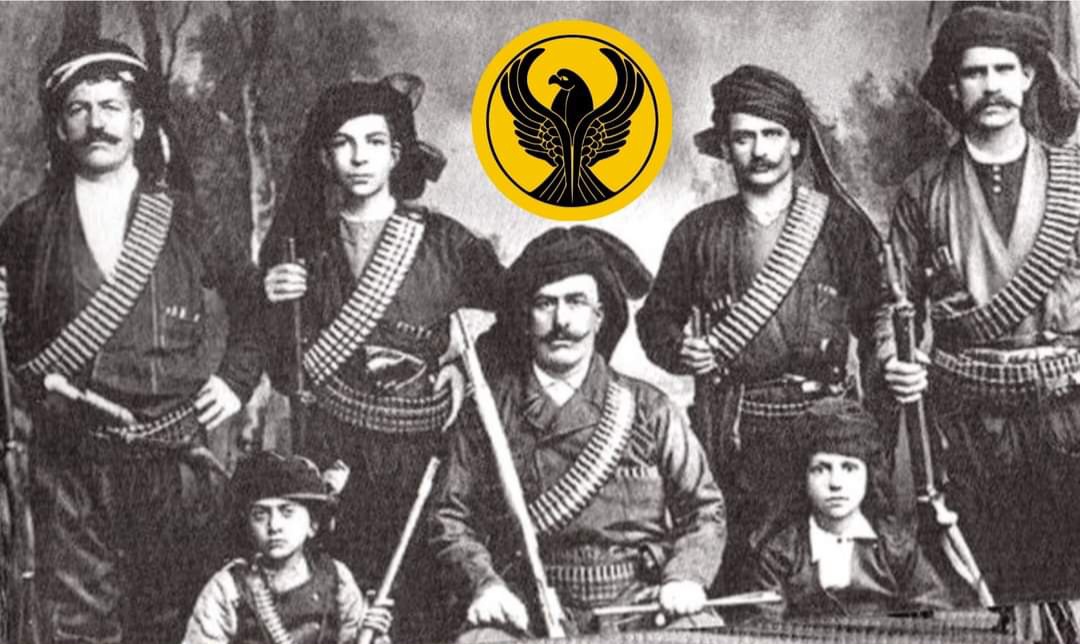
Today, May 19, Pontic Hellenism remembers. Hundreds of thousands of people were lost within a few years, in a systematic effort to erase an ancient civilization from the shores of the Black Sea (Euxeinos Pontus). The number of the dead reaches 353,000, according to historical records.

These were not collateral war casualties, but organized persecutions that began in 1914 and peaked after 1919.

The persecutions started under the regime of the Young Turks and continued under the forces of Mustafa Kemal.

First came the labor battalions, the well-known amele taburu (forced labor battalions), where men were exhausted to death. Next followed the arrests of leading figures, intellectuals, and clergy. Subsequently, the death marches into the desert, where women, children, and the elderly died from hunger, thirst, and hardships.

Ankara continues to deny the events. Instead of acceptance, it advances an official policy of oblivion and employs diplomatic means to prevent recognition from parliaments and international organizations. At the same time, concepts such as the “Blue Homeland” remind many of the same logic that led to the massacres a century ago.

May 19 was not chosen by chance. On May 19, 1919, Kemal landed in Samsun, marking the beginning of the most violent phase of the persecutions. Since then, this date has been established as a Day of Remembrance, first by Greece in 1994 and later by other countries and states.

The Pontic Genocide did not stand alone. Concurrently, other persecutions against Armenians and Assyrians unfolded, as part of a broader effort to homogenize the region. Survivors fled to various places, many to Greece, where they brought their language, dances, and traditions. Today, preserving this heritage serves as a form of resistance against oblivion.

The issue remains open in international law. Organizations such as the International Association of Genocide Scholars have recognized the events, yet full international condemnation and acceptance of responsibility from the Turkish side are still lacking. For the descendants, the memory of the 353,000 is not merely a historical fact but a duty to the past and a prerequisite for a future without repetition of similar crimes.

After the video, read about the terrible and horrifying Amele Taburu. We do not forget!

A new video shocks about the Pontic Genocide – The memory is passed on to new generations

A family stands before the Genocide monument in Piraeus. They touch soil from Pontus, smell amaranths that awaken memories, and hold their children tightly. The new video created by the Kamatero Pontic Association “Dimitrios Psathas” powerfully conveys this image shortly before May 19.

The work connects the past with the present. It shows the pain of uprooting but also the resilience of the Pontic spirit. Through contemporary images and traditional elements, it narrates how memory passes from generation to generation and remains alive.

Symbols such as the Pontic lyra and the Pontic eagle star in the video. A seven-year-old child plays the lyra, while a newborn symbolizes continuity. The creators used soil and flowers from Pontus, adding even greater weight to the symbolism.

The project was signed by Vasilis Karyofyllidis and Erotokritos Savvidis. The former, a dance instructor at the Association, emphasizes that the family of Spyros Petridis actively participated. “We wanted to show that through family we keep the memory alive,” he explains. They chose modern elements and everyday images precisely to link today with yesterday.

The filming took place in symbolic locations: at the monument “Pyrrhic Flight” in Alexandra Square in Piraeus, at the AEK Refugee Hellenism Museum and other sites with modern aesthetics. The song “Penthos” by Yüksel Baltacı, who originates from Katokhori of Trebizond, accompanies the video.

On his part, Erotokritos Savvidis, creator and producer, notes that the couple in the video reflects on the difficult journey of the Pontics. “We are the successors of this history. We will never forget it, neither we nor our children,” he says emphatically.

The work is a tribute to the 353,000 victims of the Kemalist atrocities. The Association’s president, Vasilis Kostelidis, describes it as excellent and moving for the remembrance day. He hopes it will reach the youth and strengthen the effort for international recognition of the Genocide.

The video reminds us that Pontus continues to live through its people, their stories, and their daily attitudes. It does not remain only in the past but transforms into a heritage passed down to future generations.

Video

Amele Taburu: The horror of the “Labor Battalions” that turned into extermination sites

An analytical approach to the forced labor of non-Muslims in the Ottoman Empire and the subsequent period (1914-1923)

The amele taburu, or Labor Battalions, were among the harshest methods of treating non-Muslim populations in the final phase of the Ottoman Empire. Officially intended to support the army in the rear, in reality they evolved into forced labor systems with extremely high mortality rates.

Their creation and operation

The battalions were mainly formed after 1914, with the Ottoman Empire’s entry into World War I. By special laws, non-Muslim men – primarily Greeks, Armenians, and Jews – aged 15 to 48 were called to serve not in combat units but in unarmed labor units. Several Muslims also served, but the overwhelming majority in these battalions were Christians.

The tasks included:

– Road construction and maintenance

– Work in mines and quarries

– Transportation of materials

– Agricultural work under harsh conditions

The conditions were extremely severe. Men worked with minimal food and water, without adequate clothing or medical care. Imprisonment, beatings, diseases (typhoid fever, cholera), and cold led to mass deaths. Testimonies report that in some areas, such as near İslahiye, the mortality rate reached 80%.

Numbers and consequences

Historical estimates, based on German diplomatic documents and later research, calculate that by the end of 1918 around 250,000 Greeks lost their lives in these battalions. By 1917 alone, over 200,000 Greeks had been conscripted, many dying from maltreatment, starvation, and disease.

In Pontus and Asia Minor, persecutions intensified after 1919, during the Kemalist period. The survivors were few. A notable case is that of Elias Venezis (then 18 years old), who out of 3,000 men from Aivali conscripted into his battalion, only 23 survived. His book Number 31328 remains one of the most famous testimonies.

Structure and administration

The battalions were not uniform. There were different battalions under various military commands (e.g., 1st Army, 9th Corps). In some, only Greeks or only Armenians served, while others included mixed populations. Guards frequently imposed punishments and arbitrary executions. The practice continued after 1918, especially during the Greco-Turkish conflict of 1919-1922.

Historical context and significance

The amele taburu are part of the broader framework of persecutions against Christian populations. They were a way to weaken communities by removing able-bodied men capable of resistance while also serving war needs. Similar methods were applied to other minorities.

Today, historians study these battalions based on survivor testimonies, diplomatic archives, and research. There are no complete official victim lists, making precise calculations difficult. However, the systematic nature of forced labor and the high death toll are recorded as key elements of the 1914-1923 events.

The memory of those who passed through the amele taburu remains alive through family stories and historical studies.

Share:
Dimitris Papafotis
Dimitris Papafotis

Dimitris Papafotis is the editor-in-chief of NewsFire.GR. He was born and raised in Athens. He studied at the Journalism Workshop (1991-1993). He currently lives in Pyrgos, Ilia, where he has been active in radio and various newspapers, while also maintaining his personal blog, Papafotis.gr.

Today, May 19, Pontic Hellenism remembers. Hundreds of thousands of people were lost within a few years, in a systematic effort to erase an ancient civilization from the shores of the Black Sea (Euxeinos Pontus). The number of the dead reaches 353,000, according to historical records.

These were not collateral war casualties, but organized persecutions that began in 1914 and peaked after 1919.

The persecutions started under the regime of the Young Turks and continued under the forces of Mustafa Kemal.

First came the labor battalions, the well-known amele taburu (forced labor battalions), where men were exhausted to death. Next followed the arrests of leading figures, intellectuals, and clergy. Subsequently, the death marches into the desert, where women, children, and the elderly died from hunger, thirst, and hardships.

Ankara continues to deny the events. Instead of acceptance, it advances an official policy of oblivion and employs diplomatic means to prevent recognition from parliaments and international organizations. At the same time, concepts such as the “Blue Homeland” remind many of the same logic that led to the massacres a century ago.

May 19 was not chosen by chance. On May 19, 1919, Kemal landed in Samsun, marking the beginning of the most violent phase of the persecutions. Since then, this date has been established as a Day of Remembrance, first by Greece in 1994 and later by other countries and states.

The Pontic Genocide did not stand alone. Concurrently, other persecutions against Armenians and Assyrians unfolded, as part of a broader effort to homogenize the region. Survivors fled to various places, many to Greece, where they brought their language, dances, and traditions. Today, preserving this heritage serves as a form of resistance against oblivion.

The issue remains open in international law. Organizations such as the International Association of Genocide Scholars have recognized the events, yet full international condemnation and acceptance of responsibility from the Turkish side are still lacking. For the descendants, the memory of the 353,000 is not merely a historical fact but a duty to the past and a prerequisite for a future without repetition of similar crimes.

After the video, read about the terrible and horrifying Amele Taburu. We do not forget!

A new video shocks about the Pontic Genocide – The memory is passed on to new generations

A family stands before the Genocide monument in Piraeus. They touch soil from Pontus, smell amaranths that awaken memories, and hold their children tightly. The new video created by the Kamatero Pontic Association “Dimitrios Psathas” powerfully conveys this image shortly before May 19.

The work connects the past with the present. It shows the pain of uprooting but also the resilience of the Pontic spirit. Through contemporary images and traditional elements, it narrates how memory passes from generation to generation and remains alive.

Symbols such as the Pontic lyra and the Pontic eagle star in the video. A seven-year-old child plays the lyra, while a newborn symbolizes continuity. The creators used soil and flowers from Pontus, adding even greater weight to the symbolism.

The project was signed by Vasilis Karyofyllidis and Erotokritos Savvidis. The former, a dance instructor at the Association, emphasizes that the family of Spyros Petridis actively participated. “We wanted to show that through family we keep the memory alive,” he explains. They chose modern elements and everyday images precisely to link today with yesterday.

The filming took place in symbolic locations: at the monument “Pyrrhic Flight” in Alexandra Square in Piraeus, at the AEK Refugee Hellenism Museum and other sites with modern aesthetics. The song “Penthos” by Yüksel Baltacı, who originates from Katokhori of Trebizond, accompanies the video.

On his part, Erotokritos Savvidis, creator and producer, notes that the couple in the video reflects on the difficult journey of the Pontics. “We are the successors of this history. We will never forget it, neither we nor our children,” he says emphatically.

The work is a tribute to the 353,000 victims of the Kemalist atrocities. The Association’s president, Vasilis Kostelidis, describes it as excellent and moving for the remembrance day. He hopes it will reach the youth and strengthen the effort for international recognition of the Genocide.

The video reminds us that Pontus continues to live through its people, their stories, and their daily attitudes. It does not remain only in the past but transforms into a heritage passed down to future generations.

Video

Amele Taburu: The horror of the “Labor Battalions” that turned into extermination sites

An analytical approach to the forced labor of non-Muslims in the Ottoman Empire and the subsequent period (1914-1923)

The amele taburu, or Labor Battalions, were among the harshest methods of treating non-Muslim populations in the final phase of the Ottoman Empire. Officially intended to support the army in the rear, in reality they evolved into forced labor systems with extremely high mortality rates.

Their creation and operation

The battalions were mainly formed after 1914, with the Ottoman Empire’s entry into World War I. By special laws, non-Muslim men – primarily Greeks, Armenians, and Jews – aged 15 to 48 were called to serve not in combat units but in unarmed labor units. Several Muslims also served, but the overwhelming majority in these battalions were Christians.

The tasks included:

– Road construction and maintenance

– Work in mines and quarries

– Transportation of materials

– Agricultural work under harsh conditions

The conditions were extremely severe. Men worked with minimal food and water, without adequate clothing or medical care. Imprisonment, beatings, diseases (typhoid fever, cholera), and cold led to mass deaths. Testimonies report that in some areas, such as near İslahiye, the mortality rate reached 80%.

Numbers and consequences

Historical estimates, based on German diplomatic documents and later research, calculate that by the end of 1918 around 250,000 Greeks lost their lives in these battalions. By 1917 alone, over 200,000 Greeks had been conscripted, many dying from maltreatment, starvation, and disease.

In Pontus and Asia Minor, persecutions intensified after 1919, during the Kemalist period. The survivors were few. A notable case is that of Elias Venezis (then 18 years old), who out of 3,000 men from Aivali conscripted into his battalion, only 23 survived. His book Number 31328 remains one of the most famous testimonies.

Structure and administration

The battalions were not uniform. There were different battalions under various military commands (e.g., 1st Army, 9th Corps). In some, only Greeks or only Armenians served, while others included mixed populations. Guards frequently imposed punishments and arbitrary executions. The practice continued after 1918, especially during the Greco-Turkish conflict of 1919-1922.

Historical context and significance

The amele taburu are part of the broader framework of persecutions against Christian populations. They were a way to weaken communities by removing able-bodied men capable of resistance while also serving war needs. Similar methods were applied to other minorities.

Today, historians study these battalions based on survivor testimonies, diplomatic archives, and research. There are no complete official victim lists, making precise calculations difficult. However, the systematic nature of forced labor and the high death toll are recorded as key elements of the 1914-1923 events.

The memory of those who passed through the amele taburu remains alive through family stories and historical studies.