Necessary Cookies

Required for the site to function. Cannot be disabled.

Analytics Cookies

Help us understand how visitors interact with our site (Google Analytics via GTM).

Marketing Cookies

Used to track visitors and deliver personalised advertisements.

We use cookies to enhance your browsing experience and analyse site traffic. By clicking Accept All, you consent to our use of cookies. Privacy Policy
NewsFire Global
Home News Europe World Christianity Culture Wars Opinion Video
Information
About Us Authors Advertising Terms & Conditions Privacy Policy Contact
R2B Media
R2B NEWSFIRE.GR PAPAFOTIS.GR THRACTION HELLENIC CONSERVATIVES RIGHT2THEBONE YT
Opinion World

When hope fades, gambling thrives: the poverty tax

Greece's gambling market grew to 16.7 billion euros in 2025, driven by online betting in a context of low purchasing power and negative household savings.

JUNE 25, 2026 AT 4:30 PM

The Greek gambling market continues to grow at impressive rates. Betting exceeded 16.7 billion euros in 2025, with the online segment recording particularly high growth. In recent years, the increase has been steady: from approximately 14.4 billion in 2023, to 15.65 billion in 2024 and 16.7 billion in 2025. Some see in this explosion a sign of prosperity. “If people are gambling, it means they have money,” they say.

The reality, however, is different. Usually gambling does not flourish in societies that feel secure and optimistic. It flourishes where gradual progress through work and saving seems increasingly distant.

In Greece, despite the improvement of many macroeconomic indicators over the last ten years, purchasing power remains among the lowest in the European Union, labor productivity remains disappointing, well-paid jobs are hard to find, and households have negative net savings.

Negative savings are a sign of pressure in the present and pessimism about the future. We spend more than we earn, living increasingly to make ends meet, instead of preparing for the future.

Of course, the phenomenon of problem gambling is complex and is not only about the economic factor. Digital technology has drastically changed the game. Gambling is now everywhere: on mobile phones, 24/7, with algorithms that know us well and give us exactly what is needed to keep going. Apps are designed for addiction, with fast bets, frequent small wins, and personalized bonuses. And aggressive advertising, especially in sports, normalizes the phenomenon. Thus, gambling increases even in wealthy societies, where it functions as an easy escape.

Internationally, the picture confirms this complexity. In the United Kingdom, where the market is particularly liberalized and online betting dominates, problem gambling rates are among the highest in Europe. In contrast, in Norway and Sweden, with strict state control, monopolies and advertising restrictions, problem gambling rates remain among the lowest in Europe, while at the same time they have high prosperity and life satisfaction, as well as strong social mobility.

Studies show that problem gambling is significantly more common among people with low income and unemployment, as well as in areas with high income inequality. In Finland, for example, problem gambling is six times more common among people receiving social benefits, while Italian research confirms a strong relationship between income inequality and higher problem gambling, especially in poorer areas.

The problem is not that people gamble occasionally. The problem is the consequences of problematic use. Addiction destroys families, leads to debt, depression, and suicide.

Public revenues from gambling often function as a “poverty tax”: we take money mainly from the economically weak to redistribute it back to society. A form of reverse redistribution that deepens rather than heals inequalities.

Societies are not built on the expectation of the “big win.” They are built on the belief that tomorrow can be better than today. Through work, not through lottery. And this belief is called hope.

Ultimately, what should we do?

We need stricter controls on advertising, especially on social media and in sports, as well as mandatory self-limitation tools on platforms. But mainly we need a society in which a young person believes they can progress through work and patience. Not with a betting slip. Also, we need financial education. A seemingly negligible, but steadily repeated, saving-investment today becomes a foundation of certainty for the future.

When hope weakens, luck becomes the only way out. But this is not growth. It is the symptom of a society that has lost its faith that tomorrow can be better than today.

Regards,
Leonidas

newsfire.gr
Share:
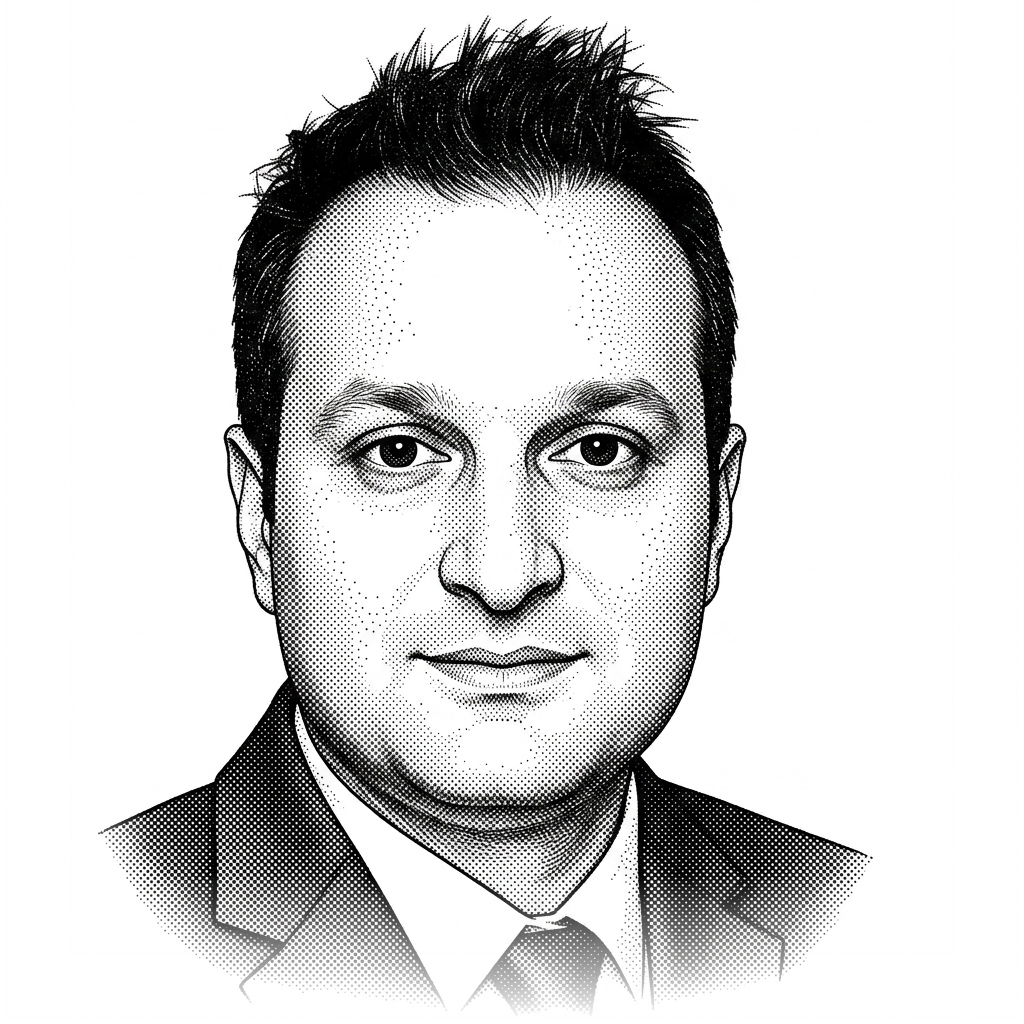
Leonidas Palaiodimos

He was born in 1985 in Agrinio and grew up in Panaitolio, with origins from Epirus. He studied at the Medical School of Aristotle University of Thessaloniki and the Hellenic Military Academy of Combat Support Officers, serving as a military doctor in the Hellenic Air Force from 2009 to 2015 in various units. Concurrently, he completed postgraduate studies with distinction in the pathological anatomy of cancer at the University of Athens. In 2015, he moved to New York for a specialization in internal medicine at Jacobi Medical Center / Albert Einstein College of Medicine, where he was awarded for outstanding performance and humanitarianism. Since 2018, he has worked as a hospital physician, assistant professor, and director of clinical research at institutions such as Montefiore Medical Center and the CUNY School of Medicine, receiving further awards for teaching and mentorship, and contributing to clinical research through publications.

The Greek gambling market continues to grow at impressive rates. Betting exceeded 16.7 billion euros in 2025, with the online segment recording particularly high growth. In recent years, the increase has been steady: from approximately 14.4 billion in 2023, to 15.65 billion in 2024 and 16.7 billion in 2025. Some see in this explosion a sign of prosperity. “If people are gambling, it means they have money,” they say.

The reality, however, is different. Usually gambling does not flourish in societies that feel secure and optimistic. It flourishes where gradual progress through work and saving seems increasingly distant.

In Greece, despite the improvement of many macroeconomic indicators over the last ten years, purchasing power remains among the lowest in the European Union, labor productivity remains disappointing, well-paid jobs are hard to find, and households have negative net savings.

Negative savings are a sign of pressure in the present and pessimism about the future. We spend more than we earn, living increasingly to make ends meet, instead of preparing for the future.

Of course, the phenomenon of problem gambling is complex and is not only about the economic factor. Digital technology has drastically changed the game. Gambling is now everywhere: on mobile phones, 24/7, with algorithms that know us well and give us exactly what is needed to keep going. Apps are designed for addiction, with fast bets, frequent small wins, and personalized bonuses. And aggressive advertising, especially in sports, normalizes the phenomenon. Thus, gambling increases even in wealthy societies, where it functions as an easy escape.

Internationally, the picture confirms this complexity. In the United Kingdom, where the market is particularly liberalized and online betting dominates, problem gambling rates are among the highest in Europe. In contrast, in Norway and Sweden, with strict state control, monopolies and advertising restrictions, problem gambling rates remain among the lowest in Europe, while at the same time they have high prosperity and life satisfaction, as well as strong social mobility.

Studies show that problem gambling is significantly more common among people with low income and unemployment, as well as in areas with high income inequality. In Finland, for example, problem gambling is six times more common among people receiving social benefits, while Italian research confirms a strong relationship between income inequality and higher problem gambling, especially in poorer areas.

The problem is not that people gamble occasionally. The problem is the consequences of problematic use. Addiction destroys families, leads to debt, depression, and suicide.

Public revenues from gambling often function as a “poverty tax”: we take money mainly from the economically weak to redistribute it back to society. A form of reverse redistribution that deepens rather than heals inequalities.

Societies are not built on the expectation of the “big win.” They are built on the belief that tomorrow can be better than today. Through work, not through lottery. And this belief is called hope.

Ultimately, what should we do?

We need stricter controls on advertising, especially on social media and in sports, as well as mandatory self-limitation tools on platforms. But mainly we need a society in which a young person believes they can progress through work and patience. Not with a betting slip. Also, we need financial education. A seemingly negligible, but steadily repeated, saving-investment today becomes a foundation of certainty for the future.

When hope weakens, luck becomes the only way out. But this is not growth. It is the symptom of a society that has lost its faith that tomorrow can be better than today.

Regards,
Leonidas

newsfire.gr