Necessary Cookies

Required for the site to function. Cannot be disabled.

Analytics Cookies

Help us understand how visitors interact with our site (Google Analytics via GTM).

Marketing Cookies

Used to track visitors and deliver personalised advertisements.

We use cookies to enhance your browsing experience and analyse site traffic. By clicking Accept All, you consent to our use of cookies. Privacy Policy
NewsFire Global
Home News Europe World Christianity Culture Wars Opinion Video
Information
About Us Authors Advertising Terms & Conditions Privacy Policy Contact
R2B Media
R2B NEWSFIRE.GR PAPAFOTIS.GR THRACTION HELLENIC CONSERVATIVES RIGHT2THEBONE YT
News Europe

Hegseth Urges Europe to Lead NATO 3.0 Reboot Effort

Defense Secretary Pete Hegseth called for European NATO members to take primary responsibility for continental defense in a "NATO 3.0" transformation as Washington withdraws automatic military asset commitments.

Dimitris Papafotis
Dimitris Papafotis Editor in Chief
JUNE 19, 2026 AT 10:25 AM

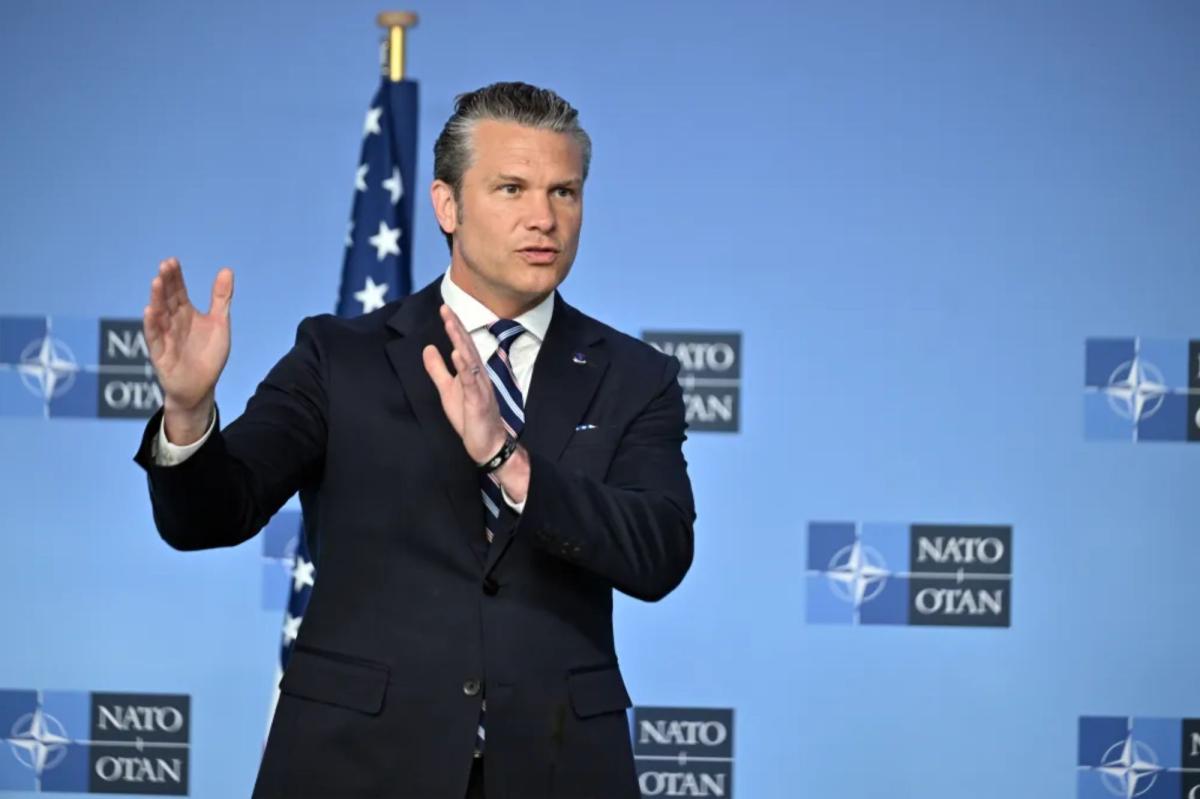
Speaking to reporters at the gathering of the 32-nation military alliance, Hegseth outlined a vision for a restructured NATO that would function as a credible deterrent force with genuine military capabilities, as New York Post reports. His remarks follow Washington’s recent notification to allies that certain critical military assets will no longer be automatically available in the event of an attack on a member state.

The Defense Secretary framed the proposed overhaul as a post-Cold War necessity, arguing that the alliance must return to its roots as a real hard-line military alliance with substantial combat power. He stressed that European nations need to take ownership of their own conventional defense rather than relying on American military infrastructure.

Hegseth revealed that the United States plans to invest $1.5 trillion in its own defense capabilities by 2027, describing this expenditure as an “arsenal of freedom” that would primarily serve American interests while also strengthening NATO’s overall posture. He made clear, however, that Washington expects its allies to demonstrate comparable commitment to their own security.

Strategic Shift Leaves European Allies Scrambling

The announcement comes weeks after the Trump administration informed NATO partners on June 3 that it would withhold certain warships, aircraft carriers and their support vessels, aerial refueling aircraft, and dozens of fighter jets from automatic deployment in crisis scenarios. European allies and Canada are now working urgently to identify how to fill these capability gaps.

NATO’s supreme allied commander, an American officer, is currently developing contingency plans for European defense following the US policy shift. The recalibration reflects the Trump administration’s stated need to prepare for simultaneous conflicts, particularly given growing tensions with China in the Indo-Pacific theater.

Article 5 Remains But With Conditions

While NATO’s foundational Article 5 collective defense provision remains technically intact—stipulating that an attack on one member constitutes an attack on all—the practical implementation is being redefined. The article does not mandate military assistance, though most allies would likely provide it in a genuine crisis.

What has changed is the scale and nature of potential American support should a European ally invoke Article 5. Despite the drawdown in conventional force commitments, Washington has no intention of withdrawing its nuclear weapons stationed in Europe, which remain central to NATO’s strategic deterrence posture.

The United States maintains by far the largest military force within the alliance, making any reduction in its forward commitment a matter of significant concern for European security planners who have grown accustomed to American military dominance within the organization.

With information from New York Post
Share:
Dimitris Papafotis
Dimitris Papafotis

Dimitris Papafotis is the editor-in-chief of NewsFire.GR. He was born and raised in Athens. He studied at the Journalism Workshop (1991-1993). He currently lives in Pyrgos, Ilia, where he has been active in radio and various newspapers, while also maintaining his personal blog, Papafotis.gr.

Speaking to reporters at the gathering of the 32-nation military alliance, Hegseth outlined a vision for a restructured NATO that would function as a credible deterrent force with genuine military capabilities, as New York Post reports. His remarks follow Washington’s recent notification to allies that certain critical military assets will no longer be automatically available in the event of an attack on a member state.

The Defense Secretary framed the proposed overhaul as a post-Cold War necessity, arguing that the alliance must return to its roots as a real hard-line military alliance with substantial combat power. He stressed that European nations need to take ownership of their own conventional defense rather than relying on American military infrastructure.

Hegseth revealed that the United States plans to invest $1.5 trillion in its own defense capabilities by 2027, describing this expenditure as an “arsenal of freedom” that would primarily serve American interests while also strengthening NATO’s overall posture. He made clear, however, that Washington expects its allies to demonstrate comparable commitment to their own security.

Strategic Shift Leaves European Allies Scrambling

The announcement comes weeks after the Trump administration informed NATO partners on June 3 that it would withhold certain warships, aircraft carriers and their support vessels, aerial refueling aircraft, and dozens of fighter jets from automatic deployment in crisis scenarios. European allies and Canada are now working urgently to identify how to fill these capability gaps.

NATO’s supreme allied commander, an American officer, is currently developing contingency plans for European defense following the US policy shift. The recalibration reflects the Trump administration’s stated need to prepare for simultaneous conflicts, particularly given growing tensions with China in the Indo-Pacific theater.

Article 5 Remains But With Conditions

While NATO’s foundational Article 5 collective defense provision remains technically intact—stipulating that an attack on one member constitutes an attack on all—the practical implementation is being redefined. The article does not mandate military assistance, though most allies would likely provide it in a genuine crisis.

What has changed is the scale and nature of potential American support should a European ally invoke Article 5. Despite the drawdown in conventional force commitments, Washington has no intention of withdrawing its nuclear weapons stationed in Europe, which remain central to NATO’s strategic deterrence posture.

The United States maintains by far the largest military force within the alliance, making any reduction in its forward commitment a matter of significant concern for European security planners who have grown accustomed to American military dominance within the organization.

With information from New York Post