Why Konstantinovka is Russia’s key to getting what it wants
Konstantinofka, a 67,000-resident city in Donetsk, is critical to Russia's strategy as the southern anchor of Ukraine's fortress belt and a key supply hub.
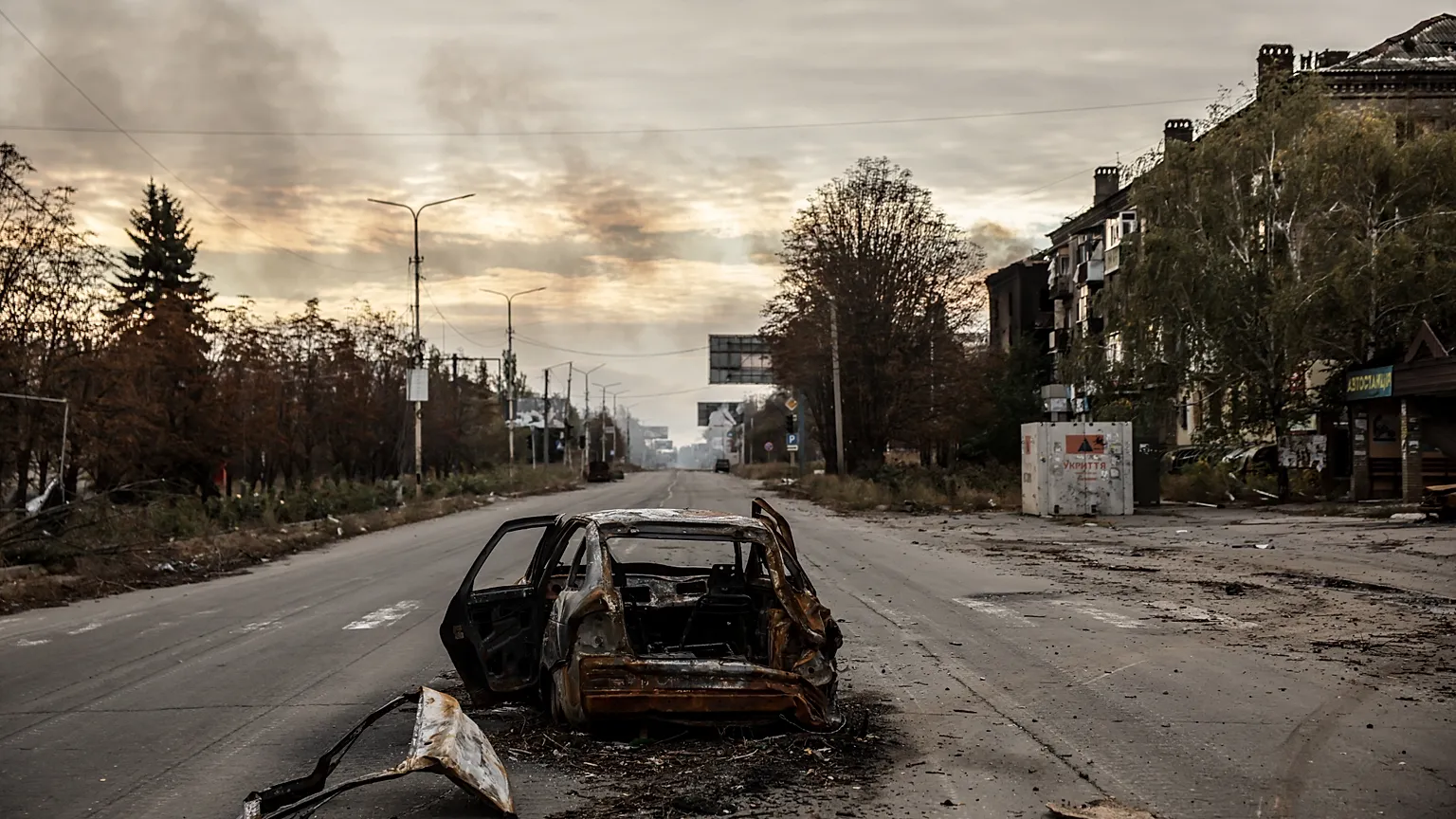

There is a reason why the name of a city of 67,000 inhabitants has been recurring in almost every Russian military communiqué for the past year. Konstantinofka is not just another point on the map of Donetsk. It is the southern edge of the so-called “fortress belt” — and that encapsulates almost its entire significance.
The Lock of the “Fortress Belt”
The “fortress belt” (fortress belt) is a chain of four fortified cities — Sloviansk, Kramatorsk, Druzhkivka, and Konstantinofka — that has been reinforced since 2014 and functions as the main defensive line of the Ukrainian army in Donbas. Konstantinofka is the southernmost and easternmost point of the formation: the entry gate.
Geography explains why Moscow is insistent there. If Konstantinofka falls, the road opens northward — to Kramatorsk and Sloviansk — and further west, toward Kharkiv, Dnipro, and Zaporizhzhia. It is no coincidence that analysts describe this complex as the “center of gravity” of the entire war. Take the lock, and you unlock the rest of the door.
The Supply Hub
The second reason is purely logistical. With a pre-war population of about 67,000, the city has been since the beginning of the invasion one of the main supply hubs for the Ukrainian army in Donetsk. It sits on critical axes — the H-20 highway Donetsk–Kramatorsk and the T0504 toward Pokrovsk.
The Russian plan is not simply a frontal capture. It is the cutting off of Ukrainian forces from their supply lines — which is why the city is a primary target. Its connection to the Pokrovsk front means that a fall here would not be a local event: it could destabilize the line more broadly.
In this field, the arrival of specialized Russian drone units — with the elite Rubicon unit being the most characteristic — changed the equation. FPV drones now reach deep enough to threaten road access, turning every supply route into a risk.
The Political Target
The third reason is political. Russia has designated the complete capture of the entire Donetsk region as a top battle priority for 2026, and the Kramatorsk–Konstantinofka zone is the strongest obstacle. Whoever controls Konstantinofka has breached the most difficult section of that objective — and acquired an obvious victory narrative.
Where We Stand Today
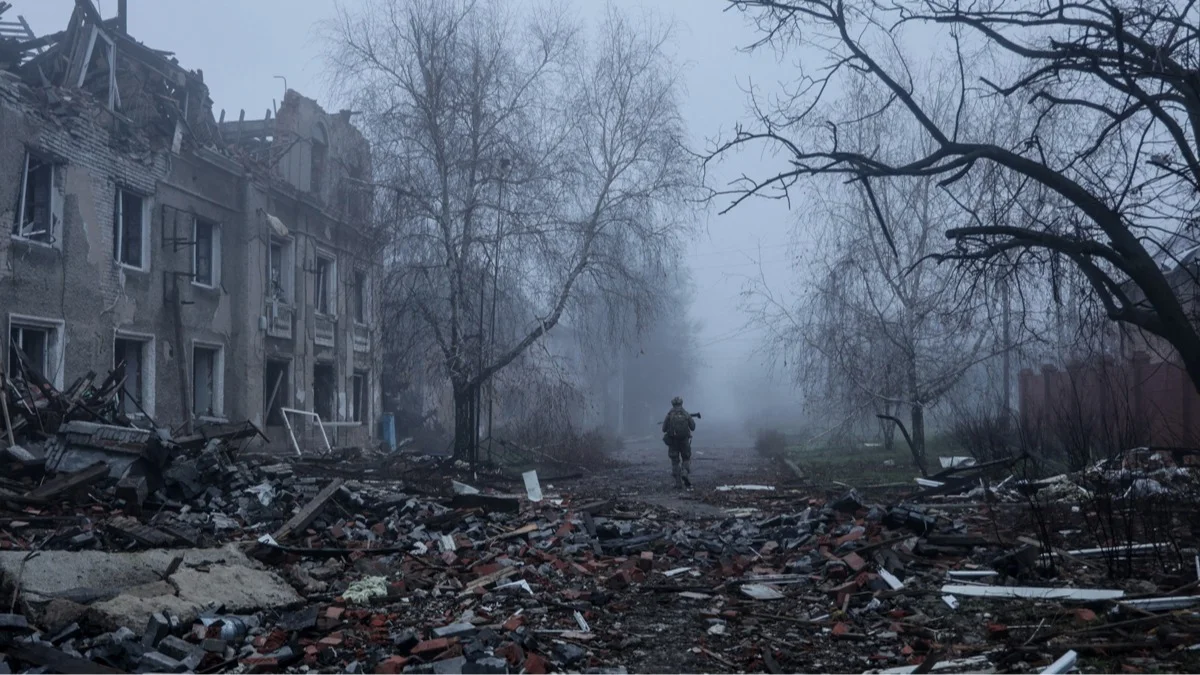
The first Russian penetrations into the city began around late October 2025, with assault groups entering from the southeast. Later, Russian units reached the zinc factory in the city center after an infiltration operation; around 2,500 residents remained as of April 2026, without stable access to water, gas, and electricity.
Nevertheless, the Institute for the Study of War estimates that Russian forces are unlikely to capture the entire “fortress belt” within 2026 — though they will most likely gain some tactical ground at high cost. Ukrainian Commander-in-Chief Olexandr Syrskyi himself admitted in May that Russian attacks on these cities increased noticeably.
The Boring Truth
Konstantinofka is important because it is simultaneously a lock, a hub, and a symbol. And because taking it costs disproportionately expensive relative to the measures of terrain you gain: a war no longer decided by breakthroughs, but by accumulation — meter by meter, basement by basement. Something that, if we want the boring truth, describes the entire front fairly well for the past two years.