NY Locals Revolt Against Solar Farms Over Land, Wildlife Harm
New York Governor Kathy Hochul's administration is overriding local opposition to force through 18 large solar installations in rural areas to meet the state's 2030 renewable energy targets.
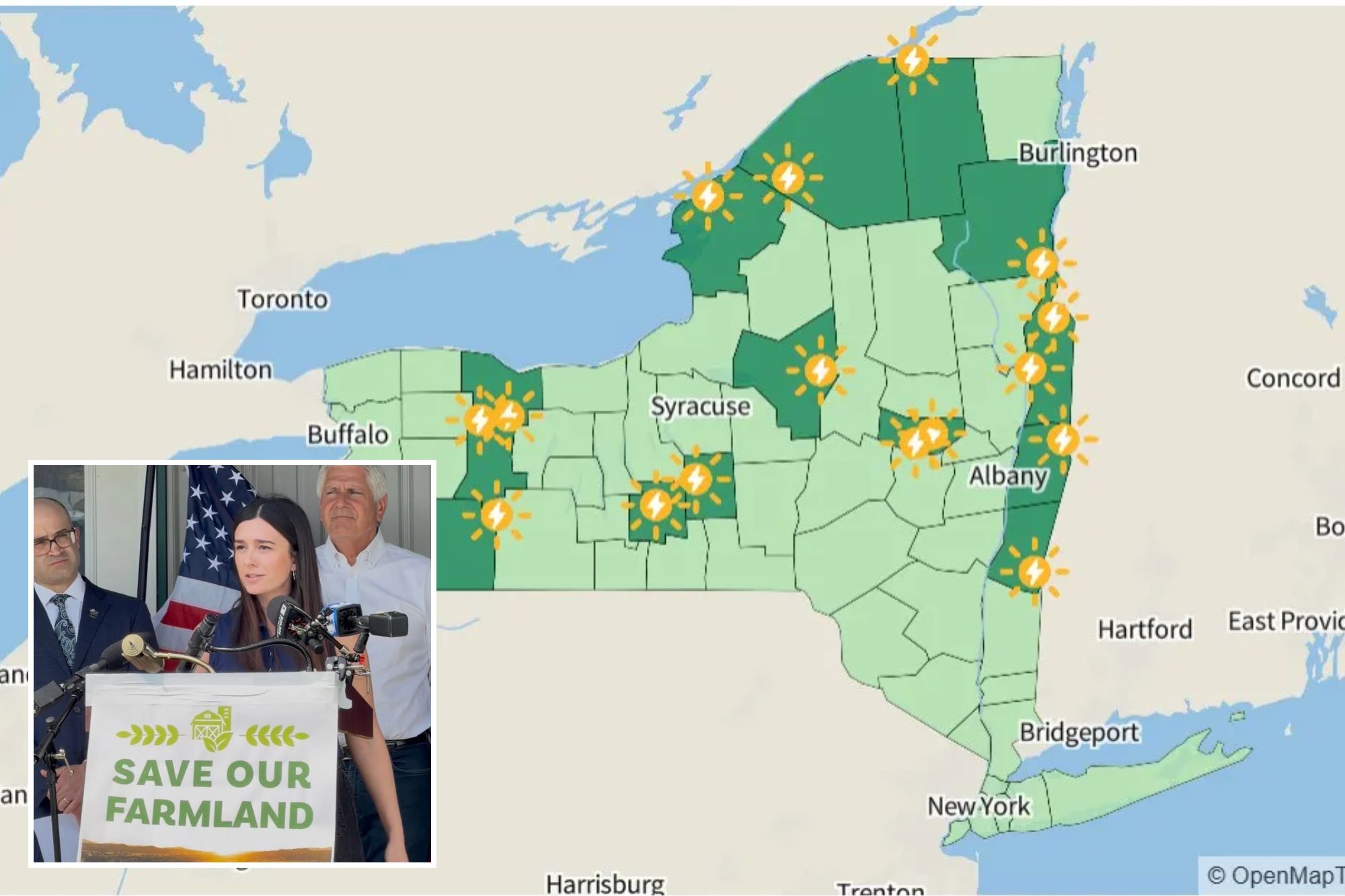

Alexandra Fasulo, a 33-year-old farmer in Schuylerville, purchased her property in 2023 only to discover that Hochul’s bulldozers were preparing to tear up 1,800 acres of protected grassland for a 100-megawatt solar complex in nearby Fort Edward, according to New York Post.
Fasulo attended a town meeting last fall to raise concerns about potential chemical runoff and contamination threatening her farm. Despite what she described as nearly unanimous local opposition, the project is moving forward anyway. We were like serfs coming before a king, Fasulo told New York Post, expressing shock that representative democracy appeared to mean nothing in the approval process.
Green Energy Mandate Overrides Local Control
The push stems from New York’s 2019 Climate Leadership and Community Protection Act, which mandates that 70 percent of state electricity must come from renewable sources by 2030, with greenhouse gas emissions reduced to 40 percent below 1990 levels and at least 3,000 megawatts of energy storage capacity. That deadline has repeatedly been pushed back.
To ram these projects through, Hochul established the Office of Renewable Energy Siting and Electric Transmission, an agency tasked with cutting red tape, dismissing environmental impact assessments, and crushing local opposition, as New York Post reports.
The agency has approved 18 sites with capacity exceeding 25 megawatts each, with another dozen wind projects in development. Major installations include the 4,000-acre, 500-megawatt Cider Solar Farm in Genesee County and the 2,000-acre Ridge View Solar Farm in Niagara County.
Foreign Companies Win Billion-Dollar Contracts
Making matters worse, New York Post has discovered that many of the multi-billion dollar solar contracts have been awarded to foreign companies including Canada’s Boralex, France’s EDF Renewables, and South Korea’s Cypress Creek Renewables.
Critics argue the installations will generate pathetically low electricity output in cold, cloudy upstate New York. While the Fort Edward site is marketed as a 100-megawatt facility, studies from the New York Independent System Operator indicate actual output will be approximately 15 percent of that capacity given the region’s gloomy climate.
Even in optimal conditions, large-scale solar has proven problematic. California’s $2.2 billion Ivanpah Solar Power Facility in the sunny Mojave Desert is closing this year after just a decade of operation due to inefficiency and obsolete technology.
Locals Report Stonewalling by State Agency
Residents fighting the projects report that solar panels are easily damaged in storms, require replacement every 15 years, and create virtually no local employment opportunities.
Fasulo described attempting to engage with ORES as a Kafkaesque nightmare, calling it a shadow agency that refuses to answer phones, respond to emails, or schedule physical appointments.
An ORES spokeswoman told New York Post that staff take their permitting responsibility very seriously, including incorporating community input, and focus on ensuring the best outcome for New York State consumers in every decision.
Wildlife Impact Reports Heavily Redacted
Frustrated by the lack of transparency, Fasulo used the Freedom of Information Law to obtain the agency’s wildlife impact report for Fort Edward. The document came back so heavily redacted she compared it to the infamous Epstein files.
She subsequently commissioned an independent report from conservation nonprofit Hudsonia. That assessment, reviewed by New York Post, reveals the Fort Edward site sits within a New York State Department of Environmental Conservation-managed grassland and bird sanctuary known for high breeding grassland bird diversity and significant numbers of wintering raptors, including endangered and threatened species.
The development threatens the endangered short-eared owl, of which fewer than 50 breeding pairs remain in the state according to the Grassland Bird Trust, as well as the threatened northern harrier and 15 species of reptiles and amphibians classified as conservation concerns.
Hudson Valley Residents Mobilize Against Big Solar
One hundred miles south in the Hudson Valley town of Copake, local resident Sara Traberman has made fighting industrial solar her full-time occupation. Chicago-based developer Hecate Energy purchased over 700 acres of productive farmland to install a planned 42-megawatt solar facility.
The pattern is repeating across rural New York as state officials prioritize renewable energy targets over local consent, environmental protection, and practical electricity generation concerns.
With information from New York Post