Necessary Cookies

Required for the site to function. Cannot be disabled.

Analytics Cookies

Help us understand how visitors interact with our site (Google Analytics via GTM).

Marketing Cookies

Used to track visitors and deliver personalised advertisements.

We use cookies to enhance your browsing experience and analyse site traffic. By clicking Accept All, you consent to our use of cookies. Privacy Policy
NewsFire Global
Home News Europe World Christianity Culture Wars Opinion
Information
About Us Authors Advertising Terms & Conditions Privacy Policy Contact
R2B Media
R2B NEWSFIRE.GR PAPAFOTIS.GR THRACTION HELLENIC CONSERVATIVES RIGHT2THEBONE YT
News Europe

German Defense Minister Boris Pistorius: No More Weapons for Ukraine – Europe at an Impasse

Germany’s Defense Minister confirms depleted arms stockpiles for Ukraine amid reduced US aid, urging allies to provide funds or old reserves as Europe faces critical military supply shortages after years of support.

Newsroom
Newsroom Staff Writer
FEBRUARY 12, 2026 AT 7:52 PM Updated: May 17, 2026 2:14 AM

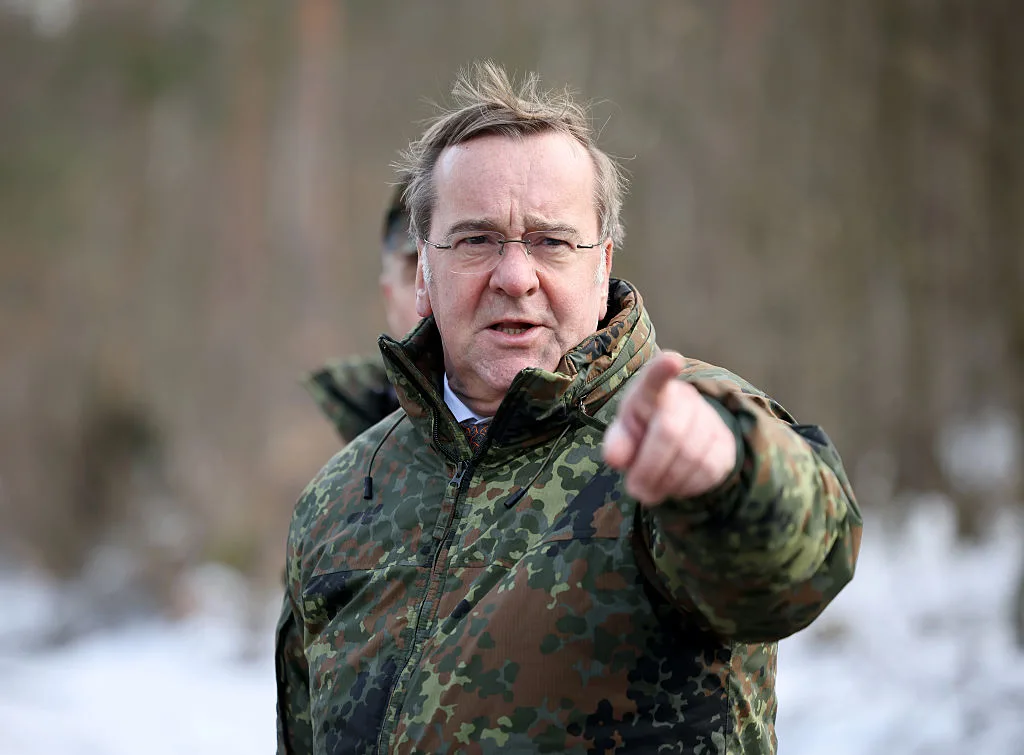
“There is nothing in the stockpiles that can be provided to Ukraine,” said German Defense Minister Boris Pistorius.

Europe appears unable to compensate for the loss of weapons from the United States following Washington’s decision to significantly reduce military aid to Ukraine.

Speaking to journalists today, Pistorius admitted that the stockpiles have been depleted and that nothing more can be sent to Ukraine.

This statement was made amid a new appeal from Ukraine to NATO allies and highlights the gap between Berlin’s ambitious promises for rearmament after the invasion and the reality of exhausted reserves, after nearly four years of continuous support to Kyiv.

Pistorius called on other countries to “examine their old stockpiles, and if there is nothing that can be provided to Ukraine, then to offer money.”

These remarks reinforce comments Pistorius made in late January when he ruled out sending additional Patriot systems from German stockpiles.

Germany has already delivered more than one-third of its own Patriot weapons to Ukraine, a contribution it described as “relatively large” compared to other allies.

Further deliveries are impossible, Pistorius explained, because the armed forces, the Bundeswehr, are still awaiting replacement systems from production lines and must maintain sufficient equipment for training, maintenance, and NATO obligations.

Germany remains one of the biggest supporters of Ukraine. Since the full-scale Russian invasion in 2022, Berlin has committed over 28 billion euros in total aid, of which more than 17 billion euros is military assistance.

Deliveries have included multiple Patriot systems, IRIS-T air defense batteries, Leopard tanks, Marder infantry fighting vehicles, artillery, ammunition, and more recently, plans for a large batch of Sidewinder missiles from existing stockpiles.

However, the latest intervention by the Defense Minister highlights the limits of the depletion of existing stockpiles.

The use of the collective “we” emphasizes the shared reality of depleted available stockpiles in many European countries, after years of reducing Cold War-era surpluses to support Ukraine, especially in highly demanded areas such as air defense systems.

Pistorius also urged those without stockpiles to contribute more money so that Ukraine can procure from the international market to replenish its reserves.

The production of replacement ammunition and systems has proven slower and more expensive than anticipated, a problem many European countries face after decades of underinvestment and demilitarization following the Cold War.

Pistorius has repeatedly noted that Germany is the only country supplying IRIS-T systems to Ukraine, but these are now in limited supply.

Germany’s depleted state contrasts sharply with the high expectations raised by former Chancellor Olaf Scholz’s “Zeitenwende” speech in February 2022.

In that speech, delivered days after the start of the Russian invasion of Ukraine, Scholz announced a special fund of 100 billion euros to modernize the chronically under-equipped Bundeswehr. He pledged to meet NATO’s defense spending target of 2% of GDP “year after year” and declared that Germany would become the largest conventional military power in Europe within the alliance.

Four years later, the special fund has enabled significant orders, but critics and some within the government say the results on the ground remain disappointing.

Parliamentary Commissioner for the Armed Forces, Henning Otte, has repeatedly cited severe shortages in spare parts, outdated equipment, and ammunition stockpiles that would last only a few days in a high-intensity conflict.

The 100 billion euro fund is expected to be exhausted by 2027, after which the regular defense budget will need to be significantly increased to maintain higher spending levels.

With Russian air strikes against Ukraine’s energy infrastructure and cities intensifying compared to the early months of the war, Kyiv is pleading for more interceptors and ammunition.


Share:
Newsroom
Newsroom

NewsFire.GR is a website created with the hope that the media will rediscover their true identity, which is none other than informing the public about the real stakes of our times. Journalism and political analysis must hold power accountable, not serve it.

“There is nothing in the stockpiles that can be provided to Ukraine,” said German Defense Minister Boris Pistorius.

Europe appears unable to compensate for the loss of weapons from the United States following Washington’s decision to significantly reduce military aid to Ukraine.

Speaking to journalists today, Pistorius admitted that the stockpiles have been depleted and that nothing more can be sent to Ukraine.

This statement was made amid a new appeal from Ukraine to NATO allies and highlights the gap between Berlin’s ambitious promises for rearmament after the invasion and the reality of exhausted reserves, after nearly four years of continuous support to Kyiv.

Germany’s Defence Minister Boris Pistorius:

There is nothing left in the stockpiles that can be provided to Ukraine. pic.twitter.com/oVX2Jy5Ry8

— Clash Report (@clashreport) February 12, 2026

Pistorius called on other countries to “examine their old stockpiles, and if there is nothing that can be provided to Ukraine, then to offer money.”

These remarks reinforce comments Pistorius made in late January when he ruled out sending additional Patriot systems from German stockpiles.

Germany has already delivered more than one-third of its own Patriot weapons to Ukraine, a contribution it described as “relatively large” compared to other allies.

Further deliveries are impossible, Pistorius explained, because the armed forces, the Bundeswehr, are still awaiting replacement systems from production lines and must maintain sufficient equipment for training, maintenance, and NATO obligations.

Germany remains one of the biggest supporters of Ukraine. Since the full-scale Russian invasion in 2022, Berlin has committed over 28 billion euros in total aid, of which more than 17 billion euros is military assistance.

Deliveries have included multiple Patriot systems, IRIS-T air defense batteries, Leopard tanks, Marder infantry fighting vehicles, artillery, ammunition, and more recently, plans for a large batch of Sidewinder missiles from existing stockpiles.

However, the latest intervention by the Defense Minister highlights the limits of the depletion of existing stockpiles.

The use of the collective “we” emphasizes the shared reality of depleted available stockpiles in many European countries, after years of reducing Cold War-era surpluses to support Ukraine, especially in highly demanded areas such as air defense systems.

Pistorius also urged those without stockpiles to contribute more money so that Ukraine can procure from the international market to replenish its reserves.

The production of replacement ammunition and systems has proven slower and more expensive than anticipated, a problem many European countries face after decades of underinvestment and demilitarization following the Cold War.

Pistorius has repeatedly noted that Germany is the only country supplying IRIS-T systems to Ukraine, but these are now in limited supply.

Germany’s depleted state contrasts sharply with the high expectations raised by former Chancellor Olaf Scholz’s “Zeitenwende” speech in February 2022.

In that speech, delivered days after the start of the Russian invasion of Ukraine, Scholz announced a special fund of 100 billion euros to modernize the chronically under-equipped Bundeswehr. He pledged to meet NATO’s defense spending target of 2% of GDP “year after year” and declared that Germany would become the largest conventional military power in Europe within the alliance.

Four years later, the special fund has enabled significant orders, but critics and some within the government say the results on the ground remain disappointing.

Parliamentary Commissioner for the Armed Forces, Henning Otte, has repeatedly cited severe shortages in spare parts, outdated equipment, and ammunition stockpiles that would last only a few days in a high-intensity conflict.

The 100 billion euro fund is expected to be exhausted by 2027, after which the regular defense budget will need to be significantly increased to maintain higher spending levels.

With Russian air strikes against Ukraine’s energy infrastructure and cities intensifying compared to the early months of the war, Kyiv is pleading for more interceptors and ammunition.