DEI Isn’t Dead, It’s Just Changing Forms
The diversity, equity, and inclusion movement in higher education is adapting rather than disappearing, with its infrastructure of administrators and accrediting bodies remaining intact despite rollbacks in some states.

According to Neil Gilbert writing in Washington Examiner, while Florida and Texas have dismantled DEI offices and Georgia has prohibited mandatory DEI training and eliminated diversity statement requirements, those celebrating the end of these initiatives are confusing dormancy with defeat.
The most significant rollbacks are confined to public universities in red states and a handful of Ivy League institutions targeted by the federal administration. Yet the underlying infrastructure supporting DEI—an interconnected network of administrators, accrediting bodies, publishers, faculty incentives, and professional norms—remains firmly in place and is proving remarkably resilient.
Rebranding, Not Retreat
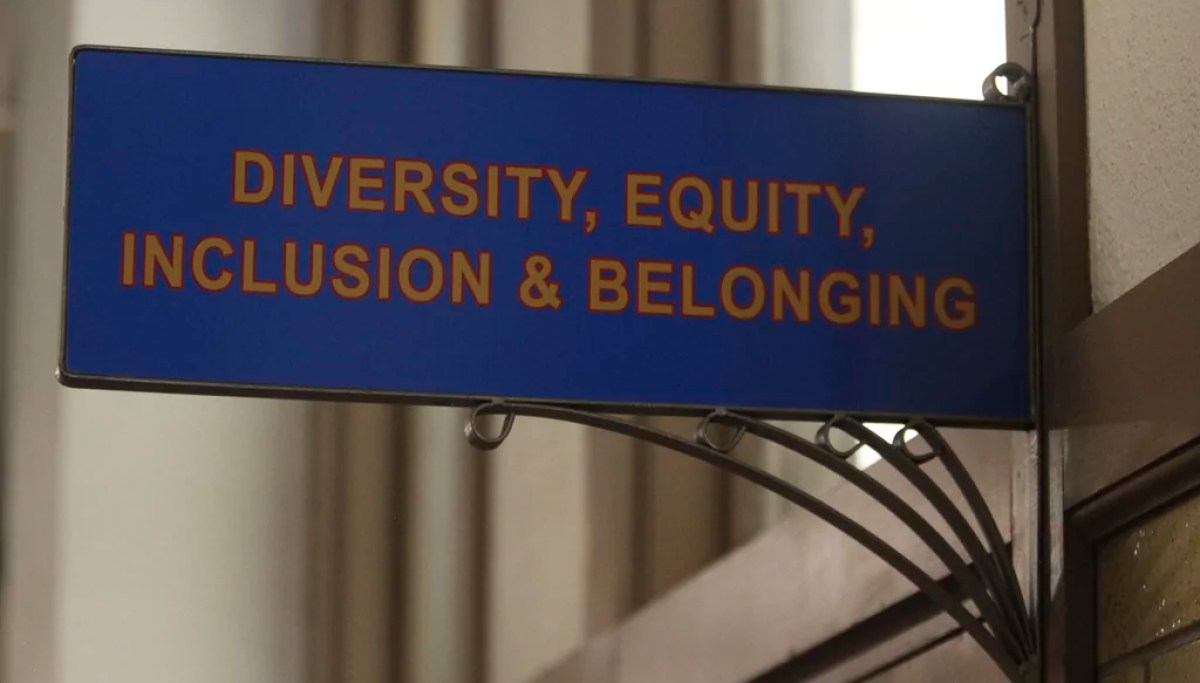
At the University of California, Berkeley, DEI has transformed into DEIB by adding “belonging,” a cosmetic change designed to obscure a politically contentious acronym while preserving its core mission. Following the ban on mandatory DEI statements, a faculty search workshop instructed departments to solicit voluntary statements and continue evaluating DEI-related commitments by reclassifying them from “required” to “preferred” qualifications linked to job responsibilities.
Workshop participants learned that such unsolicited but preferred statements should continue to receive recognition and be factored into assessments. This procedural workaround maintains DEI as a screening mechanism while shielding the hiring process from legal challenges.
Academic Publishing as Enforcement Mechanism
The movement has expanded well beyond campus boundaries into academic publishing, the primary gateway to scholarly prestige and tenure. Springer Nature has declared DEI central to its mission and mandated unconscious-bias training for all 9,000 employees.
Identity-based DEI initiatives now influence editorial policies even at the prestigious Science journals published by the American Association for the Advancement of Science, which welcome statements on diversity and inclusion within manuscript acknowledgments and invite authors to discuss their positionality indicating identification with underrepresented groups.
In 2020, editors of the Journal of the Society for Social Work and Research, published by the University of Chicago Press and considered a leading empirical journal in the field, issued a statement declaring that social work research should fundamentally focus on how racism and inequality undermine the well-being and mobility of marginalized populations.
The editorial directive pledged to prioritize scholarship grounded in “antiracist,” “anti-oppressive,” and “intersectional” frameworks, encouraging authors to submit research using a racial justice lens examining how racism and white supremacy contribute to disparities in health, education, criminal justice, child welfare, and other domains.
This editorial perspective dictates both the questions researchers should ask and the interpretive framework for understanding answers. The shift is not merely thematic but epistemological, Gilbert argues. The traditional academic imperative has shifted from “publish or perish” to publish DEI or perish.
Accreditation Bodies Lock In Requirements
Academic publishing is not the only external authority reinforcing the DEI agenda. Universities face periodic reviews by accrediting organizations that certify academic standards, and institutional accreditors have translated DEI doctrine into administrative obligations.
In social work education, the Council on Social Work Education accredits programs at approximately 770 colleges and universities across the United States. The accreditation standards reference “equity” or ADEI (anti-racism, diversity, equity, and inclusion) 42 times in a 38-page document.
Among other requirements, programs must recognize the pervasive impact of white supremacy and privilege and prepare students to have the knowledge, awareness, and skills necessary to engage in anti-racist practice. Unlike several institutional accreditors, the Council on Social Work Education has not removed or substantially softened the explicit DEI provisions in its accreditation standards.
The analysis suggests that while visible DEI apparatus may be disappearing from public view in conservative states, the movement has embedded itself into the regulatory and professional structures that govern American higher education, ensuring its survival through adaptation rather than confrontation.
With information from Washington Examiner